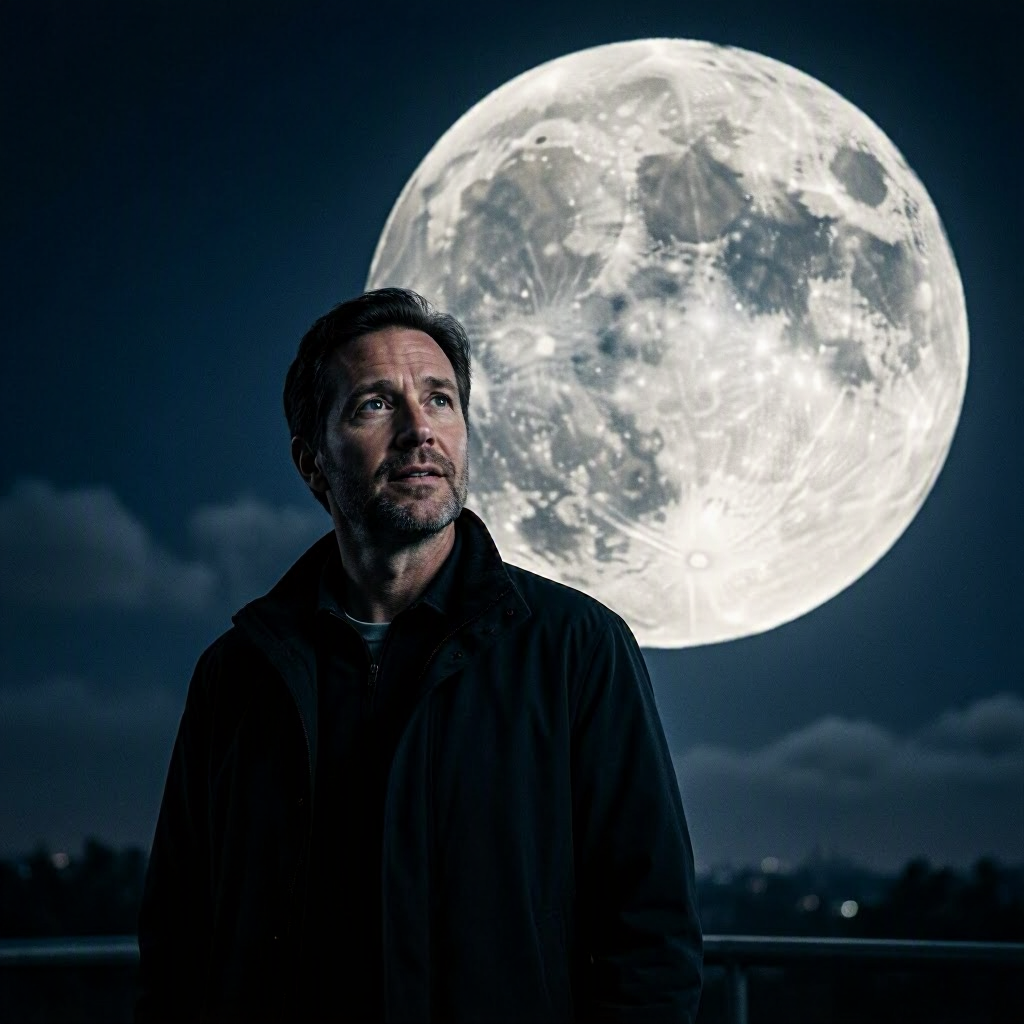
The Moon has fascinated humanity for thousands of years, inspiring myths, calendars, festivals, and scientific discoveries. Even in our modern age of satellites and space exploration, a bright full Moon still has the power to stop people in their tracks and draw their eyes skyward.
While many people pay attention to major celestial events such as eclipses and meteor showers, the remaining full moons of 2025 offer plenty of reasons to look up. Each one carries its own seasonal significance, cultural history, and unique viewing opportunities. Some will appear larger than average, while others will coincide with astronomical events that make them especially memorable.
Here are 10 surprising truths about the full moons still to come in 2025—and why they deserve a spot on your stargazing calendar.
1. Not All Full Moons Look the Same
Many people assume every full Moon appears identical, but that’s far from true.
The Moon follows an elliptical orbit around Earth, meaning its distance from our planet changes throughout the year. Some full moons appear slightly larger and brighter, while others seem a bit smaller. Atmospheric conditions, viewing angles, and the Moon’s position in the sky can also dramatically affect how it looks.
This means every full Moon offers a slightly different experience for observers.
2. Some of 2025’s Full Moons Will Appear Exceptionally Bright
As the year progresses, certain full moons will occur when the Moon is closer to Earth than usual.
These events are often called “supermoons.” During a supermoon, the lunar disk can appear noticeably larger and brighter compared to a typical full Moon. While the difference isn’t always obvious at first glance, photographers and experienced skywatchers often notice the change.
Supermoons are among the most anticipated lunar events because of their striking visual impact.
3. The Famous Moon Names Have Deep Historical Roots
Names such as Harvest Moon, Hunter’s Moon, and Beaver Moon are more than modern nicknames.
Many originated from Indigenous traditions and early agricultural societies that used the Moon’s cycles to track seasonal changes. These names helped communities prepare for planting, harvesting, hunting, and winter survival.
Today, they continue to connect modern observers with centuries of cultural and astronomical history.
4. The Harvest Moon Doesn’t Always Occur in September
One of the most common misconceptions about lunar events involves the Harvest Moon.
Contrary to popular belief, the Harvest Moon is not tied to a specific month. Instead, it is defined as the full Moon that occurs closest to the autumnal equinox in the Northern Hemisphere.
Depending on the timing of the lunar cycle, it can occur in either September or October.
5. Moon Illusions Can Make the Full Moon Look Enormous
Have you ever noticed how huge the Moon appears when it’s near the horizon?
This phenomenon is known as the Moon illusion. Although the Moon’s actual size in the sky remains nearly constant, our brains perceive it as larger when it’s close to buildings, mountains, trees, or other familiar objects.
As the Moon rises higher, it often appears smaller—even though its physical size hasn’t changed.
6. Full Moons Have Influenced Human Culture for Millennia
Long before clocks and digital calendars, people relied on lunar cycles to measure time.
Full moons played important roles in religious ceremonies, navigation, farming schedules, and storytelling traditions across countless civilizations. Ancient cultures carefully tracked lunar phases, often building monuments and observatories aligned with celestial events.
Even today, many holidays and cultural celebrations remain linked to the lunar calendar.
7. Wildlife Often Responds to Bright Full Moons
Humans aren’t the only ones affected by a bright Moon.
Numerous animal species alter their behavior during full-moon nights. Some predators use the increased visibility to hunt more effectively, while prey species may reduce activity to avoid detection.
Marine life, insects, birds, and mammals have all been observed responding to changes in lunar illumination.
The Moon’s influence extends far beyond the night sky.
8. Every Full Moon Offers a Different Viewing Angle
Because of a phenomenon called lunar libration, observers on Earth don’t see exactly the same face of the Moon all the time.
As the Moon orbits Earth, slight shifts in perspective allow us to glimpse a little more of its eastern or western edges. Over time, this enables observers to view nearly 59% of the Moon’s surface rather than exactly 50%.
It’s a subtle but fascinating reminder that the Moon is constantly moving.
9. Full Moons Are Excellent Opportunities for Amateur Astronomy
Many beginners assume the full Moon isn’t ideal for observation because its brightness can wash out some surface features.
However, a full Moon remains one of the easiest celestial objects to observe. Binoculars can reveal major maria, mountain ranges, and crater systems, while small telescopes provide stunning detail.
For newcomers to astronomy, each full Moon is an invitation to explore our nearest celestial neighbor.
10. Every Full Moon Connects Us to a Larger Cosmic Story
Perhaps the most surprising truth is that a full Moon is much more than a beautiful object in the sky.
Each full Moon represents a precise alignment of Earth, the Moon, and the Sun. The event reflects the ongoing gravitational dance that has shaped our planet’s oceans, influenced life on Earth, and guided human civilization for thousands of years.
When you look at a full Moon, you’re witnessing a process that has unfolded continuously for billions of years.
Why the Remaining Full Moons of 2025 Matter
In a world filled with constant notifications, deadlines, and digital distractions, the Moon offers something refreshingly simple: a reason to pause and look up.
The remaining full moons of 2025 provide opportunities to connect with nature, learn about astronomy, and appreciate one of the most familiar yet remarkable objects in the night sky. Whether you’re interested in photography, science, history, or simply enjoying a peaceful evening outdoors, each full Moon has something unique to offer.
The next time a full Moon rises above the horizon, take a moment to watch it. Behind its familiar glow lies a rich story of science, culture, and cosmic wonder—one that continues to unfold with every lunar cycle.







