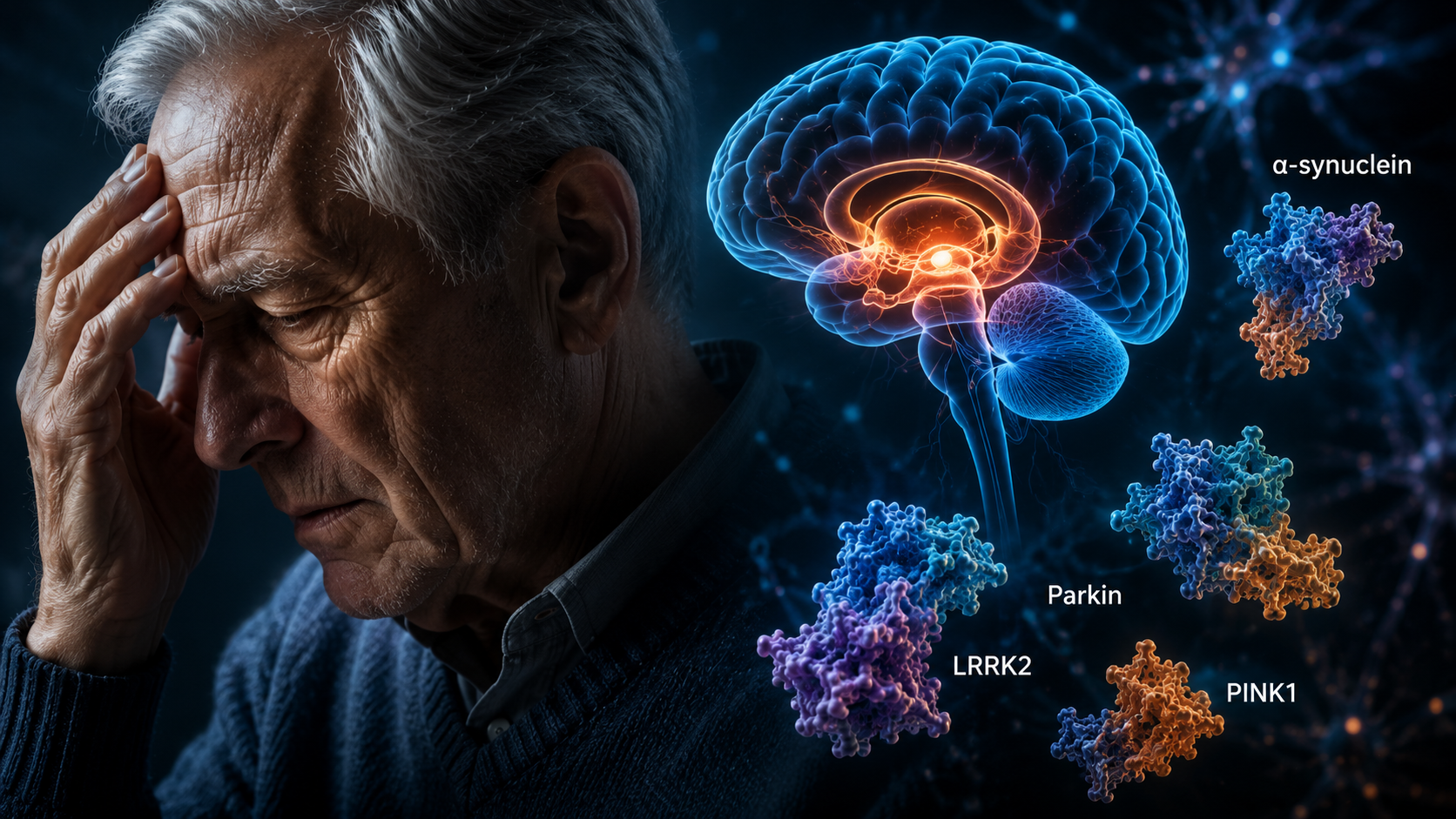
Parkinson’s disease affects millions of people worldwide, making it one of the most widely studied neurological disorders. While the condition is best known for symptoms such as tremors, stiffness, and movement difficulties, scientists have discovered that much of the disease’s story unfolds at a microscopic level inside the brain.
At the center of that story are proteins—tiny biological molecules that perform essential functions throughout the body. In Parkinson’s disease, certain proteins can behave in unusual ways, forming clumps and triggering changes that may contribute to the progression of the disorder. Understanding these proteins has become one of the most important areas of modern neuroscience.
Here are 10 fascinating facts about the brain proteins linked to Parkinson’s progression and why researchers are paying such close attention to them.
1. A Single Protein Has Become a Major Focus of Research
When scientists discuss Parkinson’s disease, one protein frequently takes center stage: alpha-synuclein.
This naturally occurring protein is found in healthy brains and appears to play a role in communication between nerve cells. However, under certain circumstances, alpha-synuclein can misfold and accumulate in abnormal ways.
These changes have made it one of the most studied proteins in Parkinson’s research.
2. Proteins Can Change Shape
Proteins are not rigid structures.
They must fold into precise three-dimensional shapes to function properly. When a protein folds incorrectly, it may lose its normal function or begin interacting with other proteins in harmful ways.
Researchers believe that abnormal protein folding plays a significant role in several neurodegenerative diseases, including Parkinson’s.
3. Protein Clumps Can Form Inside Brain Cells
One of the hallmarks of Parkinson’s disease is the presence of abnormal protein aggregates inside nerve cells.
These clumps, often called Lewy bodies, contain large amounts of misfolded alpha-synuclein. Scientists continue to investigate how these structures develop and what role they play in damaging neurons.
Their presence is one of the defining features associated with the disease.
4. The Brain Has Systems for Clearing Unwanted Proteins
Fortunately, the body is not defenseless against protein buildup.
Cells possess sophisticated mechanisms designed to identify, break down, and recycle damaged proteins. Researchers are studying whether disruptions in these cleanup systems may contribute to the accumulation of harmful protein aggregates in Parkinson’s disease.
Understanding these processes could lead to new treatment strategies.
5. The Problem May Begin Years Before Symptoms Appear
One of the most intriguing discoveries in Parkinson’s research is that protein-related changes may start long before noticeable symptoms develop.
Scientists believe abnormal alpha-synuclein accumulation could begin years—or even decades—before movement problems become apparent. This insight has fueled efforts to develop earlier diagnostic tools.
Earlier detection could one day improve treatment options and outcomes.
6. Proteins May Spread Through the Brain
Some researchers believe misfolded proteins can influence nearby proteins to adopt similar abnormal shapes.
This process has been compared to a chain reaction, although scientists continue to study exactly how it occurs. If confirmed, it could help explain why Parkinson’s symptoms often progress gradually over time and affect multiple regions of the brain.
The concept remains one of the most active areas of investigation.
7. Genetics Can Influence Protein Behavior
Not all cases of Parkinson’s disease arise for the same reasons.
Certain genetic variations are associated with increased risk, and some of these genes are involved in protein processing, transport, or cellular cleanup mechanisms. By studying these genetic factors, researchers hope to better understand why abnormal protein accumulation occurs in some individuals.
The relationship between genetics and proteins is a key part of ongoing research.
8. Scientists Are Developing Protein-Based Biomarkers
One of the biggest challenges in neurological diseases is detecting them early and accurately.
Researchers are working to identify protein-related biomarkers that may help diagnose Parkinson’s disease or track its progression. These markers could potentially be detected through laboratory tests, imaging techniques, or other diagnostic methods.
Reliable biomarkers would represent a major advance in patient care.
9. New Therapies Are Targeting Protein Accumulation
Many experimental Parkinson’s treatments focus directly on problematic proteins.
Scientists are exploring therapies designed to reduce protein clumping, enhance cellular cleanup systems, block harmful interactions, or improve the brain’s ability to manage abnormal protein deposits.
Although much of this work remains in the research stage, it has become one of the most promising directions in the field.
10. Understanding Proteins Could Unlock Future Breakthroughs
Perhaps the most exciting fact is that protein research is reshaping how scientists view Parkinson’s disease.
Rather than focusing solely on symptoms, researchers are increasingly examining the biological processes that occur deep within brain cells. Every new discovery about protein behavior provides valuable clues about how the disease develops and how it might eventually be slowed, prevented, or treated.
In many ways, these tiny molecules are helping scientists answer some of the biggest questions in neuroscience.
Why Protein Research Matters
The study of brain proteins has transformed Parkinson’s research over the past several decades. What once appeared to be a disease defined primarily by movement symptoms is now understood as a complex biological process involving protein folding, cellular health, genetics, and neural communication.
While many questions remain unanswered, scientists have made tremendous progress in uncovering the role proteins play in disease progression. These discoveries are guiding the development of new diagnostic tools, experimental therapies, and strategies for earlier intervention.
For patients, families, and researchers, that progress offers genuine hope. The more scientists learn about the proteins linked to Parkinson’s disease, the closer they move toward understanding—and potentially changing—the course of this challenging neurological condition.
The future of Parkinson’s research may depend on some of the smallest structures in the brain, but their impact could be enormous.







