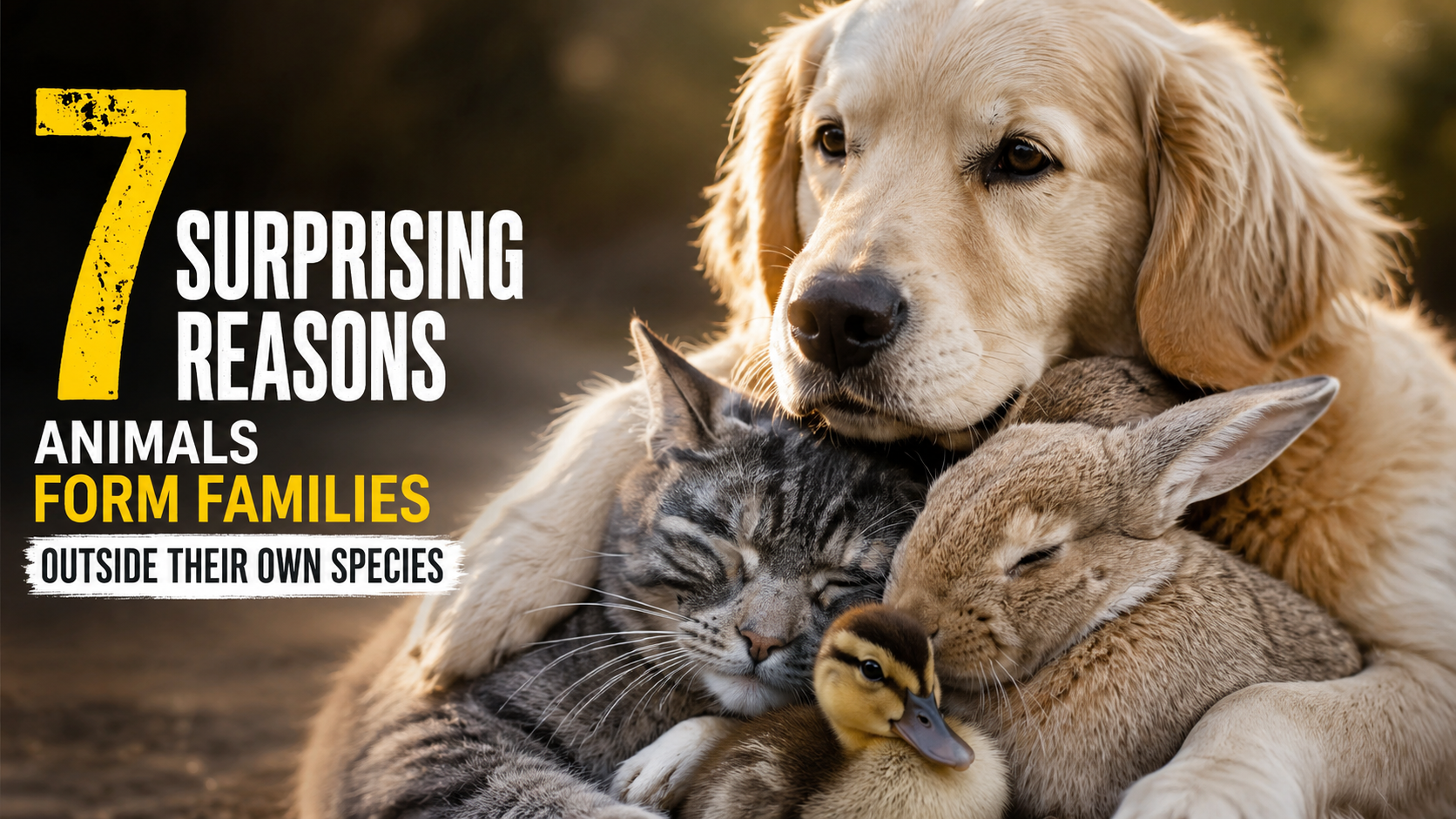
Nature is often portrayed as a world governed by competition, survival, and strict biological boundaries. Yet every so often, scientists, wildlife rescuers, and animal lovers witness something that challenges those expectations: animals forming close family-like relationships with members of entirely different species.
From dogs adopting orphaned kittens to wild animals raising young that aren’t their own, these unlikely bonds have fascinated researchers and the public alike. While such relationships may seem unusual, they reveal an important truth about animal behavior—many species are far more flexible, social, and emotionally complex than we once believed.
These cross-species families aren’t simply heartwarming stories. In many cases, they serve practical purposes that help animals survive, thrive, and adapt to their environments.
Here are seven surprising reasons animals sometimes form family bonds outside their own species.
1. The Need for Companionship Can Override Species Differences
Like humans, many animals are social creatures that benefit from companionship.
When an animal lacks members of its own species—whether because of isolation, rescue situations, habitat changes, or other circumstances—it may seek social connections wherever they are available. If another animal provides comfort, safety, or interaction, species differences may become less important.
This is especially common among domesticated animals that live closely with humans and other pets. Dogs, cats, rabbits, birds, and even farm animals have been known to form strong friendships with species they would never naturally encounter in the wild.
At its core, the desire for companionship can be a powerful force.
2. Young Animals Often Bond With Whoever Cares for Them
One of the most common explanations for cross-species families is a process known as imprinting.
Many young animals develop attachments to the first caregivers they encounter during critical stages of development. In some cases, an orphaned animal may be raised by another species entirely.
Ducklings have followed dogs, kittens have been nurtured by rabbits, and baby goats have bonded with horses. To the young animal, the caregiver represents safety, food, and protection—not a different species.
These early experiences can create lifelong relationships that resemble traditional family bonds.
3. Survival Sometimes Depends on Cooperation
In nature, survival often requires flexibility.
Animals facing harsh conditions may benefit from cooperating with species that offer protection, warmth, food access, or increased awareness of danger. While such arrangements are not always permanent, they can sometimes develop into surprisingly close relationships.
For example, mixed-species groups are observed among certain birds, fish, and mammals because cooperation increases the chances of detecting predators or locating resources.
What begins as a practical partnership can evolve into a stable social connection over time.
4. Maternal and Paternal Instincts Can Extend Beyond Species
Parental instincts are among the strongest behavioral drives in the animal kingdom.
When adult animals encounter vulnerable young, their nurturing instincts may activate regardless of species. This is particularly common among females that have recently given birth or are caring for offspring of their own.
There have been numerous documented cases of cats nursing puppies, dogs adopting baby squirrels, and livestock caring for orphaned wildlife.
While these situations may appear extraordinary, they often reflect deeply rooted caregiving behaviors rather than conscious decisions.
The urge to protect and nurture can sometimes transcend biological boundaries.
5. Animals Recognize Familiarity More Than Species
Humans tend to categorize animals by species, but animals themselves may rely more heavily on familiarity and experience.
An animal that grows up alongside members of another species often views them as part of its social group. Daily interaction creates trust, comfort, and predictability.
Over time, familiar companions become integrated into the animal’s social world, regardless of biological differences.
This helps explain why lifelong friendships can form between animals that, from a human perspective, seem like unlikely companions.
6. Shared Environments Encourage Unusual Bonds
Modern environments frequently bring together species that would rarely meet under natural conditions.
Animal shelters, rescue centers, farms, zoos, and family homes create opportunities for interactions that might never occur in the wild. In these settings, animals often spend significant amounts of time together, increasing the likelihood of social bonding.
Repeated positive interactions can gradually lead to relationships that resemble those found within traditional family groups.
In many cases, proximity and shared experiences play a major role in forming these unexpected connections.
7. Emotional Intelligence Is More Widespread Than We Once Thought
Perhaps the most fascinating reason for cross-species families is that many animals appear capable of forming emotional attachments that extend beyond simple survival needs.
Research increasingly suggests that numerous species experience complex social emotions, including affection, empathy, trust, grief, and attachment.
While scientists continue to debate exactly how animals perceive these relationships, there is growing evidence that emotional bonding is not limited to members of the same species.
Some animals appear to seek comfort from familiar companions, miss them when separated, and display behaviors consistent with strong social attachment.
These observations challenge traditional assumptions about animal relationships and reveal a level of emotional complexity that continues to surprise researchers.
Remarkable Examples From Around the World
Cross-species families have been documented in a wide range of settings.
Dogs have adopted orphaned tiger cubs. Cats have raised ducklings. Dolphins have been observed assisting injured animals outside their own species. Farm animals often form lasting friendships with companion animals such as dogs, cats, and birds.
Wildlife rehabilitation centers frequently report unlikely bonds between animals recovering together. Even zoos have witnessed enduring friendships between species that would rarely encounter each other in their natural habitats.
These stories capture public attention because they demonstrate behaviors that feel both surprising and deeply relatable.
What These Relationships Teach Us
Cross-species families offer valuable insights into animal behavior and social evolution.
They remind us that animals are often more adaptable than rigid stereotypes suggest. Rather than responding solely according to instinct, many species display flexibility in how they form social connections.
These relationships also highlight the importance of trust, security, and companionship—needs that appear across much of the animal kingdom.
In many ways, the factors that bring animals together are not entirely different from those that strengthen human relationships.
Why People Love Stories About Unlikely Animal Families
Stories about animals forming families across species boundaries resonate because they challenge expectations.
People are naturally drawn to examples of cooperation, kindness, and connection, especially when they emerge in unexpected ways. These stories offer a refreshing contrast to the idea that nature is defined only by competition and conflict.
They remind us that the natural world contains moments of compassion, adaptability, and social bonding that can be every bit as fascinating as its struggles for survival.
Final Thoughts
The sight of animals forming family-like relationships outside their own species may seem extraordinary, but it often reflects fundamental social instincts shared across the animal kingdom. Whether driven by companionship, caregiving, survival, familiarity, or emotional attachment, these bonds demonstrate a remarkable level of flexibility and resilience.
From orphaned young finding adoptive parents to lifelong friendships between unlikely companions, cross-species families continue to surprise scientists and inspire animal lovers around the world. Their stories remind us that connection can emerge in unexpected places and that the boundaries between species are sometimes far more flexible than we imagine.
In the end, these unusual families reveal one of nature’s most heartwarming lessons: the need for trust, comfort, and companionship often transcends the differences that separate us.







