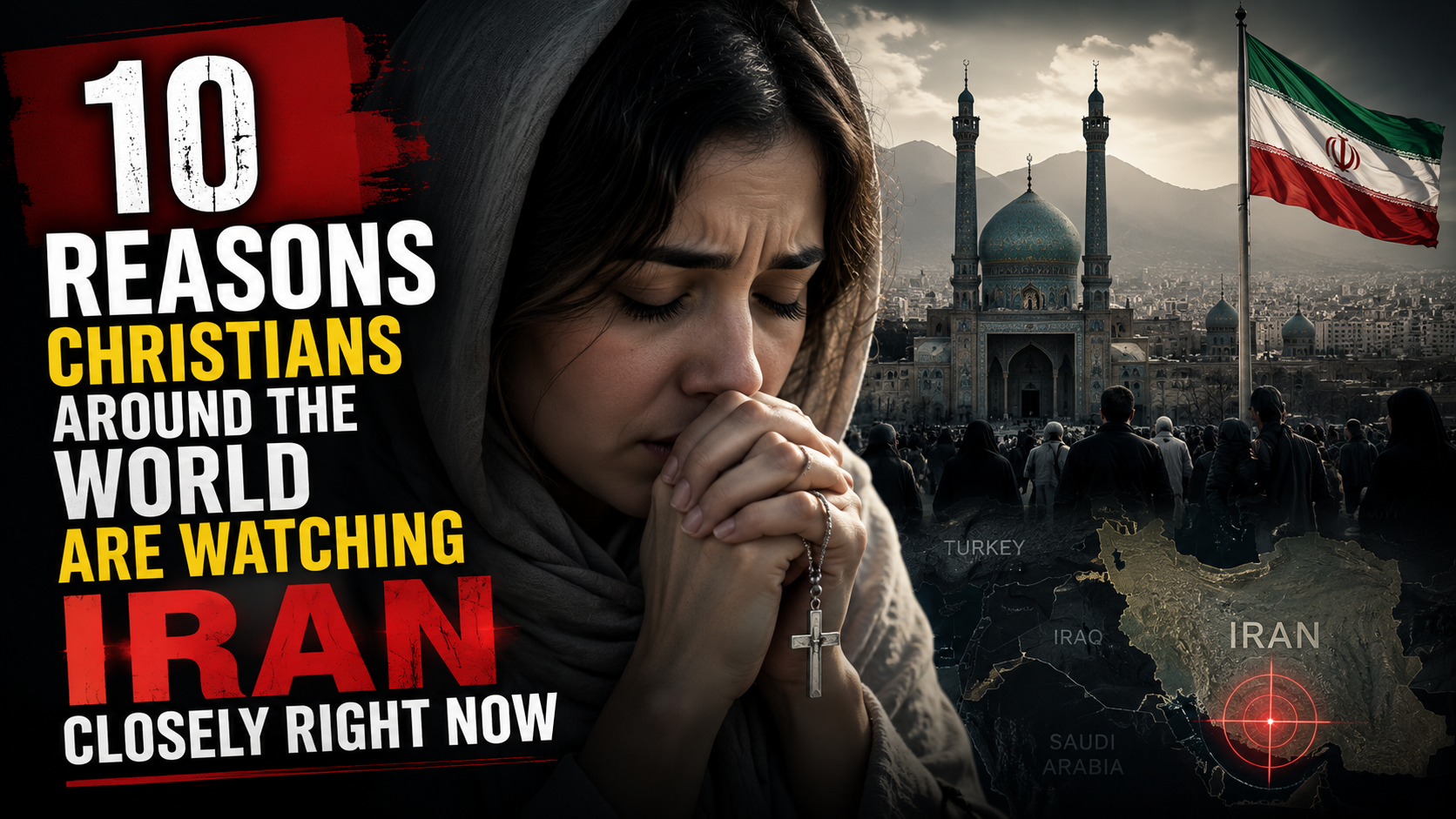
In recent years, global attention on Iran has intensified, especially among Christian communities worldwide. The interest is not driven by politics alone, but also by religious, cultural, humanitarian, and geopolitical factors that intersect in complex ways.
For many Christians, Iran represents more than just a nation in the Middle East. It is a place where faith, persecution, underground churches, social change, and international tensions all overlap. As a result, developments in the country often resonate deeply within global Christian networks.
While perspectives vary widely, there are several key reasons why Christians are paying close attention to Iran at this moment in history.
Here are 10 important reasons behind this growing global focus.
1. Reports of Christian Persecution Raise Concern
One of the primary reasons Christians are watching Iran closely is concern over religious freedom.
Reports from international organizations have highlighted restrictions on Christian worship, particularly for converts from Islam. In some cases, house churches operate discreetly due to legal and social pressures.
These reports naturally draw attention from global Christian communities who advocate for religious liberty and human rights.
2. Growth of Underground Christian Communities
Despite restrictions, there are accounts of growing underground Christian movements within Iran.
These communities often meet in private homes or secret gatherings to practice their faith.
For many observers, this growth is significant because it suggests a quiet but persistent expansion of Christianity in unexpected regions.
The hidden nature of these communities also makes their experiences difficult to document, increasing global interest.
3. Iran’s Geopolitical Role in the Middle East
Iran plays a major role in regional politics, influencing conflicts, alliances, and diplomatic relations across the Middle East.
Because political instability often affects religious minorities, Christians around the world monitor Iran’s actions closely.
Changes in foreign policy, regional involvement, or internal stability can have ripple effects that impact vulnerable communities.
4. Sanctions and Economic Pressure Affect Everyday Life
International sanctions on Iran have contributed to economic challenges within the country.
These conditions can affect access to healthcare, employment, and basic services for ordinary citizens, including religious minorities.
Christian humanitarian organizations often follow these developments to understand how they impact vulnerable populations on the ground.
5. The Role of Iran in Global Religious Dialogue
Iran’s position as an Islamic Republic makes it a focal point in discussions about interfaith relations.
Some Christian leaders are interested in engaging in dialogue that promotes understanding between religious traditions.
While such dialogue is complex, it remains an important area of interest for organizations focused on peacebuilding and religious cooperation.
6. Stories of Faith Under Pressure Inspire Global Attention
Narratives of individuals practicing Christianity under difficult conditions often spread through global Christian media and advocacy networks.
These personal stories resonate strongly because they highlight themes of perseverance, faith, and resilience.
Even when details are difficult to verify independently, the broader message often sparks emotional and spiritual engagement.
7. Human Rights Discussions Include Religious Freedom
Iran is frequently part of international human rights discussions, particularly regarding freedom of religion and expression.
Organizations that monitor global religious liberty often include Iran in their reports and advocacy efforts.
This keeps the country in ongoing conversation within Christian human rights communities.
8. Media Coverage Shapes Global Perception
International news coverage plays a major role in shaping how Christians around the world perceive Iran.
Reports about political tensions, protests, or social changes often include references to religious minorities.
This constant flow of information keeps Iran visible in global awareness, even for those not directly involved in geopolitical analysis.
9. Migration and Refugee Issues Affect Christian Communities
Political and economic instability in the region has contributed to migration patterns that include refugees from Iran.
Some of these individuals identify as Christians or convert after leaving the country.
Christian organizations involved in refugee support services often encounter people affected by Iran’s internal conditions, increasing awareness and concern.
10. Hope for Future Change Drives Ongoing Interest
Despite challenges, many observers maintain hope that conditions for religious freedom and social openness may improve over time.
This sense of possibility encourages continued attention and engagement from Christian communities worldwide.
Rather than disengaging, many organizations choose to monitor developments in hopes of positive change.
Why Iran Remains a Focus for Global Christian Communities
The attention directed toward Iran is not based on a single issue but rather a combination of religious, political, and humanitarian concerns.
From underground churches to international diplomacy, the situation is complex and constantly evolving.
For many Christians, staying informed is part of a broader commitment to awareness, advocacy, and global solidarity.
Final Thoughts
Iran’s role on the world stage ensures that it remains a country of significant interest for many different groups, including Christian communities.
While perspectives vary, the underlying concerns often center on human dignity, religious freedom, and the well-being of ordinary people.
As global conversations continue, Iran will likely remain a subject of close observation—not only for political reasons but also for its impact on faith communities and human rights discussions around the world.
In the end, the attention reflects a broader desire for understanding, connection, and hope for a more open and peaceful future.







