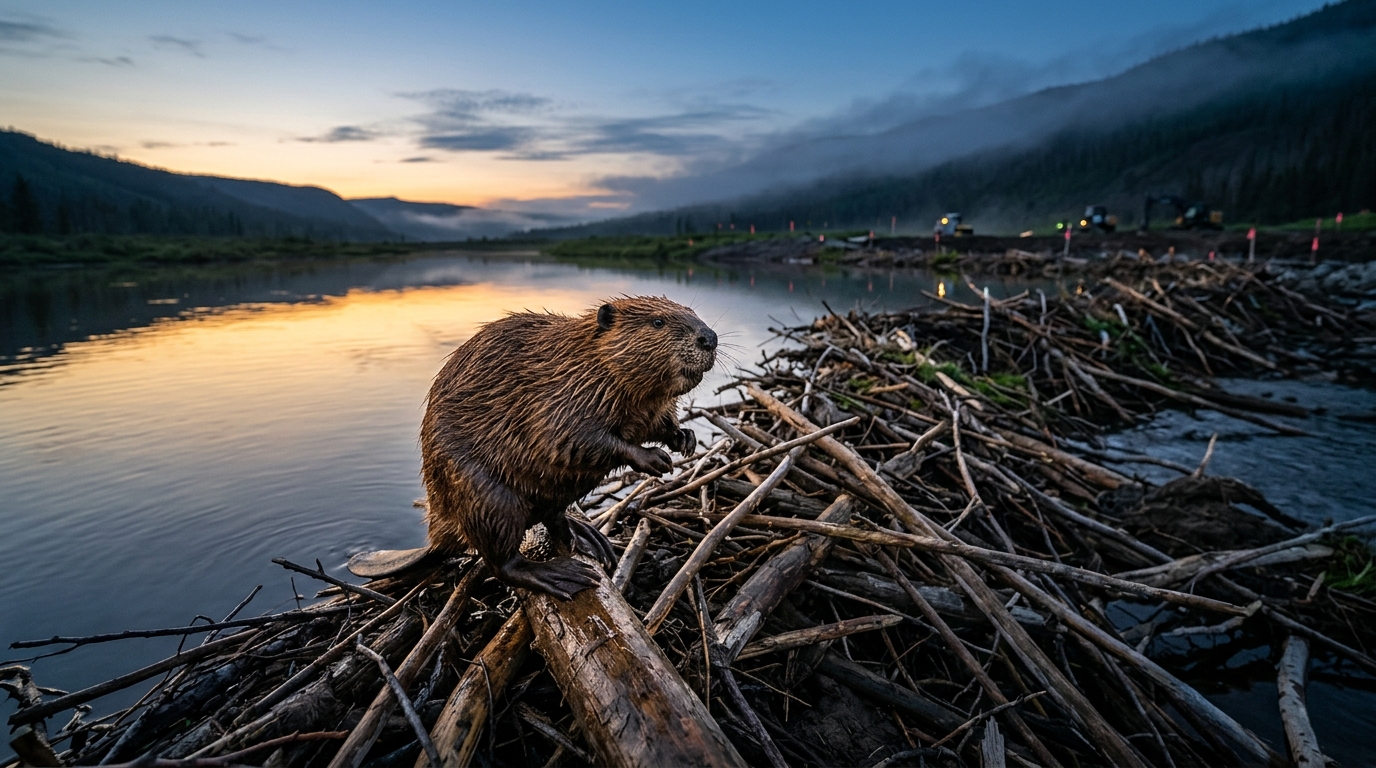
Nature has an extraordinary way of surprising us. While humans often rely on years of planning, engineering studies, and construction projects to reshape landscapes, some animals accomplish remarkable feats entirely on instinct. Few creatures demonstrate this better than beavers, the industrious rodents often called nature’s engineers.
In one widely discussed case, conservationists had spent years planning a dam project to restore wetlands and improve local ecosystems. Before the project could be fully carried out, a family of beavers moved into the area and built a dam of their own. The unexpected event fascinated scientists and the public alike, highlighting the incredible abilities of these hardworking animals.
Here are ten surprising facts about the beavers that built a dam humans planned for years.
1. Beavers Are Among Nature’s Greatest Engineers
Beavers possess an extraordinary ability to transform landscapes.
Using branches, mud, stones, and vegetation, they build dams that can alter water flow and create entirely new wetland habitats. Their structures are not random piles of debris. Instead, they are carefully assembled constructions that effectively hold back water and reshape the surrounding environment.
Few animals have as dramatic an impact on ecosystems as beavers do.
2. They Accomplished in Weeks What Humans Planned for Years
Large environmental restoration projects often involve extensive studies, permits, funding, and construction planning.
The beavers, however, required none of these formal processes. Guided by instinct, they built a functioning dam in a remarkably short period.
While human projects involve important safety and ecological considerations, the contrast demonstrated just how efficiently beavers can modify their surroundings.
3. Their Dams Create Valuable Wetlands
The beavers’ construction project was more than an impressive feat of engineering.
By slowing water movement, their dam created wetland conditions that can benefit a wide variety of plants and animals. Wetlands often support birds, fish, amphibians, insects, and numerous other species.
A single beaver dam can trigger ecological changes that ripple throughout an entire ecosystem.
4. Beavers Instinctively Understand Water Flow
One of the most remarkable aspects of beaver behavior is their apparent understanding of moving water.
Although they do not possess engineering degrees or blueprints, beavers instinctively place materials in ways that slow currents and raise water levels. Their construction methods have evolved over millions of years and are highly effective in many environments.
Their abilities continue to amaze scientists and conservationists.
5. Their Work Can Improve Biodiversity
Wetlands created by beaver dams often become biodiversity hotspots.
The newly formed ponds and marshes provide food, shelter, and breeding areas for numerous organisms. Plants flourish in moist environments, attracting insects and creating opportunities for larger animals higher up the food chain.
By changing the landscape, beavers can indirectly support entire communities of living things.
6. Beaver Dams Can Help During Droughts
Water storage is becoming increasingly important in many regions experiencing changing weather patterns.
Because beaver dams slow runoff and retain water, they can help landscapes remain wetter during dry periods. These wetlands may support vegetation and wildlife that might otherwise struggle during drought conditions.
This natural water-management ability has sparked growing interest among environmental researchers.
7. They Can Reduce Certain Types of Flooding
At first glance, building a dam might seem like it would increase flooding risks.
However, beaver dams often slow water movement and spread it across wetlands rather than allowing it to rush downstream all at once. This process can reduce the intensity of some flooding events and improve water retention within ecosystems.
Their structures frequently function as natural water regulators.
8. Their Building Skills Are Passed Through Instinct
Unlike human engineers, beavers do not attend schools or receive formal instruction.
Young beavers learn by observing their surroundings and participating in family activities, but the drive to build dams is largely instinctive. Over countless generations, evolution has shaped behaviors that allow these animals to create remarkably effective structures.
Their abilities remind us that nature has developed solutions to environmental challenges over vast stretches of time.
9. Their Story Changed How Many People View Wildlife
The story of beavers constructing a dam that humans had spent years planning captured widespread attention because it challenged assumptions about animal intelligence and capability.
People often underestimate the influence animals can have on ecosystems. The beavers demonstrated that wildlife can actively shape environments in ways that sometimes resemble human engineering projects.
Their accomplishment inspired many people to appreciate nature’s ingenuity more deeply.
10. They Remind Us That Nature Can Be an Extraordinary Partner
Perhaps the most fascinating lesson from this story is that humans do not always have to work against nature to achieve environmental goals.
In some cases, natural processes and wildlife behaviors can complement conservation efforts. The beavers unexpectedly accomplished work that aligned closely with human restoration objectives, illustrating how ecosystems sometimes possess their own remarkable solutions.
The event serves as a powerful reminder that protecting and understanding nature can reveal opportunities that might otherwise go unnoticed.
Final Thoughts
The beavers that built a dam humans had planned for years became symbols of nature’s incredible adaptability and engineering abilities. Their instinctive construction skills transformed the landscape, created valuable habitats, and highlighted the important role wildlife can play in shaping ecosystems.
More importantly, their story reminds us that nature is not merely something to observe from a distance. It is a dynamic force capable of solving problems, creating opportunities, and continually surprising us. Sometimes, the most remarkable engineering projects are carried out not by machines or blueprints, but by a family of determined beavers working quietly in a stream.







