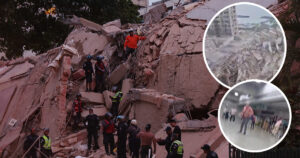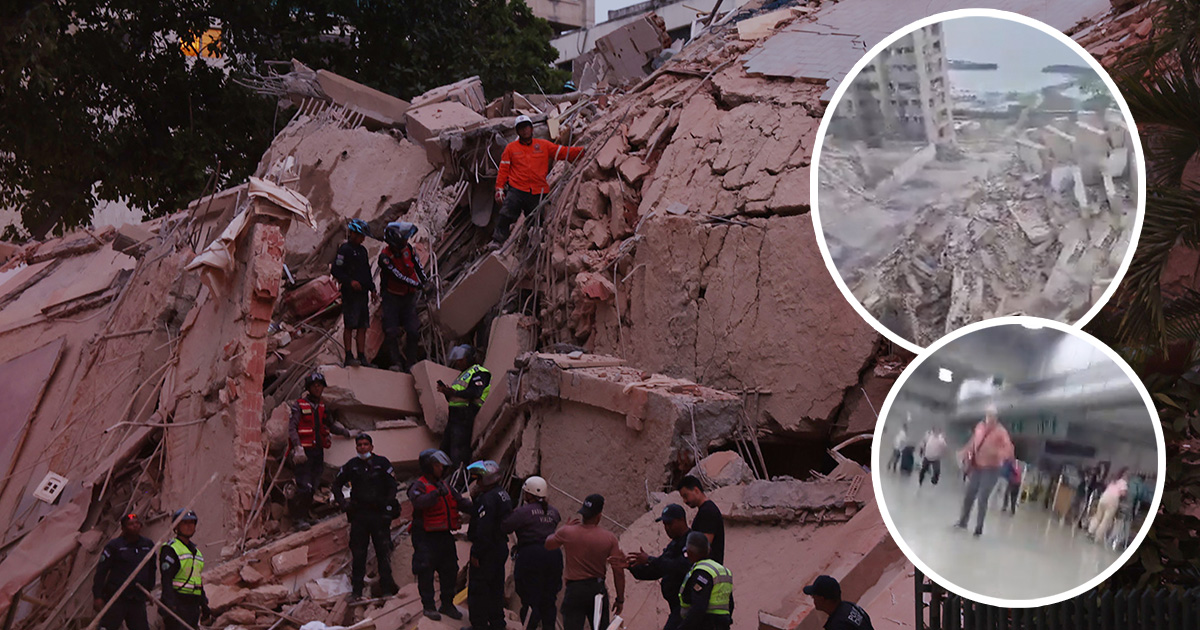
Venezuela is facing one of the worst natural disasters in its modern history after two powerful earthquakes struck the country’s northern Caribbean coast just one minute apart on Wednesday. Measuring 7.2 and 7.5 in magnitude, the back-to-back tremors are being described as the strongest seismic event to hit the nation in more than 100 years.
Authorities fear the scale of the destruction could be far greater than initial reports suggest, with some early estimates warning that the final death toll could potentially exceed 10,000.
According to the U.S. Geological Survey (USGS), the earthquake’s epicenter was located approximately 17 miles (28 kilometers) west of the coastal town of Morón. The affected area lies around 104 miles from Venezuela’s capital, Caracas, making the powerful shaking widely felt across much of the country.
Soon after the disaster, the USGS released preliminary assessments indicating the earthquakes could cause catastrophic economic losses and a significant number of fatalities due to the intensity of the shaking and the vulnerability of buildings in the region.
Casualties Continue to Rise
Officials have warned that the number of victims is expected to increase as emergency teams continue searching damaged neighborhoods.
Initial government reports confirmed at least 32 deaths and roughly 700 injuries. Later updates pushed those figures dramatically higher, with authorities confirming 164 people had lost their lives and 971 others had been injured.
Emergency responders believe many more people remain trapped beneath collapsed buildings, particularly in heavily affected coastal communities.
Officials have cautioned that these figures remain preliminary, and additional casualties are expected to be reported as rescue operations continue.
La Guaira Suffers Widespread Destruction
Among the hardest-hit areas is the state of La Guaira, located near Caracas. The region has suffered extensive structural damage, with numerous residential and commercial buildings collapsing during the violent shaking.
Government officials described the situation as a humanitarian disaster.
“Dozens of buildings have collapsed, and our rescue teams are working tirelessly to save as many lives as possible,” acting President Delcy Rodríguez said. “La Guaira has become a disaster zone, and we are still trying to determine the full extent of the damage.”
Authorities noted that complete casualty figures from the region have yet to be verified, raising concerns that the final toll could climb considerably.
Airport Forced to Close
The earthquakes also caused major damage to Simon Bolívar International Airport in La Guaira, Venezuela’s primary international gateway.
Officials temporarily shut down the airport after inspectors discovered severe structural damage throughout parts of the facility.
Videos shared on social media showed frightened passengers rushing to safety as ceilings partially collapsed, sending debris and dust across several sections of the terminal. Emergency crews quickly evacuated affected areas while engineers began assessing the safety of the infrastructure.
Thousands Feared Dead
Disaster modeling released after the earthquakes suggests the human impact could be severe.
Some preliminary estimates indicate fatalities could eventually range between 10,000 and 100,000, although officials emphasize that these projections are based on early models and have not been confirmed.
Search-and-rescue teams continue working around the clock to locate survivors trapped beneath collapsed buildings.
International Rescue Teams Mobilize
The Venezuelan government says saving lives remains its highest priority as rescue efforts continue across the affected region.
Acting President Delcy Rodríguez announced that specialized emergency response teams from several countries—including the United States, the Dominican Republic, Mexico, and El Salvador—are being deployed to assist with search, rescue, and humanitarian operations.
Authorities have also opened emergency shelters and hotels to accommodate families displaced by the disaster. Schools have been closed, and non-essential public services have been suspended to allow emergency personnel to focus on relief efforts.
U.S. Offers Emergency Assistance
Rodríguez also confirmed she spoke with U.S. Secretary of State Marco Rubio, who expressed support for the Venezuelan people during the crisis.
Later, Rubio announced that the United States would immediately send search-and-rescue specialists, medical supplies, and humanitarian aid to assist recovery efforts.
He said the deployment was authorized under the direction of President Donald Trump.
“The United States extends its deepest condolences to the people of Venezuela following these devastating earthquakes,” Rubio said in a statement. “Our thoughts are with the families who have lost loved ones, those recovering from injuries, and the courageous first responders risking their lives to save others.”
Rescue Operations Continue
As emergency crews race against time, thousands of residents remain displaced, and officials continue assessing the full scale of the destruction.
With damaged infrastructure, widespread building collapses, and rescue operations still underway, authorities warn that both the death toll and the number of injured are likely to rise in the coming days.
The international community has begun mobilizing support as Venezuela faces the enormous challenge of rescuing survivors, caring for displaced families, and rebuilding communities devastated by one of the country’s most powerful earthquakes on record.