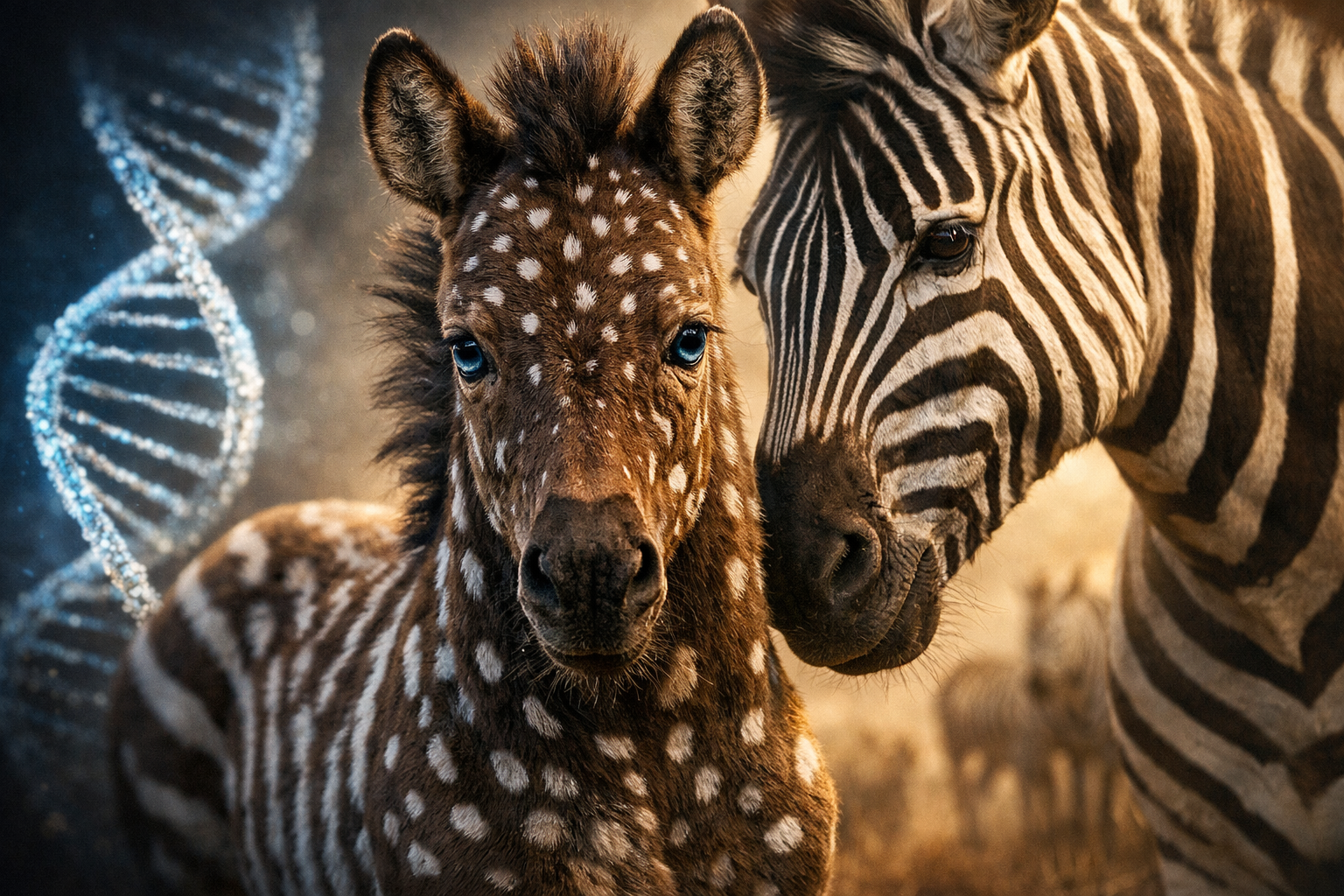
Every now and then, a young animal captures the world’s attention because it looks different from others of its kind. In the case of a remarkable zebra foal, a unique genetic trait transformed what might have been an ordinary birth into a story that sparked curiosity among wildlife enthusiasts, scientists, and animal lovers alike.
Zebras are famous for their striking black-and-white stripes, a pattern so distinctive that no two individuals share exactly the same design. Yet occasionally, a zebra is born with an unusual coat color, unexpected markings, or a rare physical characteristic that sets it apart from the rest of the herd. These differences often provide a fascinating glimpse into the science of genetics—the biological blueprint that shapes every living creature.
While a zebra foal’s unusual appearance may seem like a simple visual curiosity, it can reveal important lessons about heredity, evolution, diversity, and adaptation. Here are ten fascinating genetics facts that help explain why one extraordinary zebra foal can become such a remarkable example of nature’s complexity.
1. Every Zebra’s Stripe Pattern Is Unique
Just as humans have unique fingerprints, every zebra possesses a one-of-a-kind stripe pattern.
The arrangement of stripes develops during early fetal growth and is influenced by genetic instructions combined with developmental processes in the womb. Even siblings born to the same parents display noticeably different markings.
For researchers, these patterns are so distinctive that they can often identify individual zebras simply by studying photographs. A zebra foal’s unusual stripes may therefore offer valuable insights into how genes influence physical traits.
2. Genetics Determines More Than Coat Color
When people think about genetics, they often focus on appearance. However, genes affect far more than external features.
A zebra’s DNA influences body size, growth rate, immune system function, metabolism, behavior, and countless other biological characteristics. The visible coat pattern is only a small part of a much larger genetic story.
An extraordinary zebra foal may attract attention because of its appearance, but its genetic makeup influences nearly every aspect of its development and survival.
3. Rare Genetic Variations Can Create Unexpected Patterns
Occasionally, small changes in genetic instructions can produce unusual physical traits.
These variations, known as mutations, occur naturally and are an important source of biological diversity. In some cases, a mutation may alter pigmentation, stripe formation, or coat coloration.
A zebra born with an uncommon appearance often provides a visible example of how even slight genetic differences can create dramatic changes in an animal’s outward characteristics.
4. Genetic Diversity Strengthens Wildlife Populations
One of the most important concepts in biology is genetic diversity.
Within any species, individuals carry slightly different combinations of genes. This variation helps populations adapt to changing environments, resist disease, and maintain long-term health.
An unusual zebra foal highlights the fact that diversity exists even within seemingly uniform species. Those differences help ensure that wildlife populations remain resilient over time.
Without genetic variation, species would be far more vulnerable to environmental challenges.
5. Coat Colors Depend on Pigment-Producing Genes
The familiar black-and-white appearance of zebras is controlled by genes involved in pigment production and distribution.
These genes regulate how cells produce melanin, the pigment responsible for darker coloration. Variations in these genetic instructions can sometimes result in lighter stripes, darker coats, or unusual color combinations.
A zebra foal displaying rare coloration offers scientists an opportunity to study how pigmentation genes operate and interact during development.
6. Not Every Genetic Change Is Harmful
The word “mutation” often carries negative connotations, but most genetic changes are either neutral or have little impact on an animal’s health.
Many unusual traits simply represent natural variation within a species. Some may slightly alter appearance without affecting survival, behavior, or overall well-being.
An extraordinary zebra foal serves as a reminder that genetic differences are a normal part of life and often contribute to the rich diversity observed throughout the natural world.
7. Inheritance Is More Complex Than It Appears
Many people assume that offspring inherit traits in simple, predictable ways. In reality, genetics is often far more complicated.
Multiple genes frequently work together to influence a single characteristic. Environmental factors can also affect how genetic instructions are expressed during development.
This complexity helps explain why even closely related animals can look surprisingly different. A zebra foal’s unusual appearance may result from a combination of inherited genes interacting in unexpected ways.
8. Evolution Depends on Genetic Variation
Every species alive today exists because genetic variation has provided opportunities for adaptation over countless generations.
Natural selection acts on differences among individuals, allowing beneficial traits to become more common over time. Without genetic variation, evolution would not be possible.
An extraordinary zebra foal represents a small example of the diversity that fuels evolutionary processes. While not every variation influences survival, genetic differences create the raw material upon which evolution operates.
9. Scientists Learn Valuable Lessons From Rare Animals
Animals with unusual genetic traits often attract scientific interest because they can reveal how specific genes function.
Researchers study rare color patterns, developmental differences, and inherited characteristics to better understand biological processes. These investigations can contribute to broader knowledge about genetics across many species.
A single zebra foal with a rare appearance may therefore provide insights that extend far beyond zebras themselves.
10. Genetics Reveals Nature’s Endless Creativity
Perhaps the most fascinating lesson of all is that genetics continually produces new combinations of traits.
Although species follow recognizable patterns, no two individuals are exactly alike. Each animal carries a unique genetic blueprint shaped by inheritance, variation, and developmental processes.
An extraordinary zebra foal reminds us that nature is never entirely predictable. Even within familiar species, genetic diversity can produce surprising and beautiful outcomes.
Why Rare Zebra Foals Capture Public Attention
People are naturally drawn to animals that appear different from what they expect.
A zebra with unusual stripes or rare coloration immediately stands out because it challenges our mental image of what a zebra should look like. This unexpected difference sparks curiosity and encourages people to learn more about the science behind the animal’s appearance.
These stories also provide an opportunity to educate the public about genetics in a way that feels accessible and engaging.
The Connection Between Genetics and Conservation
Understanding genetics plays a critical role in wildlife conservation.
Conservationists monitor genetic diversity within populations to help maintain healthy breeding groups and reduce the risks associated with inbreeding. Strong genetic variation improves a species’ ability to adapt to environmental changes and disease threats.
Rare individuals, including unusual zebra foals, often remind researchers of the importance of preserving biodiversity at both the species and genetic levels.
Protecting wildlife means safeguarding not only populations but also the genetic richness that supports their long-term survival.
What This Zebra Foal Teaches Us About Life
The story of an extraordinary zebra foal extends beyond biology. It offers a broader lesson about individuality and diversity.
Nature rarely creates exact copies. Instead, it thrives through variation, producing countless unique combinations that contribute to the richness of life on Earth.
Whether expressed through stripes, coloration, behavior, or other characteristics, diversity strengthens ecosystems and makes the natural world more resilient and fascinating.
Final Thoughts
At first glance, an unusual zebra foal may seem like a simple wildlife curiosity. Yet beneath its distinctive appearance lies a fascinating story about genetics, inheritance, diversity, and evolution.
From unique stripe patterns and pigmentation genes to genetic variation and conservation science, this extraordinary animal highlights some of the most important principles in biology. Its existence reminds us that every living creature carries a unique genetic blueprint shaped by millions of years of evolutionary history.
Ultimately, the zebra foal’s story demonstrates that nature’s greatest strength often lies in its diversity. Each genetic variation contributes to the endless complexity and beauty of life, ensuring that no two animals—and no two stories—are ever exactly the same.







