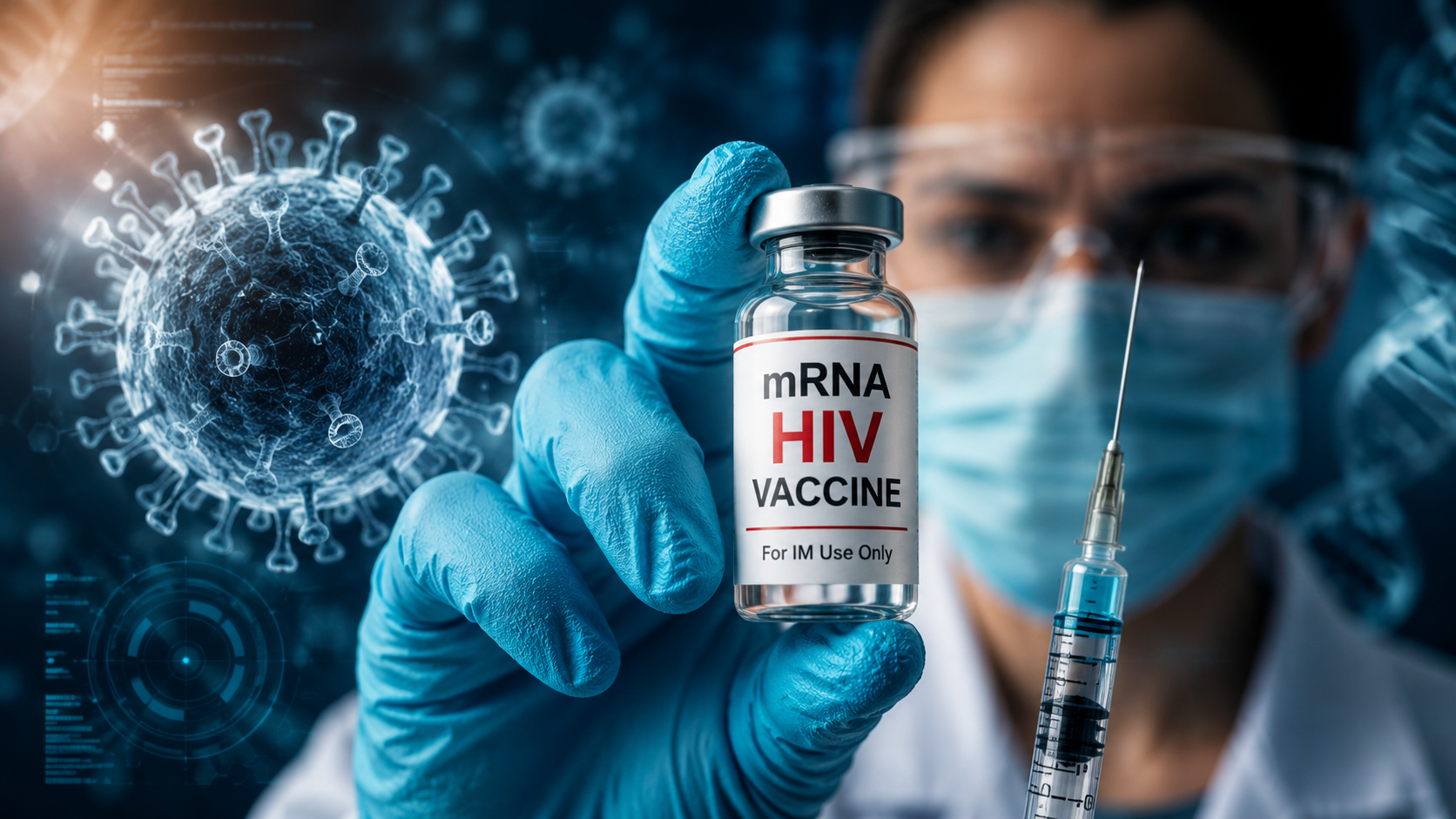
For more than four decades, scientists have been searching for an effective vaccine against HIV, the virus that causes AIDS. Despite tremendous advances in treatment and prevention, developing a vaccine has proven to be one of the most difficult challenges in medical research. HIV mutates rapidly, attacks critical components of the immune system, and exists in many different strains worldwide.
Now, a new generation of experimental HIV vaccines based on messenger RNA (mRNA) technology is generating excitement among researchers. While these vaccines are still being studied and are not yet approved for public use, they represent a promising new approach in the ongoing effort to prevent HIV infection.
The attention surrounding mRNA HIV vaccine research is not just about one vaccine candidate—it’s about what the technology could mean for the future of infectious disease prevention. Here are 10 reasons this research is attracting global interest.
1. HIV Has Long Been One of Medicine’s Toughest Challenges
Unlike many viruses for which successful vaccines already exist, HIV presents unique obstacles.
The virus changes rapidly, allowing it to evade immune responses that might otherwise stop an infection. It also targets immune cells themselves, making it particularly difficult for the body to mount lasting protection.
Because of these challenges, any progress toward an HIV vaccine is considered a major scientific achievement.
2. mRNA Technology Offers a New Approach
Traditional vaccines often use weakened viruses, inactivated viruses, or pieces of pathogens to stimulate immunity.
mRNA vaccines work differently. They provide cells with genetic instructions that help the immune system recognize specific viral targets. This approach allows researchers to design and modify vaccine candidates more efficiently than many traditional methods.
The flexibility of mRNA technology is one reason it has attracted so much attention.
3. Researchers Can Adapt Designs More Quickly
One of the advantages of mRNA platforms is their ability to be updated relatively rapidly.
As scientists learn more about HIV’s structure and behavior, they can adjust vaccine designs to test new strategies. This adaptability is especially valuable when studying viruses that mutate frequently.
Researchers hope this flexibility will help them overcome some of the barriers that have slowed vaccine development in the past.
4. The Goal Is to Train the Immune System More Effectively
A successful HIV vaccine must do more than simply trigger an immune response.
Scientists are working to develop vaccine candidates that encourage the production of broadly neutralizing antibodies—specialized immune defenses capable of recognizing and blocking multiple HIV variants.
Many current research efforts focus on teaching the immune system to generate these powerful protective responses.
5. Decades of Research Have Laid the Foundation
Although mRNA technology is relatively new in the public eye, HIV vaccine research has been ongoing for decades.
Scientists have spent years studying HIV’s biology, identifying vulnerable parts of the virus, and understanding how the immune system responds to infection. The latest mRNA candidates build upon this extensive body of knowledge.
Today’s progress is the result of countless earlier discoveries.
6. Global Collaboration Is Accelerating Research
HIV vaccine development is one of the most collaborative efforts in modern science.
Universities, biotechnology companies, nonprofit organizations, public health agencies, and international research institutions are working together to share data, conduct studies, and evaluate new approaches.
This level of cooperation helps speed up scientific progress and encourages innovation.
7. Early Clinical Trials Are Providing Valuable Information
Experimental vaccines must undergo extensive testing before they can be considered safe and effective.
Early-stage clinical trials help researchers understand how the body responds to vaccine candidates, evaluate safety profiles, and identify areas for improvement. Even when studies do not produce the desired results, they often provide critical insights that guide future development.
Every trial contributes to the broader understanding of HIV prevention.
8. Success Could Transform Global Public Health
HIV remains a major global health challenge, affecting millions of people worldwide.
An effective vaccine could dramatically reduce new infections and complement existing prevention strategies such as testing, treatment, and preventive medications. Public health experts view a vaccine as one of the most powerful tools that could eventually help control the epidemic.
The potential impact extends far beyond individual patients.
9. The Research May Benefit Other Diseases
Advances made during HIV vaccine development often influence other areas of medicine.
The knowledge gained from studying immune responses, viral biology, and vaccine design can contribute to future research on other infectious diseases. Likewise, improvements in mRNA technology developed for HIV may have applications in other vaccines and therapies.
Scientific breakthroughs frequently produce benefits beyond their original goals.
10. It Represents a New Chapter in Vaccine Science
Perhaps the biggest reason for the excitement is what this research symbolizes.
For years, HIV has challenged some of the world’s best scientists. The emergence of mRNA-based approaches demonstrates how new technologies can breathe fresh life into longstanding scientific problems. Researchers now have tools that simply did not exist when HIV was first identified in the early 1980s.
While significant hurdles remain, the field is entering a new and potentially transformative phase.
Why This Research Matters
The attention surrounding mRNA HIV vaccines reflects both the magnitude of the challenge and the promise of the technology. HIV continues to affect communities around the world, making the search for an effective vaccine one of the most important goals in infectious disease research.
Experts emphasize that vaccine development is a complex process that requires careful testing, rigorous scientific review, and patience. Not every experimental candidate will succeed, and meaningful progress often comes through incremental advances rather than dramatic breakthroughs.
Still, the current wave of research has given scientists new reasons for optimism. By combining decades of HIV research with cutting-edge mRNA technology, researchers are exploring possibilities that once seemed out of reach.
Whether or not a specific vaccine candidate ultimately succeeds, the work being done today is expanding scientific knowledge and bringing researchers closer to a goal that has inspired generations of scientists: a safe and effective vaccine against HIV.