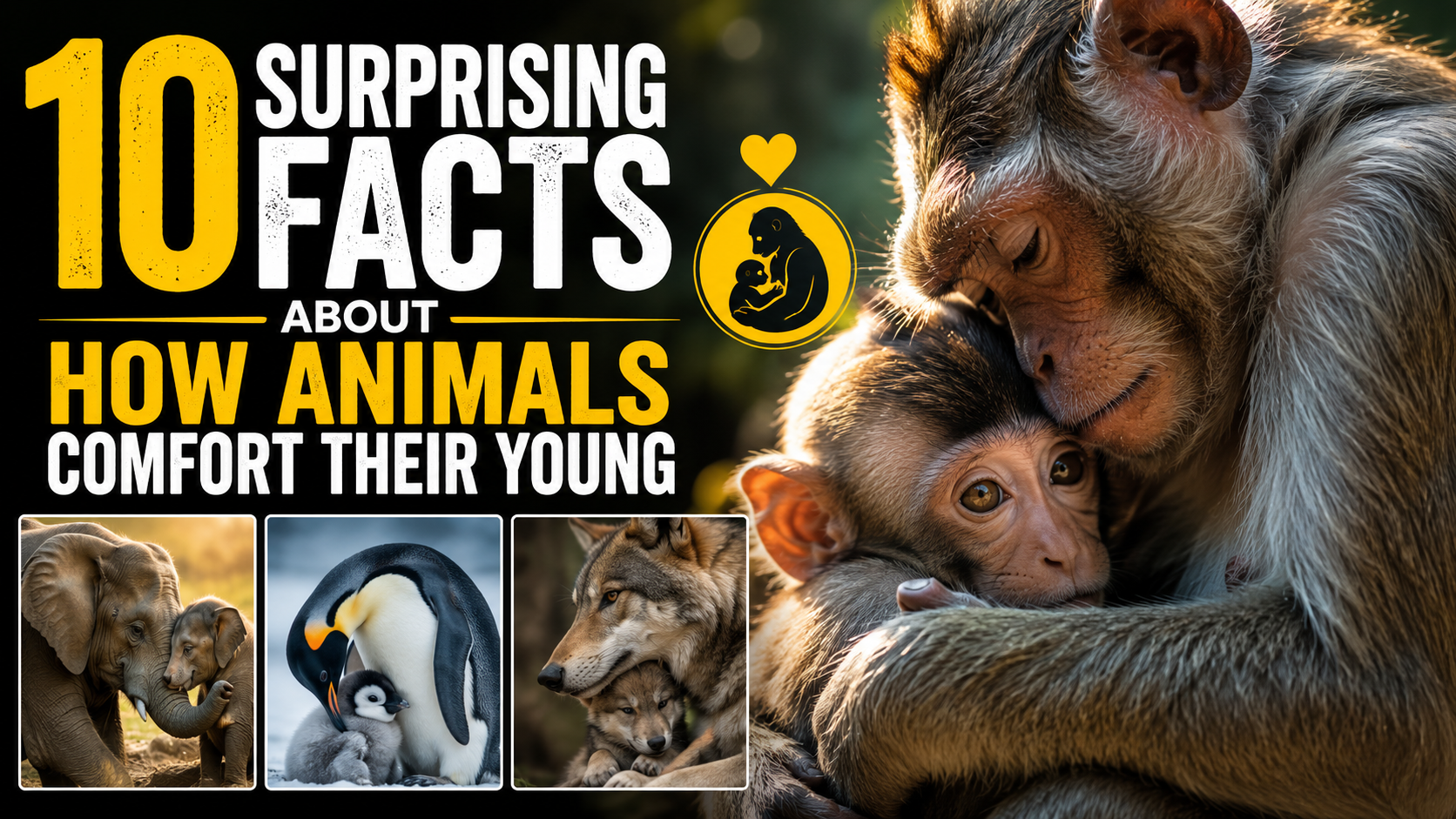
When people think about parenting, they usually picture human families. We often assume that comforting a frightened child, offering reassurance, or providing emotional support are uniquely human behaviors. However, decades of research into animal behavior tell a very different story.
Across the animal kingdom, parents invest enormous amounts of time and energy caring for their offspring. From elephants gently touching distressed calves with their trunks to chimpanzee mothers cuddling anxious infants, many species display behaviors that appear remarkably similar to the nurturing instincts humans experience.
While scientists are careful not to assign human emotions to animals without evidence, growing research suggests that many species engage in sophisticated forms of caregiving that go far beyond simply providing food and protection. These behaviors help young animals feel secure, learn essential survival skills, and develop healthy social relationships.
Here are ten surprising facts about how animals comfort their young and what these behaviors reveal about life in the natural world.
1. Physical Contact Is One of Nature’s Most Powerful Comfort Tools
One of the most universal forms of comfort among animals is touch.
From the moment they are born, many young animals rely heavily on physical contact with their parents. This contact provides warmth, protection, and reassurance during vulnerable stages of development.
Primates often carry infants close to their bodies for extended periods. Kangaroo joeys remain safely tucked inside their mother’s pouch. Elephant calves frequently stay in close physical contact with their mothers and other members of the herd.
Research suggests that physical closeness can help reduce stress and strengthen bonds between parent and offspring.
For many species, touch serves as a powerful form of communication long before young animals are capable of understanding more complex social signals.
2. Mothers Often Recognize Distress Signals Immediately
Parents throughout the animal kingdom appear highly sensitive to signs that their young are uncomfortable, frightened, or in danger.
Many species can recognize distress through:
- Vocal sounds
- Body movements
- Facial expressions
- Behavioral changes
A mother chimpanzee, for example, may quickly respond when her infant cries out after becoming separated. Similarly, bird parents often react instantly when chicks signal discomfort or hunger.
This responsiveness increases the likelihood that vulnerable offspring receive assistance when they need it most.
Scientists believe such behaviors evolved because attentive caregiving improves survival rates.
3. Comforting Behaviors Exist in More Species Than Most People Realize
When people think of nurturing animals, mammals usually come to mind first.
However, caregiving behaviors appear across a surprisingly wide range of species.
Researchers have documented comforting and protective actions among:
- Elephants
- Gorillas
- Chimpanzees
- Dolphins
- Wolves
- Birds
- Certain fish species
Although the specific behaviors differ, the underlying goal often remains similar: helping offspring remain safe, calm, and supported during development.
This widespread pattern highlights the importance of parental investment in the natural world.
4. Vocal Reassurance Plays a Major Role
Just as human parents use soothing voices to calm children, many animals rely on vocal communication to reassure their young.
Different species use unique sounds to signal safety and maintain connection.
Examples include:
- Whale calls
- Dolphin whistles
- Bird songs
- Primate grunts
- Elephant rumbles
These sounds often help offspring locate parents, stay close to family groups, and feel secure in unfamiliar environments.
In some species, vocal communication begins almost immediately after birth.
Researchers continue studying these interactions to better understand how animals use sound to strengthen family bonds.
5. Comfort Helps Young Animals Learn About the World
Comforting behaviors are not only about reducing fear.
They also create a safe environment for learning.
Young animals constantly face new experiences, including unfamiliar surroundings, social interactions, and potential threats.
When parents provide reassurance during these moments, offspring may become more willing to explore and develop confidence.
Scientists sometimes compare this to the concept of a “secure base” in human development—a trusted source of safety that encourages healthy exploration.
Many animal parents appear to serve a similar function.
6. Social Groups Often Help Raise and Comfort Young
In some species, caregiving extends beyond biological parents.
Elephants provide one of the best-known examples.
Within elephant herds, multiple females often participate in caring for calves. These “allomothers” may help guide, protect, and comfort younger animals.
Similar behaviors have been observed among:
- Primates
- Wolves
- Meerkats
- Certain bird species
This cooperative approach increases the level of support available to offspring and strengthens social bonds within the group.
It also demonstrates that caregiving can be a shared responsibility rather than an individual task.
7. Play Can Be a Form of Comfort
Play is often viewed as entertainment, but researchers increasingly recognize its importance in emotional development.
Many animal parents engage in playful interactions with their young.
Examples include:
- Chasing games
- Gentle wrestling
- Mock hunting
- Object play
These activities help offspring develop physical skills, social abilities, and confidence.
Play can also reduce stress and strengthen emotional bonds between parents and young.
For developing animals, learning through play often occurs alongside feelings of safety and comfort.
8. Some Animals Show Signs of Emotional Support
One of the most fascinating areas of animal behavior research involves emotional responses.
While scientists remain cautious about interpreting animal emotions, growing evidence suggests that some species respond to distressed offspring in ways that appear supportive.
Researchers have documented behaviors such as:
- Gentle touching
- Staying close to frightened young
- Increased grooming
- Protective positioning
Primates, elephants, and dolphins have all demonstrated behaviors that many experts believe reflect advanced social awareness.
Although animal emotions may not mirror human emotions exactly, these findings suggest that emotional caregiving may be more widespread than previously thought.
9. Comforting Behaviors Can Influence Long-Term Development
Early experiences often shape future behavior.
Research involving various species indicates that offspring receiving consistent care and protection may develop differently than those experiencing chronic stress or neglect.
Supportive caregiving has been associated with:
- Improved social skills
- Greater confidence
- Better stress management
- Stronger group integration
While outcomes vary across species, the general pattern suggests that nurturing environments play an important role in healthy development.
This principle appears remarkably consistent throughout nature.
10. Animal Parenting Is More Complex Than Many People Imagine
Perhaps the most surprising fact of all is the overall sophistication of animal caregiving.
For many years, animal parenting was often described in purely instinctive terms.
Modern research paints a much richer picture.
Parents across numerous species make decisions, adapt to changing situations, respond to individual offspring needs, and participate in complex social interactions.
Their caregiving involves communication, learning, protection, teaching, and emotional responsiveness.
These discoveries continue challenging outdated assumptions about the gap between human and animal behavior.
Why Comfort Matters in Nature
From an evolutionary perspective, comforting behavior serves important practical purposes.
Young animals face countless risks, including predators, environmental hazards, social challenges, and competition for resources.
Parents who successfully help offspring remain safe and resilient improve the likelihood that those young will survive and eventually reproduce.
Over generations, behaviors that support offspring development become reinforced through natural selection.
What may appear as simple affection often carries significant survival value.
The Science Behind Parent-Offspring Bonds
Researchers studying animal behavior frequently focus on attachment and bonding.
Strong parent-offspring relationships provide several advantages:
- Increased protection
- Better learning opportunities
- Improved social development
- Enhanced emotional regulation
- Greater survival rates
In many species, bonding begins shortly after birth and remains critical throughout early development.
The strength of these relationships often influences how successfully young animals adapt to their environments.
Lessons Humans Can Learn From Animal Caregiving
Observing animal parenting offers valuable insights into the importance of nurturing relationships.
Although human families are far more complex than those of most animals, some fundamental principles appear surprisingly universal.
Across species, successful caregiving often involves:
- Responsiveness
- Protection
- Communication
- Patience
- Emotional support
These behaviors help create environments where young individuals can grow, learn, and thrive.
The similarities remind us that caregiving is one of nature’s most enduring and essential strategies.
New Discoveries Continue to Surprise Scientists
Animal behavior research is advancing rapidly.
Modern technologies such as:
- High-resolution video monitoring
- GPS tracking
- Behavioral analysis software
- Artificial intelligence
allow scientists to observe family interactions in unprecedented detail.
As researchers gather more data, they continue uncovering new examples of sophisticated caregiving across species.
Many experts believe we are only beginning to understand the full complexity of animal family life.
Final Thoughts
The image of animal parenting as purely instinctive is gradually giving way to a more nuanced understanding. Research increasingly reveals that many species engage in complex caregiving behaviors that provide comfort, security, and support for their young.
From gentle physical contact and reassuring vocalizations to cooperative caregiving and playful learning experiences, animals demonstrate a remarkable range of nurturing strategies. These behaviors not only help offspring survive but also contribute to healthy emotional, social, and physical development.
While animals and humans are different in countless ways, studying how animals comfort their young highlights an important truth: throughout nature, strong bonds between parents and offspring play a crucial role in helping the next generation thrive. The more scientists learn about these relationships, the more they reveal the extraordinary depth and sophistication of life in the animal kingdom.







