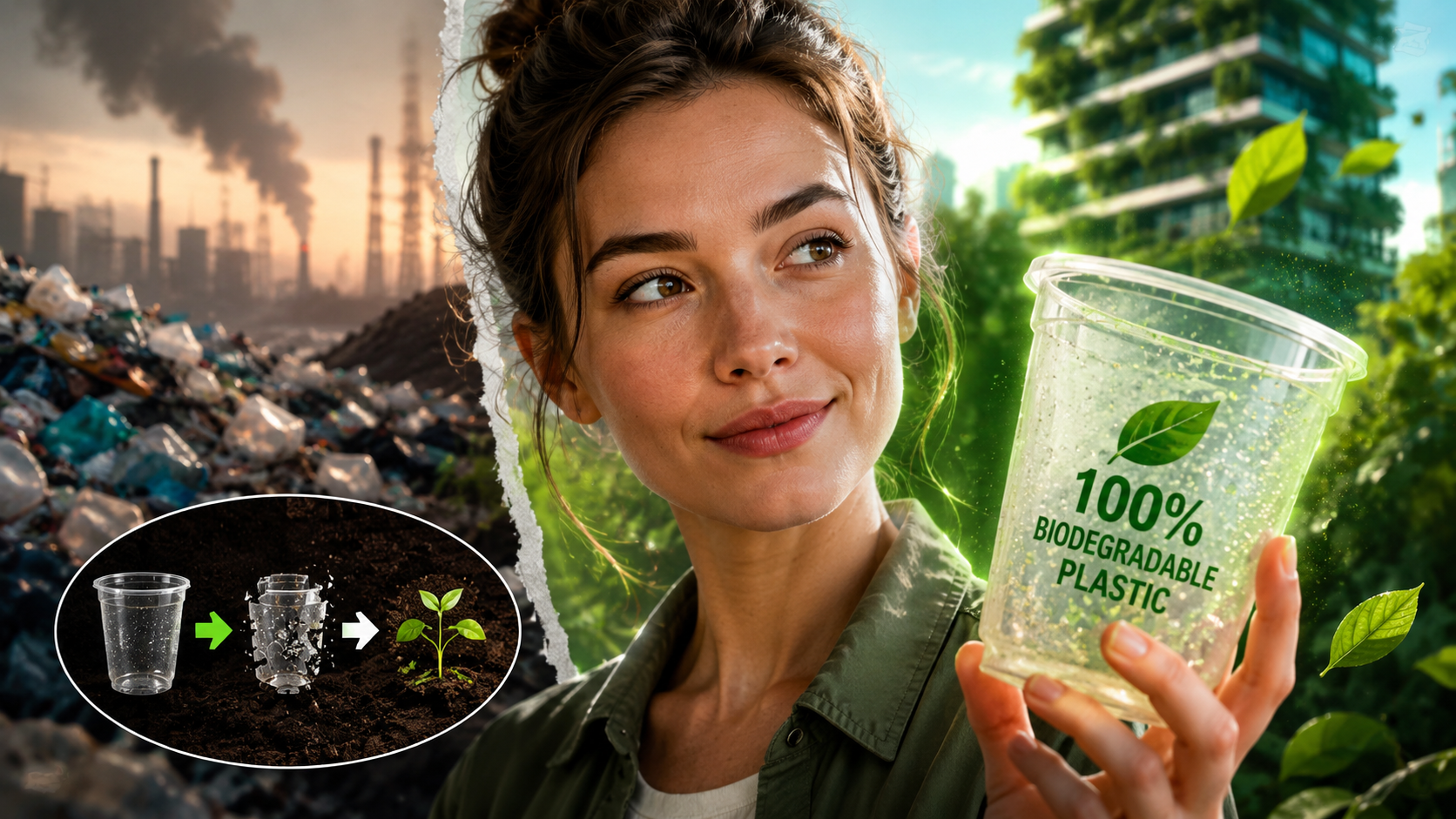
Plastic has become an essential part of modern life. It is used in everything from food packaging and medical equipment to electronics and clothing. However, the durability that makes plastic so useful has also created one of the world’s biggest environmental challenges. Conventional plastics can persist in the environment for hundreds of years, contributing to pollution on land and in the oceans.
In response, scientists and companies around the world have been developing biodegradable plastics—materials designed to break down more quickly under certain conditions. While these innovations hold tremendous promise, many people misunderstand what biodegradable plastics are and how they actually work.
Here are ten things most people don’t realize about biodegradable plastic innovations.
1. Not All Biodegradable Plastics Are the Same
The term “biodegradable plastic” covers a wide variety of materials.
Some biodegradable plastics are made from plant-based sources such as corn starch or sugarcane, while others are produced from petroleum-derived materials that have been engineered to break down under specific conditions.
Different products have different chemical compositions, meaning they do not all behave the same way once they are discarded.
2. Biodegradable Doesn’t Mean They Disappear Instantly
One of the biggest misconceptions is that biodegradable plastics vanish quickly after being thrown away.
In reality, many require particular conditions—such as specific temperatures, moisture levels, or the presence of certain microorganisms—to break down effectively.
Without these conditions, some biodegradable plastics may persist much longer than people expect.
3. Some Need Industrial Composting Facilities
Certain biodegradable plastics are designed to decompose in industrial composting systems.
These facilities carefully control temperature, humidity, and microbial activity to accelerate the breakdown process. A biodegradable product placed in a backyard compost pile or landfill may not decompose in the same way.
Proper disposal methods are often just as important as the material itself.
4. Many Are Made From Renewable Resources
A significant number of biodegradable plastics are produced using renewable plant materials.
Corn, cassava, sugarcane, and other agricultural products can serve as feedstocks for creating certain bioplastics. Using renewable resources may reduce dependence on fossil fuels and contribute to more sustainable production systems.
However, researchers continue studying the best ways to balance material production with agricultural and environmental considerations.
5. They Can Help Reduce Certain Types of Pollution
Biodegradable plastics have the potential to lessen some environmental impacts associated with traditional plastics.
When appropriately designed and properly managed, these materials may reduce the persistence of waste in specific settings and offer alternatives for products that are difficult to recycle.
However, experts generally view them as one part of a broader strategy that also includes reducing waste, increasing recycling, and improving waste-management systems.
6. Scientists Are Creating Plastics From Unexpected Sources
Innovation in this field is moving rapidly.
Researchers have explored producing biodegradable plastics from algae, food waste, agricultural by-products, and even microorganisms. Some bacteria naturally produce compounds that can be transformed into biodegradable materials.
These discoveries are opening new possibilities for more sustainable manufacturing.
7. Biodegradable Plastics Still Require Responsible Disposal
A biodegradable label does not mean a product can simply be discarded anywhere.
Littering remains harmful regardless of the material involved. Improper disposal can still create environmental problems and may prevent certain biodegradable products from breaking down as intended.
Responsible waste management remains essential.
8. Some Biodegradable Plastics Can Be Surprisingly Durable
People often assume biodegradable materials are weak or short-lived.
In reality, many modern biodegradable plastics are engineered to perform similarly to conventional plastics during their intended use. They can possess impressive strength, flexibility, and durability while still being designed to degrade under appropriate conditions.
This combination of functionality and improved end-of-life characteristics is one reason the field continues to attract scientific interest.
9. The Technology Is Constantly Improving
Biodegradable plastics are the result of ongoing research and innovation.
Scientists are continually developing new materials that aim to improve performance, reduce production costs, and achieve more efficient degradation under practical conditions.
As technology advances, future biodegradable materials may become increasingly versatile and environmentally beneficial.
10. They Represent a Shift in How We Think About Materials
Perhaps the most important aspect of biodegradable plastic innovation is the change in perspective it represents.
For much of the modern era, products were designed primarily for performance and convenience, with less attention given to what would happen after they were discarded. Biodegradable plastic research encourages a more complete approach by considering an item’s entire life cycle.
This shift in thinking is helping inspire new ideas about material design, sustainability, and responsible resource use.
Final Thoughts
Biodegradable plastic innovations are among the most promising developments in the effort to address global plastic pollution. Yet these materials are often more complex than they first appear. They vary widely in composition, require specific conditions to break down effectively, and are not substitutes for responsible waste management.
At the same time, advances in biodegradable plastics demonstrate how science and innovation can contribute to more sustainable solutions. By developing materials made from renewable resources and designing products with their entire life cycle in mind, researchers are reimagining how plastics can fit into a more environmentally conscious future.
The story of biodegradable plastics is still unfolding, but one thing is clear: these innovations are changing the conversation about materials, waste, and our relationship with the products we use every day.







