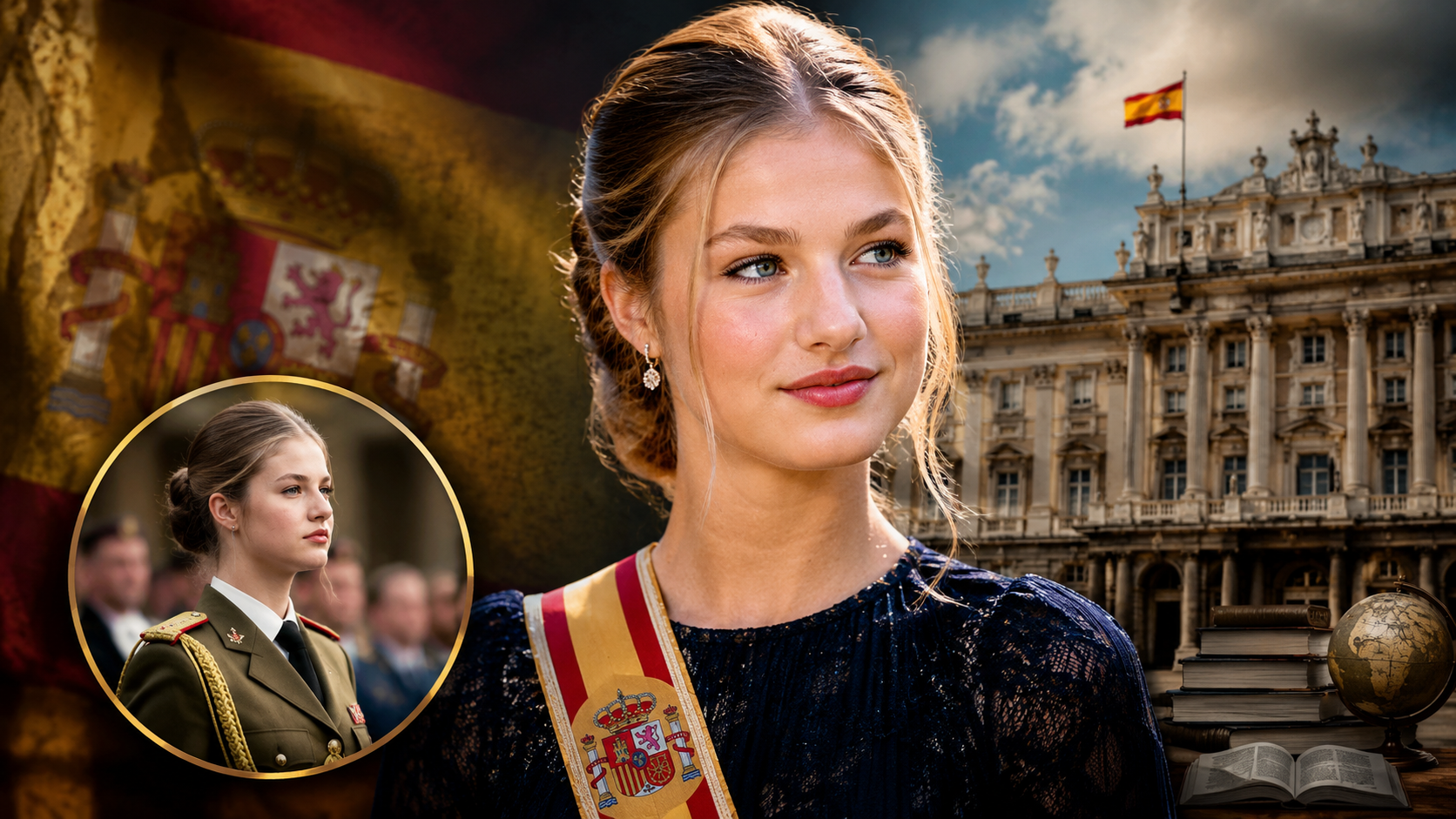
Royal families have always fascinated the public, but modern royals are now expected to do far more than simply attend ceremonies and represent tradition. Today’s future monarchs are being raised in a world shaped by global politics, media scrutiny, technology, and rapidly changing social expectations.
Because of this, education has become one of the most important parts of preparing young royals for future leadership.
Few examples reflect this shift more clearly than the upbringing and education of Spain’s future queen, Princess Leonor of Spain.
As the eldest daughter of King Felipe VI and Queen Letizia, Princess Leonor has spent much of her life under public attention while quietly preparing for the enormous responsibilities that may one day come with the Spanish crown.
What has especially captured public interest is the way her education blends royal tradition with modern leadership training. From international studies to military preparation, her path reflects how European monarchies are evolving for a new generation.
Here are 11 fascinating facts about Spain’s future queen and the remarkable education shaping her future.
1. She Became Heir to the Throne at a Very Young Age
Princess Leonor was born into royal life, but her future role became official in 2014 when her father, King Felipe VI, ascended the throne following the abdication of King Juan Carlos I.
At that moment, Leonor officially became the heir presumptive to the Spanish throne.
Despite her young age, the transition immediately placed her in a position of enormous historical importance. From that point forward, much of her education and public preparation became focused on future leadership responsibilities.
Her upbringing has since been carefully shaped around diplomacy, communication, history, and national service.
2. She Has Studied in an International Environment
One reason many people admire Princess Leonor’s education is its international focus.
Rather than remaining entirely within traditional royal institutions in Spain, she attended the UWC Atlantic College in Wales, one of the world’s best-known international boarding schools.
The school is famous for bringing together students from dozens of countries and encouraging cultural understanding, leadership, and global awareness.
This experience exposed Leonor to diverse perspectives beyond royal life and allowed her to interact with students from many different backgrounds.
Modern monarchies increasingly value this kind of international education because future leaders are expected to understand global issues, diplomacy, and multicultural communication.
3. Her Education Combines Tradition and Modern Leadership
Royal education today looks very different from previous centuries.
Princess Leonor’s studies reportedly include subjects connected to politics, history, languages, international relations, ethics, and communication skills — all areas considered essential for a modern constitutional monarch.
At the same time, she is still being trained in royal protocol, Spanish history, and institutional responsibilities tied to the monarchy.
This combination reflects the changing role of modern European royalty.
Future monarchs are no longer expected to rule politically, but they are expected to represent national identity, stability, diplomacy, and public service at the highest level.
4. She Is Fluent in Multiple Languages
Like many modern royals, Princess Leonor has received extensive language training.
In addition to Spanish, she has studied English and reportedly has exposure to other languages as part of her international education.
Multilingual ability is increasingly important for royals because they regularly interact with diplomats, world leaders, charities, and international organizations.
Language skills also help future monarchs connect more naturally with global audiences and represent their countries abroad more effectively.
For many observers, her language abilities symbolize the modernization of the Spanish monarchy.
5. Military Training Is Part of Her Preparation
One of the most discussed aspects of Princess Leonor’s preparation for future leadership is her military training.
Like several future European monarchs, she has undertaken formal military education as part of her royal responsibilities.
This training is not only symbolic. In constitutional monarchies, military preparation is often viewed as a way to strengthen discipline, leadership skills, resilience, and understanding of national institutions.
It also reflects historical traditions connected to the monarchy’s relationship with the armed forces.
For many Spaniards, this aspect of her education demonstrates commitment to duty and public service.
6. Her Mother’s Background Influenced Her Upbringing
Princess Leonor’s upbringing has also attracted attention because of her mother, Queen Letizia.
Before becoming queen, Letizia worked as a journalist and television news presenter. Her professional background is considered unusually modern compared to many traditional royal paths.
Many royal observers believe Queen Letizia has played a major role in ensuring her daughters receive a balanced, academically focused, and grounded education.
This modern influence may partly explain why Leonor’s public image often appears more relatable and contemporary than older royal stereotypes.
7. Public Speaking Became Part of Her Training Early
One skill that stands out in Princess Leonor’s development is public communication.
From a relatively young age, she has delivered speeches at official events, including national ceremonies and awards presentations.
Public speaking is considered one of the most important responsibilities for modern royals because they frequently serve as symbolic representatives of national unity and cultural identity.
Observers have noted her calm demeanor and growing confidence during official appearances.
These experiences are likely designed to prepare her for the intense public visibility that comes with royal leadership.
8. She Represents a New Generation of European Royalty
Princess Leonor belongs to a younger generation of royals being raised during a time of rapid social and technological change.
Unlike previous generations, today’s future monarchs grow up under constant social media attention, instant global news coverage, and increased public scrutiny.
As a result, their education now includes media awareness, image management, and modern communication strategies alongside traditional studies.
Leonor’s upbringing reflects how royal institutions are adapting to remain relevant in the 21st century.
9. She Balances Public Duty With Personal Privacy
Despite global public interest, Spain’s royal family has generally tried to maintain a degree of normalcy and privacy around Princess Leonor’s life.
Compared to some celebrity-style royal coverage seen elsewhere, her public appearances remain relatively controlled and carefully managed.
This balance appears intentional.
Many modern royal families aim to protect younger heirs from excessive media pressure while gradually preparing them for future responsibilities.
As a result, Leonor’s public image often feels more focused on education, preparation, and service than entertainment or controversy.
10. Her Future Role Carries Historical Importance
If Princess Leonor eventually becomes queen, she would represent a significant historical figure for Spain’s monarchy.
Her future leadership would symbolize continuity for one of Europe’s oldest royal institutions while also representing generational change.
Because constitutional monarchies rely heavily on public trust and symbolic leadership, much attention is placed on how future monarchs are educated and prepared.
Every aspect of her development is therefore viewed not only as personal growth, but also as preparation for national responsibility.
11. Her Education Reflects the Changing Nature of Leadership
Perhaps the most fascinating part of Princess Leonor’s story is what it says about modern leadership itself.
Today’s leaders — royal or otherwise — are expected to possess far more than status or tradition. They are expected to communicate effectively, understand global issues, adapt to change, and connect with people authentically.
Leonor’s education appears designed around these expectations.
Her international studies, language skills, military training, and public speaking experiences all point toward a broader shift in how future leaders are prepared.
For many people, her story reflects the idea that leadership today is increasingly based on education, emotional intelligence, adaptability, and service rather than privilege alone.
Final Thoughts
Princess Leonor’s remarkable education has attracted global attention because it represents far more than royal tradition.
Her upbringing reflects how modern monarchies are evolving to prepare future leaders for a rapidly changing world. Through international education, public service preparation, military training, and communication skills, Spain’s future queen is being shaped for responsibilities that extend far beyond ceremony alone.
At the same time, her story continues to fascinate people because it blends history, tradition, modernity, and personal growth in a uniquely human way.
As public interest in young royals continues worldwide, many people will undoubtedly keep watching how Princess Leonor’s journey unfolds in the years ahead.







