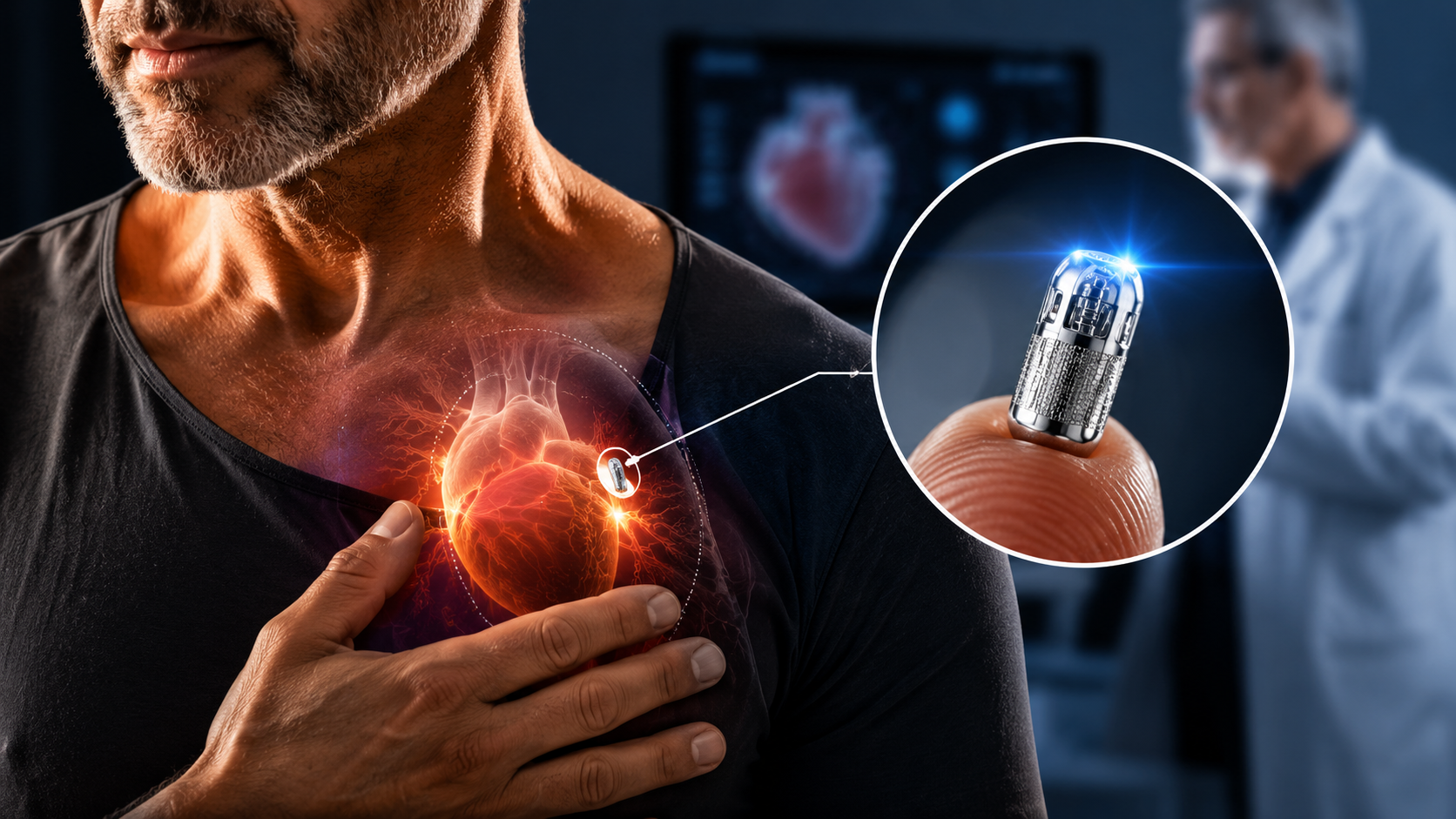
For decades, pacemakers have helped millions of people maintain healthy heart rhythms. These life-saving devices monitor the heart’s electrical activity and deliver small pulses when needed to keep the heartbeat steady. While conventional pacemakers have transformed cardiac care, they often rely on wires, known as leads, that connect the device to the heart.
Now, researchers and medical engineers are developing new generations of pacemakers that can operate without traditional wires. Some experimental systems use wireless energy transfer, miniature implantable electronics, or innovative designs that reduce the need for bulky hardware. These advances are generating excitement because they could make future devices smaller, safer, and more comfortable for patients.
Here are 11 incredible facts about the pacemaker technologies being developed without traditional wires.
1. The Device Can Be Much Smaller Than Conventional Pacemakers
Traditional pacemakers usually require a battery-powered pulse generator implanted beneath the skin, along with wires that connect to the heart.
New wire-free designs can dramatically reduce the size of the implant. Some experimental devices are small enough to fit directly within the heart or occupy only a fraction of the space required by conventional systems.
Miniaturization is one of the biggest advantages of these emerging technologies.
2. Eliminating Wires May Reduce Certain Complications
Pacemaker leads are highly effective, but they can occasionally become damaged, displaced, or infected.
By removing or minimizing the need for wires, researchers hope to reduce complications associated with leads. Fewer implanted components may also simplify some procedures and improve long-term reliability.
This is one of the primary reasons scientists are pursuing leadless designs.
3. Some Devices Use Wireless Energy Transfer
One of the most fascinating developments involves powering medical implants without conventional batteries or wired connections.
Researchers are investigating systems that use wireless energy transmission through radio frequencies, ultrasound, magnetic fields, or other technologies. These methods could potentially provide power to implanted devices without requiring large internal batteries.
The concept sounds futuristic, but it is already being actively studied.
4. The Heart’s Natural Motion May Help Generate Energy
Some experimental pacemaker designs explore harvesting energy from the body’s own movements.
The continuous motion of the beating heart, blood flow, or breathing may provide tiny amounts of energy that can be converted into electricity. While the power generated is small, researchers are investigating whether it could help support certain implantable devices.
If successful, future implants might partially power themselves.
5. The Technology Combines Medicine and Advanced Engineering
Creating a wire-free pacemaker requires expertise from multiple scientific fields.
Cardiologists, biomedical engineers, materials scientists, electronics specialists, and software developers often collaborate to design these sophisticated devices. The result is a remarkable fusion of medicine and cutting-edge engineering.
Many of the innovations being explored would have been impossible only a few decades ago.
6. Some Leadless Pacemakers Are Already in Clinical Use
What was once a purely experimental concept is increasingly becoming reality.
Certain leadless pacemaker systems have already been approved in various countries for specific patient groups. These devices demonstrate that wire-free cardiac pacing is more than a laboratory idea—it is an emerging part of modern medicine.
Researchers continue working to expand their capabilities and applications.
7. Smaller Devices Can Mean Less Invasive Procedures
Traditional pacemaker implantation often requires creating a pocket beneath the skin and threading leads through blood vessels.
Many leadless systems can be implanted using minimally invasive techniques that avoid some of these steps. This may reduce recovery times and lower procedural complexity for certain patients.
Less invasive approaches remain a major goal throughout medical device development.
8. Future Designs Could Communicate With Multiple Implants
Scientists are exploring networks of tiny implantable devices that communicate wirelessly with one another.
Rather than relying on a single large device, future systems might coordinate multiple miniature components placed in different parts of the heart. These devices could work together to monitor cardiac activity and deliver therapy more precisely.
This concept represents a significant departure from traditional pacemaker architecture.
9. Advanced Materials Are Making New Designs Possible
Modern pacemaker research relies heavily on innovative materials.
Flexible electronics, biocompatible polymers, miniature sensors, and specialized coatings help ensure that implants function safely inside the body. Some researchers are even investigating biodegradable components that dissolve naturally after completing their intended purpose.
Materials science plays a crucial role in driving innovation.
10. The Technology Could Improve Patient Comfort
Smaller devices and fewer implanted components may offer quality-of-life benefits.
Patients could potentially experience fewer restrictions related to leads, reduced visibility of implanted hardware, and greater comfort during daily activities. While individual experiences vary, improving patient comfort remains an important design objective.
Medical technology increasingly focuses on both effectiveness and patient experience.
11. This Could Be Just the Beginning
Perhaps the most exciting fact is that wire-free pacemaker technology continues to evolve rapidly.
Researchers are working on next-generation systems that incorporate wireless communication, advanced sensors, remote monitoring, energy harvesting, and even artificial intelligence-assisted decision-making. These developments could reshape how heart rhythm disorders are treated in the coming decades.
What seems groundbreaking today may become standard practice tomorrow.
Why This Innovation Matters
Heart rhythm disorders affect millions of people worldwide, making pacemakers one of the most important medical technologies ever developed. The move toward wire-free and leadless systems reflects a broader trend in healthcare: creating devices that are smaller, smarter, less invasive, and more patient-friendly.
While not every experimental design will become widely available, the progress being made is remarkable. Advances in wireless power, miniaturized electronics, and biomedical engineering are opening possibilities that once belonged to the realm of science fiction.
For patients, these innovations may eventually mean safer procedures, fewer complications, and improved quality of life. For researchers, they represent a glimpse into the future of implantable medicine.
As technology continues to advance, the pacemaker powered without traditional wires may be remembered as an important milestone in the ongoing evolution of modern healthcare.







