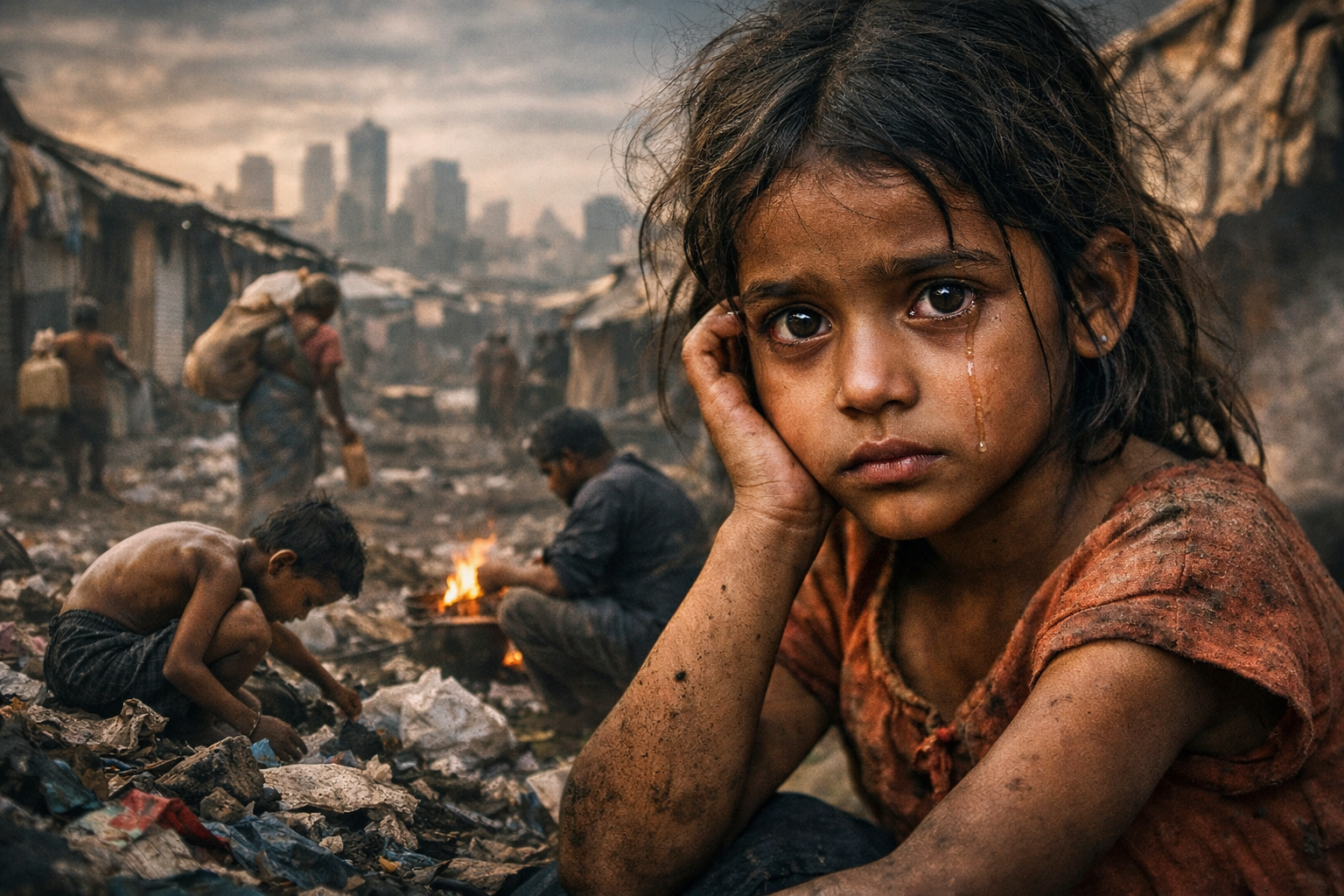
When people hear the phrase global poverty, they often picture a single image: families struggling to survive with very limited resources. While that image reflects a real challenge faced by millions of people, it only scratches the surface of a much larger and more complex issue.
Global poverty is not simply about a lack of money. It is connected to education, healthcare, infrastructure, employment opportunities, political stability, access to clean water, and many other factors that influence daily life. Understanding poverty requires moving beyond stereotypes and looking at the broader systems that shape people’s circumstances.
The good news is that global poverty is not an unsolvable problem. Over the past several decades, significant progress has been made in many parts of the world. At the same time, major challenges remain, particularly in regions affected by conflict, economic instability, and environmental pressures.
The more we understand about poverty, the better equipped we are to discuss solutions and support meaningful change.
Here are 11 important realities about global poverty that many people don’t fully realize.
1. Poverty Is About More Than Income
One of the most common misconceptions is that poverty can be measured solely by how much money a person earns.
Income certainly matters, but poverty is far more complicated.
A family may earn enough to survive financially yet still struggle with poor healthcare, unsafe housing, limited education, unreliable transportation, or lack of access to clean water.
This is why many experts use broader measures when evaluating poverty.
Quality of life depends on multiple factors, and improving economic conditions alone does not automatically solve every challenge people face.
Poverty is often best understood as a lack of opportunity and access rather than simply a lack of income.
2. Poverty Looks Different Around the World
There is no single face of poverty.
Conditions vary dramatically between countries, regions, and even neighboring communities.
In some areas, poverty may involve food insecurity and limited healthcare. In others, it may be characterized by unemployment, inadequate housing, or poor educational opportunities.
Urban poverty often differs from rural poverty.
The challenges faced by a family in a crowded city may look very different from those experienced by a farming community in a remote region.
Understanding these differences is important because effective solutions often depend on local circumstances.
3. Millions Have Escaped Extreme Poverty
While poverty remains a serious global challenge, one encouraging fact is often overlooked.
Over the last several decades, hundreds of millions of people have moved out of extreme poverty.
Economic growth, expanded access to education, improvements in healthcare, technological innovation, and international development efforts have contributed to significant progress in many regions.
This progress demonstrates that poverty is not inevitable.
Positive change is possible when governments, communities, organizations, and individuals work together to create opportunities.
Recognizing success stories can help inform future solutions.
4. Education Plays a Critical Role
Education is one of the most powerful tools for reducing poverty.
Access to quality education helps individuals develop skills, improve employment prospects, and increase earning potential.
It also contributes to better health outcomes, stronger communities, and greater economic mobility.
However, millions of children around the world still face barriers to education, including financial limitations, conflict, gender inequality, and inadequate infrastructure.
Investing in education often creates benefits that extend far beyond a single generation.
When children gain access to learning opportunities, entire communities can benefit.
5. Poverty and Health Are Closely Connected
Health and poverty influence one another in powerful ways.
Poor health can make it difficult for individuals to work, attend school, or care for their families. At the same time, poverty can limit access to healthcare services, nutritious food, clean water, and sanitation.
This creates a cycle that can be difficult to break.
A preventable illness may result in lost income, increased expenses, and reduced opportunities.
Improving healthcare access is therefore an important part of many poverty-reduction strategies.
Healthy populations are often better positioned to pursue education, employment, and economic growth.
6. Women and Girls Often Face Additional Challenges
In many parts of the world, poverty affects women and girls differently than men and boys.
Barriers related to education, employment opportunities, property rights, healthcare access, and social expectations can limit opportunities for women.
When women gain greater access to education, financial resources, and decision-making opportunities, communities frequently experience positive economic and social outcomes.
Supporting gender equality is not only a human rights issue—it is also an important factor in reducing poverty and promoting development.
Empowering women often benefits entire families and future generations.
7. Poverty Is Frequently Linked to Conflict
Conflict and poverty are closely connected.
Communities affected by war, political instability, or violence often face disruptions to education, healthcare, employment, and infrastructure.
Families may be displaced from their homes, businesses may close, and essential services may become unavailable.
Even after conflicts end, rebuilding can take years or decades.
Many of the regions experiencing the highest levels of poverty today are also dealing with the long-term effects of conflict.
Peace and stability play a crucial role in creating opportunities for economic and social development.
8. Access to Basic Infrastructure Matters More Than Many People Realize
Infrastructure may not sound exciting, but it can have a profound impact on quality of life.
Roads, electricity, internet access, transportation systems, water networks, and sanitation services all influence economic opportunity and well-being.
Without reliable infrastructure, it becomes harder for businesses to operate, students to attend school, and families to access healthcare.
Something as simple as a paved road can connect communities to markets, services, and opportunities that were previously difficult to reach.
Infrastructure often serves as a foundation for long-term development.
9. Poverty Can Exist Alongside Economic Growth
Many people assume that economic growth automatically eliminates poverty.
While growth can create opportunities, the relationship is not always straightforward.
A country’s economy may expand while certain populations continue to struggle.
Factors such as inequality, geographic isolation, limited access to education, and unequal distribution of resources can prevent some groups from benefiting fully from economic progress.
This is why many development experts emphasize inclusive growth—economic expansion that creates opportunities for a broad range of people rather than benefiting only a small segment of society.
10. Small Interventions Can Have Large Effects
When discussing global poverty, it’s easy to assume that only massive programs can make a difference.
In reality, relatively small interventions can sometimes produce significant results.
Access to clean water, vaccinations, school supplies, agricultural training, financial services, or basic healthcare can dramatically improve outcomes for individuals and families.
The effectiveness of an intervention often depends less on its size and more on how well it addresses a specific need.
Thoughtful, targeted solutions can create lasting improvements in people’s lives.
11. Solving Poverty Requires Long-Term Commitment
Perhaps the most important thing to understand about global poverty is that meaningful progress takes time.
There are no simple or universal solutions.
Reducing poverty requires coordinated efforts across multiple areas, including education, healthcare, economic development, governance, infrastructure, and environmental sustainability.
Progress often happens gradually.
Improvements that seem small today may produce substantial benefits over years or decades.
Long-term commitment is essential because lasting change typically requires patience, persistence, and collaboration.
Why Misconceptions About Poverty Matter
Misunderstandings about poverty can influence how people think about solutions.
When poverty is viewed as a simple problem with a single cause, proposed solutions often fail to address underlying challenges.
A more accurate understanding encourages thoughtful discussion and more effective approaches.
It helps people recognize that poverty is influenced by a combination of economic, social, political, and environmental factors.
The better informed we are, the more productive our conversations about development and opportunity can become.
The Role of Innovation and Technology
Technology is increasingly playing a role in poverty reduction efforts.
Mobile banking services allow people to access financial tools without traditional bank accounts. Digital education platforms expand learning opportunities. Agricultural technologies help improve food production and resource management.
While technology alone cannot eliminate poverty, it can create new opportunities and increase access to important services.
Innovative solutions are helping communities address challenges in ways that were difficult to imagine just a few decades ago.
As technology continues to evolve, its potential impact may grow even further.
What Individuals Can Do
Global poverty can feel overwhelming because of its scale.
However, individuals are not powerless.
People can:
- Support effective charitable organizations.
- Stay informed about global issues.
- Volunteer skills and expertise.
- Advocate for policies that promote opportunity.
- Support businesses with ethical practices.
- Contribute to educational initiatives.
- Raise awareness through informed discussions.
Small actions may seem insignificant, but collective efforts often create meaningful change over time.
Looking Toward the Future
The future of poverty reduction will likely depend on a combination of economic development, education, healthcare improvements, technological innovation, environmental sustainability, and international cooperation.
Challenges remain, including climate change, conflict, population growth, and economic uncertainty.
At the same time, history demonstrates that progress is possible.
Many of the improvements achieved over recent decades would have seemed unrealistic to previous generations.
That progress offers reason for cautious optimism.
Final Thoughts
Global poverty is one of the most important challenges facing humanity, yet it is often misunderstood.
It is not simply a question of income. It involves opportunity, access, health, education, infrastructure, stability, and countless other factors that influence people’s lives.
Understanding these realities helps move the conversation beyond stereotypes and simplistic assumptions.
It also highlights an important truth: poverty is complex, but it is not permanent.
Around the world, communities, organizations, governments, and individuals continue working toward solutions that create opportunity and improve quality of life.
The more we understand the issue, the better prepared we are to support meaningful progress.
And perhaps that is the most important lesson of all—lasting change begins with informed understanding.







