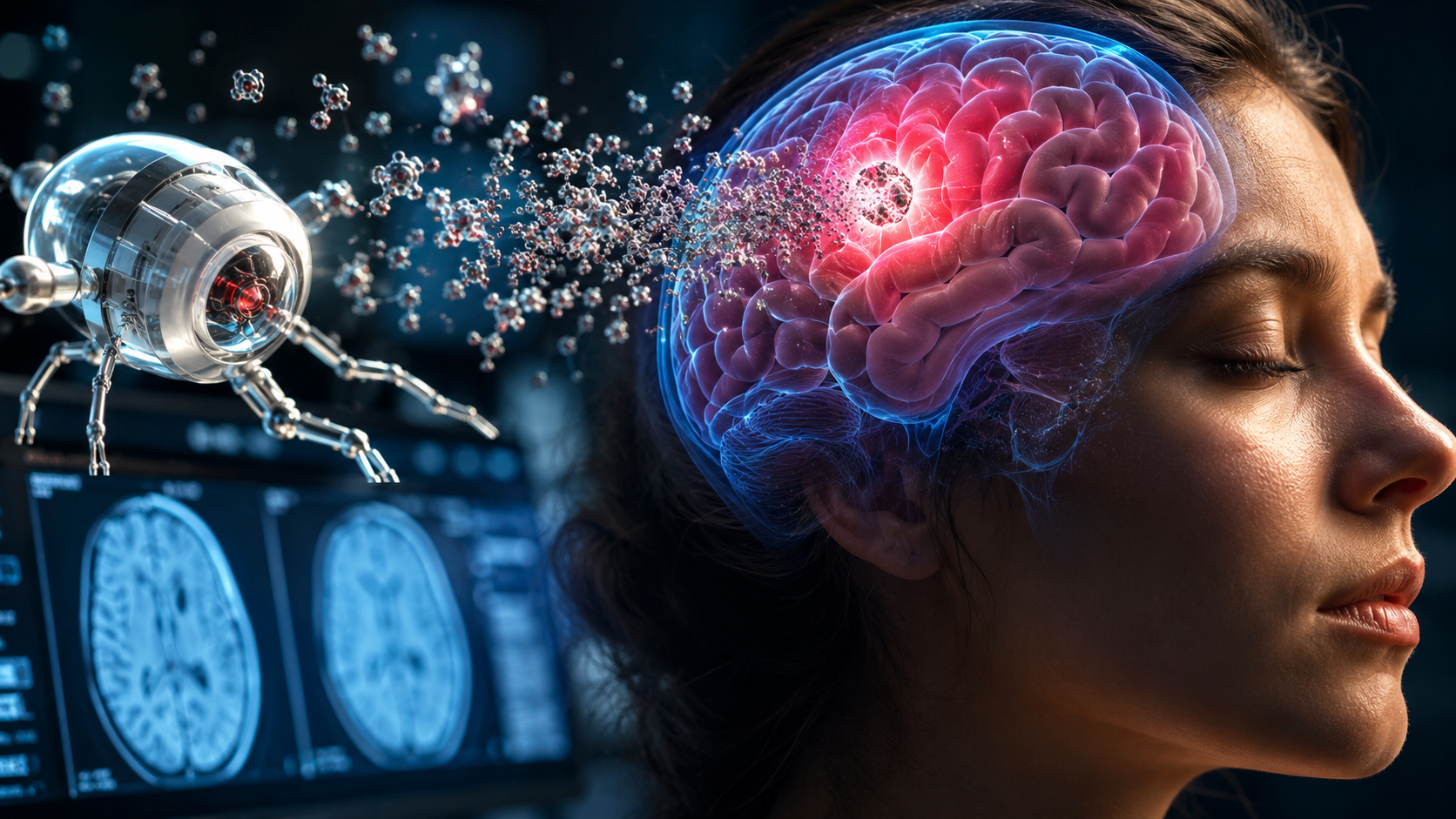
The human brain is often described as the most complex structure in the known universe. Containing billions of neurons and trillions of connections, it controls everything from movement and memory to emotions and decision-making. Despite remarkable advances in medicine, treating brain injuries and neurological disorders remains one of the greatest challenges in healthcare.
In recent years, a groundbreaking field known as nanotechnology has begun offering new possibilities. By working at an incredibly small scale—measured in billionths of a meter—scientists are developing innovative tools that may one day transform how brain diseases and injuries are diagnosed, monitored, and treated.
From delivering medications directly to damaged brain cells to helping repair injured neural tissue, nanotechnology is opening doors that seemed impossible just a few decades ago. While many of these technologies are still under development, the progress has generated tremendous excitement among researchers worldwide.
Here are 12 fascinating facts about brain-healing nanotechnology and why experts believe it could reshape the future of neuroscience.
1. Nanotechnology Operates at an Almost Unimaginably Small Scale
To understand the potential of brain-healing nanotechnology, it helps to appreciate just how tiny these technologies are.
A nanometer is one-billionth of a meter. To put that into perspective, a human hair is roughly 80,000 to 100,000 nanometers wide. Nanoparticles are so small that thousands of them could fit across the width of a single hair.
This microscopic size allows scientists to interact with biological structures at the cellular and even molecular level, creating opportunities that conventional medical technologies cannot easily achieve.
2. It May Help Solve One of Neuroscience’s Biggest Challenges
The brain is protected by a highly selective defense system called the blood-brain barrier.
This barrier serves an essential purpose by preventing harmful substances from entering the brain. However, it also blocks many potentially beneficial medications, making neurological disorders difficult to treat.
Researchers are developing specialized nanoparticles capable of crossing or bypassing this barrier more effectively. These microscopic carriers may eventually deliver drugs directly to targeted brain regions, increasing treatment efficiency while reducing unwanted side effects elsewhere in the body.
This capability is one of the primary reasons nanotechnology has attracted so much attention in neuroscience.
3. Nanoparticles Can Function as Precision Drug Delivery Systems
Traditional medications often travel throughout the entire body, even when only one specific area requires treatment.
Nanotechnology offers the possibility of precision targeting. Scientists can design nanoparticles to carry medications directly to damaged brain cells or diseased tissues.
This targeted approach may allow lower drug doses while improving effectiveness. By concentrating treatment where it is needed most, researchers hope to minimize systemic side effects and enhance therapeutic outcomes.
Such precision medicine represents a major shift from many traditional treatment methods.
4. Brain Tumor Treatment Could Become More Effective
Brain tumors remain among the most difficult cancers to treat because of their location and the challenges associated with delivering therapies safely.
Nanotechnology is being explored as a way to improve the delivery of chemotherapy drugs to brain tumors. Researchers are investigating nanoparticles that can seek out tumor cells while sparing healthy tissue.
Some experimental systems are also designed to release medications gradually over time, maintaining therapeutic levels for longer periods.
Although much of this work remains in the research phase, early findings suggest promising possibilities for future cancer treatment strategies.
5. Nanotechnology May Assist in Repairing Damaged Neural Tissue
The brain has a limited ability to repair certain types of injury, particularly after significant trauma or neurological disease.
Scientists are exploring whether nanomaterials can help support tissue regeneration by creating environments that encourage neuron growth and connection formation.
Specialized nanostructures may act as scaffolds that guide nerve cells as they rebuild damaged networks. These structures can provide physical support while also delivering growth-promoting molecules directly to affected areas.
Such approaches could eventually play a role in recovery following injuries such as strokes or traumatic brain damage.
6. Researchers Are Developing Smart Nanoparticles
Not all nanoparticles simply transport drugs.
Some advanced systems are being engineered to respond to conditions within the body. These “smart” nanoparticles can potentially detect specific biological signals and release treatments only when certain conditions are met.
For example, a nanoparticle might remain inactive until it encounters inflammation, abnormal proteins, or disease-specific markers.
This level of responsiveness could make future therapies more precise and efficient than many current treatment options.
7. Nanotechnology Could Improve Early Disease Detection
Many neurological disorders begin developing years before noticeable symptoms appear.
Early detection is critical because treatments are often most effective before significant damage occurs. Researchers are investigating nanoscale sensors capable of identifying disease-related molecules at extremely low concentrations.
These sensors may one day help detect conditions such as Alzheimer’s disease, Parkinson’s disease, or other neurodegenerative disorders much earlier than current methods allow.
Earlier diagnosis could provide patients with more treatment options and better long-term outcomes.
8. It Shows Promise for Neurodegenerative Diseases
Neurodegenerative diseases affect millions of people worldwide and currently have limited treatment options.
Conditions such as Alzheimer’s disease, Parkinson’s disease, and Huntington’s disease involve complex biological processes that are difficult to target with conventional therapies.
Nanotechnology may provide new approaches by delivering drugs directly to affected neurons, reducing inflammation, removing harmful protein accumulations, or supporting cellular health.
While these applications remain under active investigation, many researchers view them as among the most promising areas of nanomedicine.
9. Nanomaterials Can Communicate with Brain Cells
One of the most fascinating aspects of nanotechnology is its ability to interact directly with cellular systems.
Certain nanomaterials can influence how neurons grow, connect, and respond to signals. Researchers are studying how these materials can be used to improve neural interfaces, promote regeneration, and enhance communication between damaged cells.
This interaction opens possibilities for therapies that work in harmony with the brain’s natural biological processes rather than simply treating symptoms.
The more scientists understand these interactions, the greater the potential for innovative treatments.
10. It May Enhance Future Brain-Computer Interfaces
Brain-computer interfaces are technologies that allow communication between the brain and external devices.
Although still evolving, these systems hold enormous potential for helping individuals with paralysis, severe neurological disorders, or communication impairments.
Nanotechnology may improve interface performance by creating more sensitive sensors and better connections between electronic devices and neural tissue.
Smaller, more biocompatible materials could reduce inflammation while improving signal quality, making future brain-computer technologies more effective and comfortable.
11. Nanotechnology Could Reduce Treatment Side Effects
Many neurological medications affect multiple systems throughout the body, which can lead to unwanted side effects.
One of the greatest advantages of nanoparticle-based therapies is their ability to focus treatment on specific targets.
By directing drugs precisely where they are needed, researchers hope to reduce exposure to healthy tissues and lower the risk of adverse reactions.
This improved accuracy may allow patients to receive effective treatment while experiencing fewer complications.
For many neurological conditions, this could represent a significant improvement over existing therapies.
12. The Field Is Still Young but Advancing Rapidly
Despite the excitement surrounding brain-healing nanotechnology, it is important to recognize that many applications remain experimental.
Researchers continue studying safety, effectiveness, long-term impacts, and practical implementation. Clinical trials are underway in various areas, and new discoveries are emerging every year.
What makes the field particularly exciting is the pace of progress. Advances in materials science, neuroscience, biotechnology, artificial intelligence, and engineering are accelerating innovation.
Many experts believe that some of today’s experimental concepts could become routine medical tools within the coming decades.
How Brain-Healing Nanotechnology Works
At its core, brain-healing nanotechnology involves designing materials and devices that can interact with biological systems at the molecular and cellular level.
These technologies may take several forms, including:
- Drug-carrying nanoparticles
- Nanoscale sensors
- Regenerative scaffolds
- Targeted imaging agents
- Smart delivery systems
- Neural interface materials
Because these tools operate on the same scale as many biological structures, they can achieve levels of precision that traditional medical technologies often cannot.
This precision is what makes nanotechnology particularly attractive for treating the brain, where even minor interventions require extraordinary accuracy.
Challenges Scientists Still Face
Although the potential is enormous, several obstacles remain.
Researchers must ensure that nanomaterials are safe, biocompatible, and capable of functioning effectively within the complex environment of the human brain. Long-term safety remains an important area of study, particularly because nanoparticles may behave differently than larger materials.
Manufacturing challenges, regulatory requirements, and cost considerations must also be addressed before widespread clinical use becomes possible.
These hurdles are significant, but ongoing research continues to move the field forward.
The Future of Brain Repair
The ultimate goal of brain-healing nanotechnology is not merely to manage symptoms but to address neurological problems at their source.
Future therapies may combine targeted drug delivery, regenerative medicine, artificial intelligence, and nanoscale engineering to create highly personalized treatment approaches.
Scientists envision a future in which damaged neural circuits can be repaired, diseases can be detected before symptoms appear, and treatments can be delivered with extraordinary precision.
While such advances may take years to fully develop, the foundation is already being built today.
Final Thoughts
Brain-healing nanotechnology represents one of the most exciting frontiers in modern medicine. By working at the molecular scale, researchers are developing innovative ways to diagnose, treat, and potentially repair some of the most challenging neurological conditions.
From crossing the blood-brain barrier and delivering drugs with pinpoint accuracy to supporting tissue regeneration and improving disease detection, nanotechnology is expanding what scientists once believed was possible.
Although much of the research remains in development, the progress achieved so far suggests that the future of neuroscience may look very different from the present. As technology continues to evolve, brain-healing nanotechnology could play a transformative role in helping people recover from injury, manage disease, and maintain cognitive health throughout their lives.
The field is still young, but its potential is enormous—and many researchers believe the most remarkable discoveries are yet to come.







