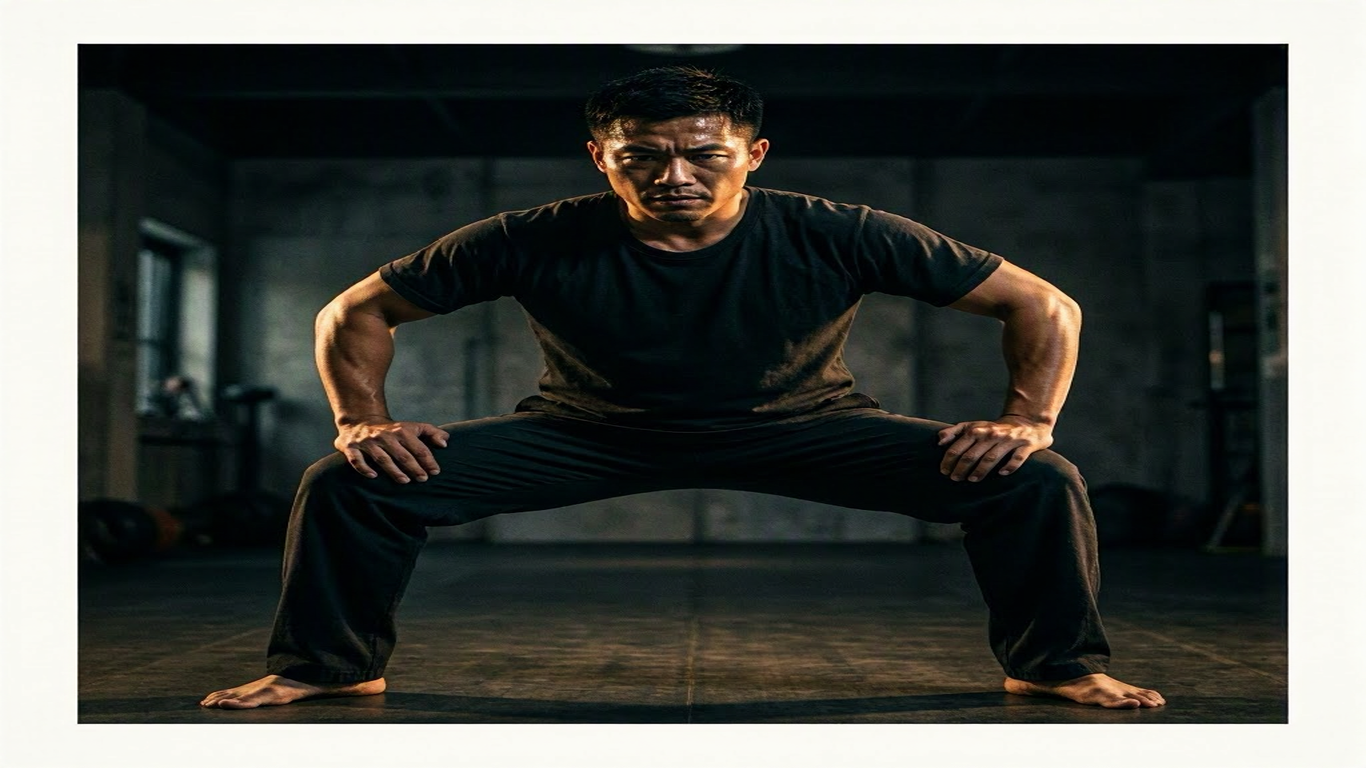
The horse stance is one of the oldest and most respected exercises in traditional martial arts. Used for centuries in disciplines such as Kung Fu, Tai Chi, and other Eastern training systems, this simple-looking position is known for building lower-body strength, improving balance, enhancing stability, and developing mental focus.
At first glance, the exercise appears straightforward. You simply stand with your feet wide apart, bend your knees, and hold the position. Yet anyone who has tried maintaining a proper horse stance for even a minute quickly discovers that it is far more challenging than it looks.
Despite its simplicity, many beginners—and even experienced practitioners—make mistakes that reduce the effectiveness of the exercise or increase the risk of discomfort and injury. Understanding these common errors can help you get the most out of your training while protecting your joints and muscles.
Here are 12 of the most common mistakes people make when practicing the horse stance and how to avoid them.
1. Standing Too High
One of the biggest mistakes beginners make is not lowering their body enough.
Many people assume they are in a horse stance simply because their feet are spread apart and their knees are slightly bent. However, a shallow position often fails to activate the muscles that make the exercise effective.
The horse stance is designed to challenge the legs, hips, and core. If you remain too upright, your muscles won’t work as hard, limiting the benefits.
That doesn’t mean you should immediately force yourself into an extremely deep squat. Instead, gradually work toward a position where your thighs become more engaged while maintaining proper form.
2. Letting the Knees Collapse Inward
Knee alignment is critical during any lower-body exercise.
A common mistake occurs when the knees drift inward toward each other while holding the stance. This position places unnecessary stress on the joints and can lead to discomfort over time.
Ideally, your knees should track in the same direction as your toes. Maintaining this alignment helps distribute force more evenly throughout the legs and supports better stability.
Regularly checking your posture in a mirror can help you identify and correct this issue.
3. Placing the Feet Too Wide
Many people believe that a wider stance automatically makes the exercise more effective.
In reality, an excessively wide position can create strain in the hips, groin, and knees. It may also make it difficult to maintain proper posture.
Your stance should feel challenging but controlled. The ideal width varies depending on body type, flexibility, and experience level.
Finding a comfortable middle ground allows you to maintain proper alignment while still challenging your muscles.
4. Rounding the Lower Back
Poor posture is another common problem.
As fatigue sets in, some people begin to round their lower back or lean forward excessively. This often shifts tension away from the legs and places unnecessary stress on the spine.
A proper horse stance should maintain a neutral spine. Imagine a string gently pulling the top of your head upward while your shoulders remain relaxed.
Keeping your torso upright helps improve both stability and muscle engagement.
5. Holding Excessive Tension in the Upper Body
Many beginners focus so intensely on their legs that they unknowingly tense their shoulders, neck, jaw, and arms.
This extra tension wastes energy and can make the exercise feel more difficult than necessary.
Traditional martial arts training often emphasizes relaxation alongside strength. While the lower body works hard, the upper body should remain calm and controlled.
Relaxed breathing and loose shoulders help improve endurance and comfort during longer holds.
6. Forgetting to Engage the Core
The horse stance is often viewed as a leg exercise, but the core plays an equally important role.
Without proper core engagement, balance becomes less stable and posture may begin to deteriorate.
The abdominal muscles act as a support system for the spine and pelvis. Gently activating the core helps maintain alignment and improves overall body control.
Think of drawing your belly button slightly inward while continuing to breathe naturally.
This simple adjustment can make a noticeable difference in stability and endurance.
7. Holding the Breath
When muscles begin to fatigue, many people instinctively hold their breath.
Unfortunately, this habit can increase tension, elevate blood pressure temporarily, and make the exercise feel significantly harder.
Steady breathing is essential.
Slow, controlled breaths help deliver oxygen to working muscles and encourage relaxation throughout the body.
Many experienced practitioners coordinate their breathing with mental focus, using each breath to remain calm and centered while maintaining the stance.
8. Trying to Progress Too Quickly
Patience is one of the most overlooked aspects of horse stance training.
After hearing stories of martial artists holding the position for several minutes—or even longer—some beginners attempt to advance too quickly.
This often leads to poor form, excessive soreness, and frustration.
Like any fitness skill, strength and endurance develop gradually. Starting with short holds and increasing duration over time is usually the safest and most effective approach.
Consistency beats intensity when it comes to long-term progress.
9. Ignoring Hip Mobility
Many people focus solely on leg strength while overlooking flexibility and mobility.
Tight hips can make it difficult to maintain proper positioning and may contribute to discomfort during the exercise.
Incorporating gentle stretching and mobility work into your routine can improve comfort and movement quality.
Exercises targeting the hips, groin, hamstrings, and ankles often complement horse stance training and support better overall performance.
Improved mobility can also reduce the likelihood of compensating with poor posture.
10. Training Through Pain
There’s an important difference between muscular effort and joint pain.
The horse stance is supposed to challenge your muscles. Feeling fatigue in the thighs, hips, and core is normal.
Sharp pain in the knees, hips, lower back, or ankles is not.
Ignoring pain can turn a minor issue into a more serious problem.
If discomfort persists, it’s wise to stop, assess your technique, and consult a qualified fitness or healthcare professional if needed.
Listening to your body is a key part of safe and effective training.
11. Focusing Only on Time
Many practitioners become obsessed with how long they can hold the stance.
While endurance is important, duration alone doesn’t determine success.
A shorter hold with excellent form is far more valuable than a longer hold performed with poor posture and compromised alignment.
Quality should always come before quantity.
Rather than chasing impressive numbers, focus on maintaining strong technique throughout the exercise.
As your strength improves, longer hold times will naturally follow.
12. Expecting Instant Results
Perhaps the most common mistake of all is expecting immediate transformation.
In today’s fast-paced world, people often want quick results from every fitness routine. However, the horse stance follows a different philosophy.
The benefits develop gradually through consistent practice.
Improved balance, stronger legs, enhanced posture, greater body awareness, and increased endurance are all rewards that accumulate over time.
Those who stick with the exercise often discover that the real value lies not only in physical improvements but also in the patience, discipline, and focus the practice develops.
Why the Horse Stance Remains Popular
Despite its age, the horse stance continues to be used by martial artists, athletes, fitness enthusiasts, and wellness practitioners around the world.
Its appeal lies in its simplicity. No equipment is required. It can be performed almost anywhere. Yet it challenges multiple muscle groups while encouraging concentration and body control.
Unlike many modern fitness trends that come and go, the horse stance has survived for centuries because it delivers practical benefits when practiced correctly.
The exercise helps strengthen the legs, engage the core, improve posture, and develop mental resilience—all through a single position.
Final Thoughts
The horse stance may appear simple, but mastering it requires attention to detail, patience, and consistency. Avoiding common mistakes such as poor posture, improper knee alignment, shallow positioning, and rushed progression can dramatically improve your results.
More importantly, remember that success isn’t measured solely by how long you can hold the stance. Proper technique, controlled breathing, and gradual improvement are what truly matter.
Like many traditional practices, the horse stance teaches valuable lessons beyond physical fitness. It encourages discipline, focus, and persistence—qualities that can benefit nearly every area of life.
Whether you’re practicing for strength, balance, athletic performance, or personal growth, approaching the horse stance with proper form and realistic expectations can help you unlock its full potential over time.







