For many years, people were taught that strong emotions should be hidden, controlled, or pushed aside. Phrases like “stay strong,” “don’t cry,” and “keep it together” became common advice for dealing with difficult situations. While emotional self-control certainly has its place, modern psychology suggests that completely suppressing emotions may not be as healthy as many once believed.
Human emotions serve an important purpose. They help us understand our experiences, connect with others, respond to challenges, and navigate everyday life. Whether it’s joy, sadness, anger, disappointment, excitement, or fear, emotions provide valuable information about what’s happening inside us.
The problem isn’t having emotions—it’s what happens when we consistently ignore them.
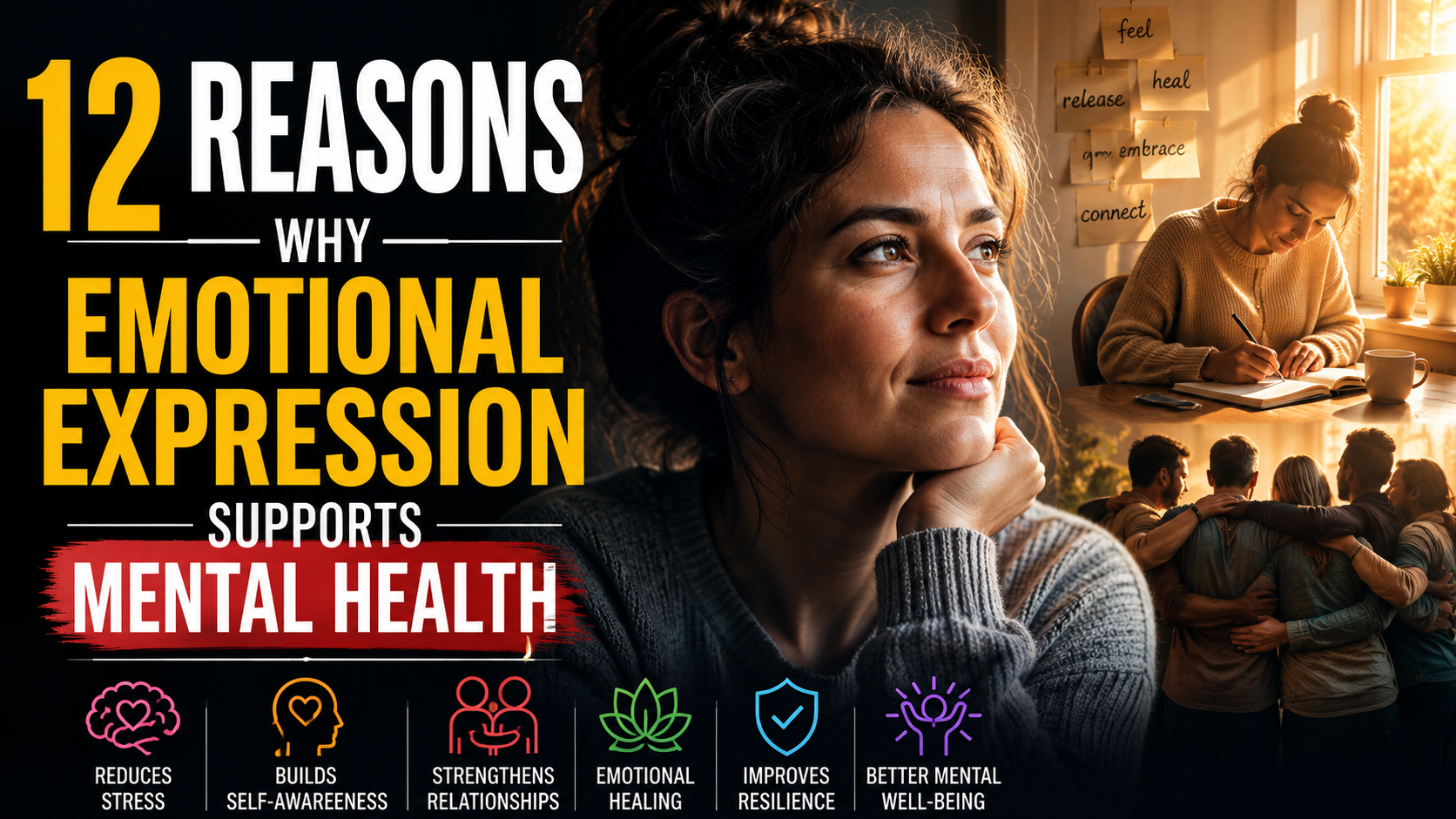
Research in psychology and mental health continues to show that healthy emotional expression plays a vital role in overall well-being. Expressing feelings in constructive ways can reduce stress, improve relationships, strengthen resilience, and support better mental health over time.
Here are 12 important reasons why emotional expression matters more than many people realize.
1. Emotional Expression Reduces Internal Stress
When emotions are constantly held inside, they don’t simply disappear.
Instead, they often remain active beneath the surface, creating ongoing mental tension. Many people experience this as irritability, anxiety, restlessness, or emotional exhaustion without fully understanding the cause.
Expressing emotions allows the mind to process experiences rather than continuously carrying them.
Whether through conversation, writing, art, prayer, or reflection, healthy emotional release can help reduce psychological pressure and create a greater sense of relief.
Many people notice they feel lighter and calmer after finally discussing something that has been bothering them for weeks or months.
2. It Helps You Understand Yourself Better
Emotions provide important clues about your needs, values, and experiences.
For example:
- Anger may signal that a personal boundary has been crossed.
- Sadness may indicate loss or disappointment.
- Anxiety may point toward uncertainty or perceived risk.
- Joy often highlights what truly matters to you.
When emotions are acknowledged and expressed, they become valuable sources of self-awareness.
Ignoring emotions, on the other hand, can make it harder to understand why you react certain ways or what drives your decisions.
Self-awareness is one of the foundations of emotional intelligence, and emotional expression helps build it.
3. It Strengthens Relationships
Healthy relationships depend on communication.
While many people focus on communicating thoughts and opinions, emotional communication is equally important.
Expressing feelings honestly helps others understand your experiences and perspectives. It creates opportunities for empathy, support, and deeper connection.
When emotions remain hidden, misunderstandings often increase.
Partners, family members, and friends cannot respond to needs they don’t know exist. Open emotional communication fosters trust and helps relationships become more authentic and resilient.
4. Emotional Expression Can Prevent Emotional Overload
Unexpressed emotions tend to accumulate over time.
Think of emotions as pressure building inside a container. If there is no safe outlet, the pressure may eventually become overwhelming.
This often explains why people sometimes react intensely to seemingly minor situations. The emotional response may not be about the immediate event alone—it may be connected to weeks, months, or even years of unresolved feelings.
Regular emotional expression helps prevent this buildup and allows people to process experiences gradually rather than all at once.
5. It Supports Better Mental Health
Mental health professionals increasingly recognize the connection between emotional processing and psychological well-being.
While emotional expression alone is not a cure for mental health conditions, it can play an important role in maintaining emotional balance.
People who regularly acknowledge and process their emotions often find it easier to cope with life’s challenges. They may experience lower levels of emotional distress and greater psychological flexibility when facing difficult situations.
Learning how to identify and express emotions in healthy ways is a skill that supports long-term mental wellness.
6. It Improves Emotional Resilience
Resilience is often misunderstood.
Many people assume resilience means never feeling upset or affected by adversity. In reality, resilience involves recovering from challenges and adapting effectively.
Emotional expression supports resilience because it allows people to process setbacks rather than deny them.
When emotions are acknowledged, individuals can work through difficult experiences more effectively and move forward with greater clarity.
Strong emotional health doesn’t come from avoiding emotions—it comes from learning how to navigate them.
7. It Enhances Physical Well-Being
The connection between mind and body is stronger than many people realize.
Chronic emotional stress can contribute to physical symptoms such as:
- Headaches
- Muscle tension
- Fatigue
- Sleep disturbances
- Digestive issues
- Increased stress levels
While emotional expression cannot eliminate all physical health problems, it may help reduce some of the physiological strain associated with prolonged emotional suppression.
Many people report feeling physically better after resolving long-standing emotional conflicts or sharing difficult experiences with someone they trust.
8. Emotional Expression Encourages Problem Solving
When emotions remain unacknowledged, they can cloud judgment and make decision-making more difficult.
Expressing feelings often creates mental space for clearer thinking.
For example, someone who openly acknowledges frustration at work may be better able to identify practical solutions than someone who simply ignores the emotion.
Emotional awareness provides valuable information that can guide more effective choices.
Rather than being obstacles, emotions can become tools for understanding problems and identifying meaningful solutions.
9. It Reduces Feelings of Isolation
One of the most powerful benefits of emotional expression is the sense of connection it creates.
Many people believe they must handle difficult emotions alone. As a result, they may withdraw from others during challenging times.
Sharing emotions with trusted individuals often reveals something important: many experiences are more universal than they seem.
Others may have faced similar struggles, fears, disappointments, or uncertainties.
This realization can reduce feelings of loneliness and create a stronger sense of belonging and support.
10. It Builds Emotional Intelligence
Emotional intelligence refers to the ability to recognize, understand, and manage emotions effectively.
People with strong emotional intelligence are often better equipped to handle stress, communicate effectively, resolve conflicts, and build healthy relationships.
Regular emotional expression helps strengthen these abilities.
The more comfortable individuals become identifying and discussing emotions, the easier it becomes to regulate them in healthy ways.
Emotional intelligence is not an inborn trait reserved for a few people. It is a skill that can be developed over time.
11. It Helps Process Grief and Loss
Loss is an unavoidable part of life.
Whether it involves the death of a loved one, the end of a relationship, a career setback, or an unexpected life change, grief affects everyone differently.
Attempting to suppress grief often prolongs emotional pain.
Expressing sadness, talking about memories, journaling thoughts, or seeking support allows people to gradually process loss and adapt to new circumstances.
Healing doesn’t require forgetting what happened. It requires giving emotions the space they need to be experienced and understood.
12. It Promotes Greater Authenticity
Many people spend years trying to present a version of themselves that appears strong, confident, and unaffected by challenges.
While maintaining composure can be useful in certain situations, constantly hiding emotions can create a disconnect between how people feel and how they present themselves.
Authenticity involves aligning external behavior with internal experiences.
Healthy emotional expression allows people to show up more honestly in their relationships, work, and daily lives.
Authentic individuals often experience greater self-acceptance because they are no longer investing energy into hiding significant parts of themselves.
Common Myths About Emotional Expression
Despite growing awareness, several misconceptions still exist.
Myth 1: Expressing Emotions Means Losing Control
Healthy emotional expression is not about uncontrolled outbursts.
It involves acknowledging feelings in constructive ways that support understanding and communication.
Myth 2: Strong People Don’t Show Emotions
True strength often involves the courage to acknowledge vulnerability rather than avoid it.
Many emotionally strong individuals are also highly emotionally aware.
Myth 3: Ignoring Emotions Makes Them Go Away
Unaddressed emotions frequently remain active beneath the surface and may influence thoughts, behaviors, and stress levels over time.
Awareness is usually more effective than avoidance.
Healthy Ways to Express Emotions
There is no single “correct” way to express feelings.
Some effective approaches include:
- Talking with trusted friends or family members
- Writing in a journal
- Speaking with a therapist or counselor
- Practicing mindfulness
- Engaging in creative activities
- Exercising regularly
- Participating in support groups
- Using relaxation techniques
The goal is not to eliminate emotions but to create healthy outlets for processing them.
Final Thoughts
Emotions are a natural part of being human. They provide insight into our experiences, relationships, needs, and values. When acknowledged and expressed in healthy ways, emotions can become powerful tools for growth, healing, and self-understanding.
Suppressing feelings may seem easier in the short term, but emotional avoidance often creates additional challenges over time. By contrast, healthy emotional expression can reduce stress, improve relationships, strengthen resilience, and support overall mental well-being.
The healthiest approach isn’t to let emotions control your life—or to ignore them completely. It’s to listen to them, understand them, and express them in ways that help you move forward.
In many ways, emotional expression isn’t a sign of weakness. It’s one of the most important skills for maintaining long-term mental and emotional health.







