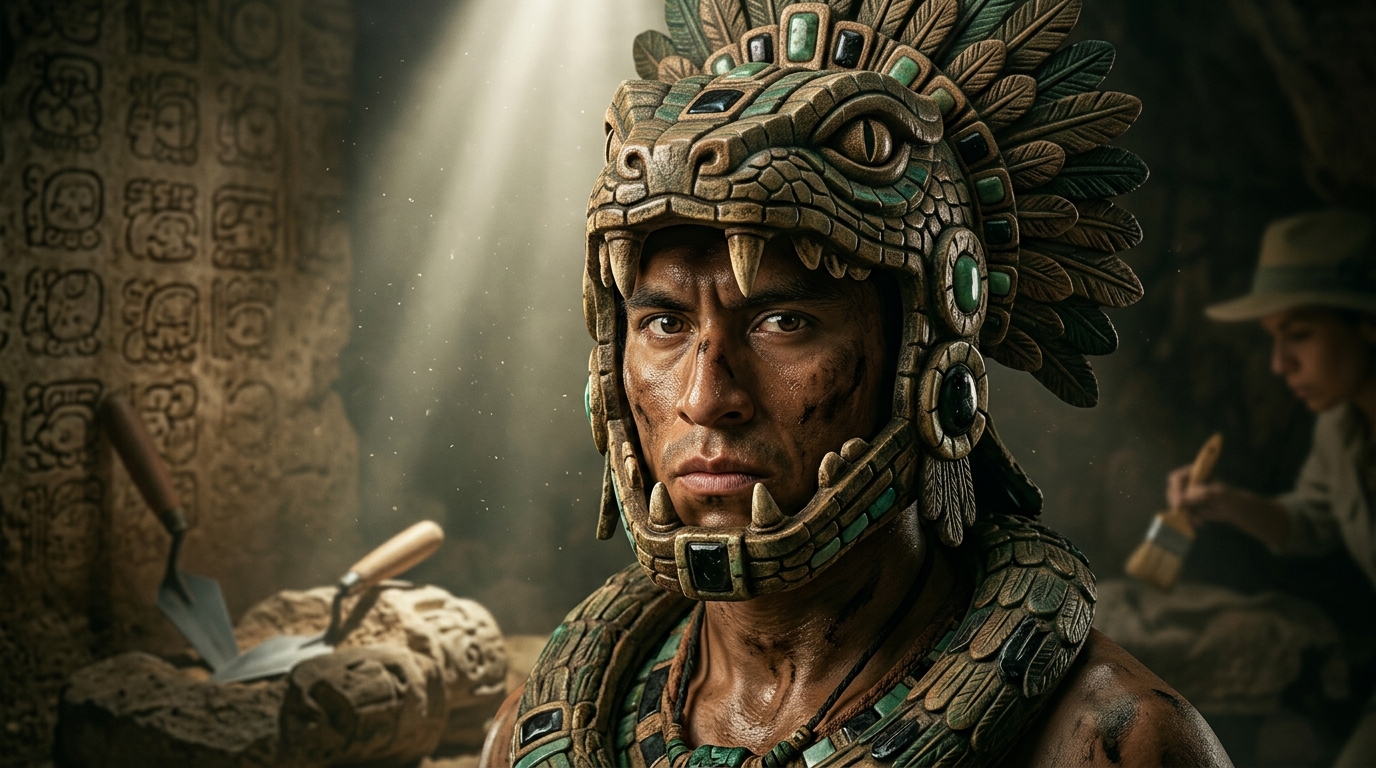
The ancient Maya civilization continues to astonish researchers with its magnificent cities, advanced knowledge of astronomy, and intricate works of art. Yet some of its most captivating discoveries come in the form of individual figures immortalized in carvings, murals, and sculptures. Among them is the mysterious snake-helmeted Maya warrior, an image that has intrigued archaeologists and historians for years.
Depicted wearing an elaborate helmet shaped like a serpent, this warrior represents far more than an ancient soldier. The figure provides valuable clues about Maya warfare, religion, political power, and artistic expression. Every detail of the warrior’s appearance raises fascinating questions about the beliefs and customs of one of the world’s most remarkable civilizations.
Here are twelve reasons why this snake-helmeted Maya warrior continues to captivate archaeologists.
1. The Helmet Features One of the Maya’s Most Powerful Symbols
The serpent held enormous significance in Maya culture.
Throughout Maya art and mythology, snakes were associated with divine power, transformation, fertility, and connections between the human and supernatural worlds. Serpents frequently appeared in religious imagery and were often linked to rulers and gods.
A warrior wearing a snake-shaped helmet was therefore displaying far more than decorative headgear. The serpent likely symbolized authority, spiritual power, or divine protection.
2. It Reveals the Importance of Warriors in Maya Society
The Maya were accomplished builders, mathematicians, and astronomers, but they were also skilled warriors.
Conflict between rival city-states played an important role in Maya history. Victories in battle could increase political influence, secure valuable resources, and elevate the status of rulers.
The snake-helmeted figure reminds us that warfare was a significant aspect of Maya civilization and that military achievements often carried great social and political importance.
3. The Helmet Was Probably Reserved for Elite Individuals
Creating an elaborate ceremonial helmet required considerable resources and craftsmanship.
Archaeologists believe that such highly decorated military attire was likely worn by elite warriors, nobles, or rulers rather than ordinary soldiers. The serpent imagery may have indicated high rank or membership within an important military group.
The warrior’s appearance therefore provides insights into the social hierarchy of ancient Maya communities.
4. The Figure Combines Warfare and Religion
One of the most fascinating aspects of Maya culture is how closely warfare and religion were intertwined.
Military campaigns were often connected to rituals, sacred calendars, and beliefs about divine favor. Warriors sometimes portrayed themselves as embodiments of gods or supernatural forces.
The snake helmet may have symbolized a spiritual transformation in which the wearer assumed the qualities or protection of a sacred serpent.
5. Maya Art Captured Remarkable Detail
Images of the snake-helmeted warrior demonstrate the extraordinary skill of Maya artists.
Carvings and murals often depict intricate clothing, jewelry, weapons, and facial expressions. These artistic details provide archaeologists with valuable evidence about appearance, social roles, and ceremonial practices.
Without these artistic representations, much of what we know about Maya life would have been lost forever.
6. Serpents Frequently Appeared in Maya Mythology
Snakes occupied a prominent place in Maya religious thought.
Many Maya traditions associated serpents with rain, fertility, wisdom, and communication with divine realms. Some myths described great serpents as cosmic beings that connected heaven and earth.
The use of serpent imagery on a warrior’s helmet suggests that the figure may have carried both military and spiritual significance.
7. The Warrior’s Appearance Raises New Questions
One reason archaeologists find the figure so intriguing is that many details remain uncertain.
Was the warrior a historical individual, a ruler, or a legendary figure? Did the helmet represent a specific military order or religious role? Was the serpent imagery intended to invoke protection, status, or supernatural power?
The lack of definitive answers continues to fuel research and debate.
8. The Figure Demonstrates the Sophistication of Maya Military Culture
Ancient warfare is often imagined as simple and unorganized, but the Maya evidence tells a different story.
Archaeological discoveries indicate that Maya armies possessed specialized weapons, military strategies, and elaborate ceremonial traditions. Elite warriors may have been distinguished by highly symbolic attire and insignia.
The snake-helmeted warrior illustrates the complexity and sophistication of Maya military culture.
9. It Highlights the Role of Symbolism in Ancient Civilizations
To modern observers, the serpent-shaped helmet may appear purely decorative.
For the Maya, however, symbols often carried deep layers of meaning. Animals, colors, and ceremonial objects communicated information about identity, power, and spiritual beliefs.
The warrior’s helmet serves as a reminder that ancient societies frequently expressed important ideas through visual symbolism.
10. The Discovery Humanizes the Ancient Maya
Large pyramids and ruined cities can sometimes make ancient civilizations feel distant and abstract.
The image of an individual warrior changes that perspective. It encourages us to imagine a real person who wore ceremonial attire, participated in important events, and lived within a vibrant and complex society.
The figure creates a more personal connection with people who lived centuries ago.
11. It Demonstrates the Value of Archaeological Preservation
Many ancient works of art have been lost to time, weathering, and human activity.
The survival of depictions like the snake-helmeted warrior allows researchers to reconstruct aspects of Maya society that would otherwise remain unknown. Every preserved image contributes to our understanding of religion, politics, and daily life.
The figure highlights why archaeological conservation remains so important.
12. It Reminds Us That the Maya Still Hold Countless Secrets
Perhaps the most fascinating reason archaeologists remain captivated by the snake-helmeted warrior is that it represents how much remains undiscovered.
The Maya civilization flourished for centuries, building magnificent cities and producing extraordinary works of art and knowledge. Yet many inscriptions remain undeciphered, and numerous archaeological sites are still hidden beneath dense forests.
The snake-helmeted warrior is both an important historical figure and a symbol of the mysteries that continue to surround one of the world’s greatest civilizations.
Why the Snake-Helmeted Maya Warrior Continues to Fascinate Researchers
The image of the snake-helmeted Maya warrior combines many of the elements that make archaeology so compelling. It brings together warfare, religion, art, mythology, and human identity in a single remarkable figure.
Its elaborate serpent imagery reveals the importance of symbolism in Maya society, while its military associations shed light on the political and ceremonial life of ancient city-states. Most importantly, the figure reminds us that the Maya were not merely builders of pyramids and observers of the stars. They were complex individuals who lived within a richly symbolic world filled with tradition, belief, and ambition.
Centuries after the warrior’s image was created, it continues to spark curiosity and inspire new discoveries, proving that the ancient Maya still have many stories left to tell.







