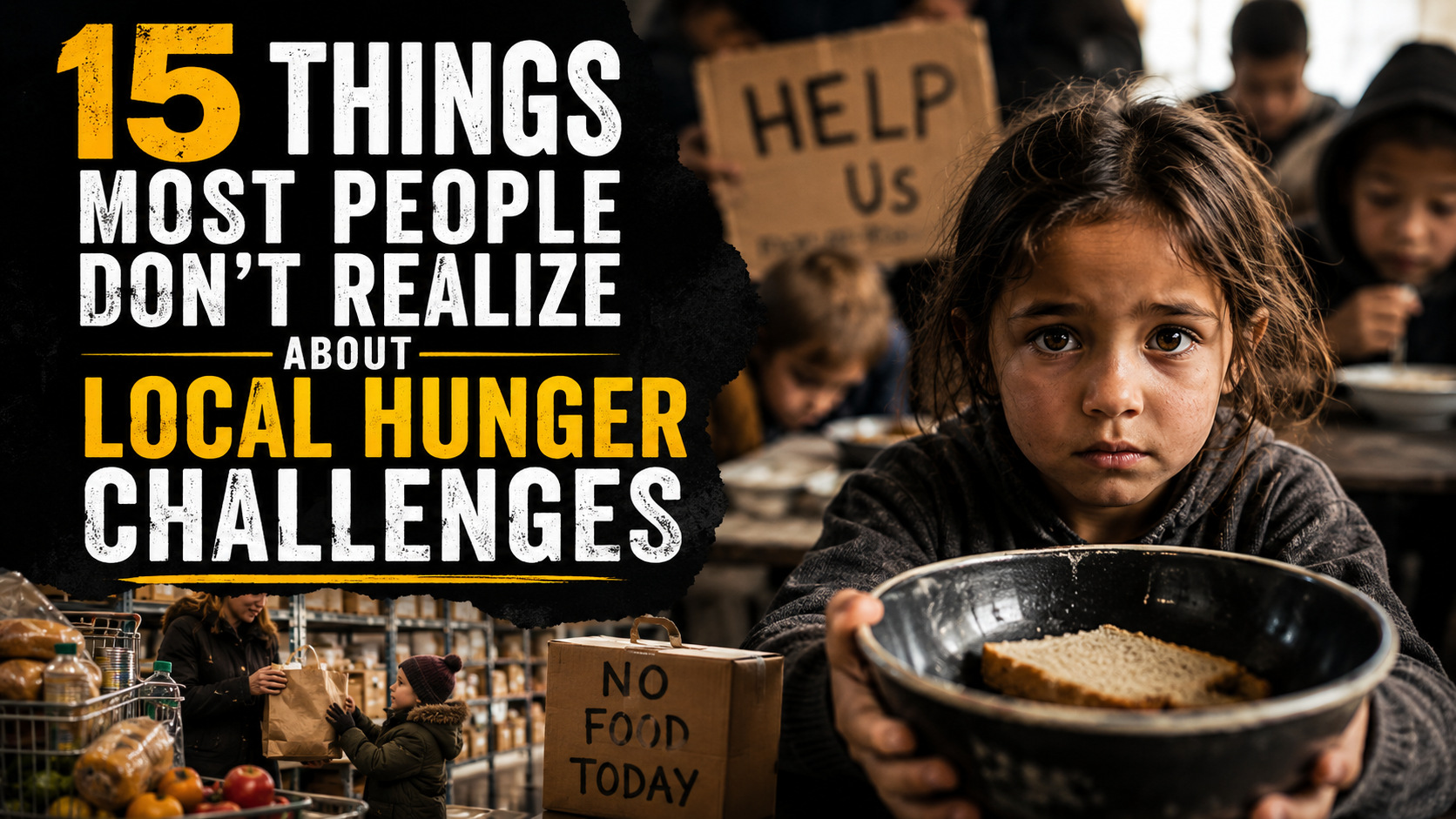
When people hear the word “hunger,” many imagine distant regions facing food shortages or large-scale humanitarian crises. What often goes unnoticed is that hunger exists much closer to home than most people realize. In cities, suburbs, and rural communities across the country, countless families struggle to put enough food on the table every day.
The reality of local hunger is far more complex than simply not having enough food. It is tied to housing costs, healthcare expenses, transportation barriers, job instability, and many other challenges that affect people’s daily lives. While food banks, community programs, and charitable organizations play a crucial role in helping those in need, the underlying causes of hunger often remain hidden from public view.
Understanding these realities can help create greater awareness and inspire more meaningful action. Here are 15 things most people don’t realize about local hunger challenges.
1. Hunger Often Exists in Plain Sight
Many people assume they would easily recognize someone struggling with hunger. In reality, food insecurity often remains invisible.
The parent standing next to you at a school event, the elderly neighbor across the street, or the employee serving customers at a local business may all be facing difficult choices about food. Hunger doesn’t always look the way people expect.
Many individuals experiencing food insecurity work hard to maintain normal routines and appearances, making their struggles difficult to detect.
2. Having a Job Doesn’t Guarantee Food Security
One of the biggest misconceptions is that hunger only affects unemployed individuals.
Many households experiencing food insecurity include one or more working adults. Rising living expenses can consume much of a family’s income, leaving little money for groceries after paying rent, utilities, childcare, transportation, and healthcare costs.
For some families, even full-time employment isn’t enough to consistently cover all essential needs.
3. Children Are Among the Most Vulnerable
Food insecurity can have a significant impact on children.
Without reliable access to nutritious meals, children may struggle with concentration, academic performance, emotional well-being, and physical development. For some students, school breakfast and lunch programs provide meals they may not receive elsewhere.
Weekends, holidays, and summer breaks can become particularly difficult periods when school meals are unavailable.
This is one reason many communities have developed programs specifically designed to support children outside regular school hours.
4. Hunger Is Not Just About Empty Stomachs
Many people think hunger simply means not eating enough food.
In reality, nutrition matters just as much as quantity. Families facing financial hardship may rely on inexpensive foods that are filling but lack important nutrients.
As a result, some individuals experience both food insecurity and nutrition-related health issues at the same time. A person may consume enough calories while still lacking access to healthy, balanced meals.
This hidden aspect of hunger often receives less attention but has long-term consequences.
5. Seniors Face Unique Challenges
Older adults are another group frequently affected by food insecurity.
Many seniors live on fixed incomes that may not keep pace with rising costs. After paying for housing, medications, utilities, and healthcare expenses, little money may remain for groceries.
Some seniors also face mobility challenges that make grocery shopping difficult. Others experience social isolation, which can further complicate access to nutritious food.
For many older adults, hunger is linked not only to finances but also to transportation and physical limitations.
6. Rural Communities Often Face Greater Obstacles
When discussing hunger, attention frequently focuses on urban areas. However, rural communities face their own unique struggles.
Residents may live far from grocery stores, food banks, healthcare providers, and community services. Transportation options can be limited, making it difficult for families to access affordable food regularly.
In some regions, a single grocery trip may require traveling many miles, increasing both time and fuel costs.
These challenges can make food insecurity even harder to address.
7. Unexpected Emergencies Can Trigger Hunger Quickly
Many families live paycheck to paycheck.
A medical emergency, car repair, reduced work hours, or unexpected bill can create immediate financial strain. What appears to be a stable household can suddenly face food insecurity due to a single unexpected event.
For many people, the difference between financial stability and hardship is smaller than they realize.
This highlights how vulnerable many households are to sudden economic disruptions.
8. Food Banks Serve More Than People Expect
Some assume food banks only help individuals facing extreme poverty.
In reality, food assistance programs serve a wide range of people, including working families, veterans, seniors, students, individuals with disabilities, and those recovering from financial setbacks.
Many visitors seek temporary assistance while navigating short-term challenges.
Food banks often function as a safety net that helps prevent families from falling deeper into crisis.
9. Transportation Can Be a Major Barrier
Having access to food and having access to transportation are often closely connected.
Families without reliable vehicles may struggle to reach grocery stores offering affordable options. Public transportation may be limited or unavailable in some areas.
Even if food assistance exists nearby, transportation barriers can make accessing it difficult.
For many households, the challenge isn’t only affording food—it’s physically getting to where food is available.
10. Hunger Affects Mental Health
Food insecurity creates significant emotional stress.
Constantly worrying about how to feed a family can lead to anxiety, frustration, embarrassment, and feelings of hopelessness. Parents often experience intense pressure when they are unable to provide the meals they want for their children.
The psychological impact of hunger can affect relationships, job performance, sleep quality, and overall well-being.
Addressing hunger means supporting both physical and mental health needs.
11. Many People Struggling With Hunger Never Ask for Help
Pride, stigma, and fear often prevent individuals from seeking assistance.
Some people worry about being judged. Others feel embarrassed or believe someone else needs help more than they do.
As a result, many families delay reaching out until their situation becomes severe.
Community organizations frequently emphasize that seeking help during difficult times is a sign of responsibility, not failure.
12. Rising Housing Costs Are Closely Connected to Hunger
Housing expenses are one of the biggest drivers of food insecurity.
As rent and mortgage payments increase, families often have less money available for groceries. When budgets become tight, food is one of the few flexible expenses households can reduce.
Unfortunately, this often means skipping meals, buying less nutritious foods, or relying on emergency assistance.
The relationship between housing affordability and hunger is stronger than many people realize.
13. Community Support Makes a Bigger Difference Than Most Think
Local efforts can have a powerful impact.
School meal programs, food drives, neighborhood pantries, faith-based organizations, community gardens, and volunteer groups all help strengthen local food systems.
While no single program can solve hunger entirely, collective action often creates meaningful improvements for families facing hardship.
Many successful hunger-relief efforts begin with small groups of people working together to support their communities.
14. Food Waste and Hunger Often Exist Side by Side
One of the most surprising realities is that food waste and hunger frequently occur in the same communities.
Large amounts of edible food are discarded every year while families struggle to access nutritious meals. Although food recovery programs help redirect surplus food to those in need, significant opportunities remain to reduce waste and improve food distribution.
Finding better ways to connect excess food with hungry households could benefit both people and the environment.
15. Hunger Is a Community Issue, Not an Individual Failure
Perhaps the most important thing people don’t realize is that hunger is rarely caused by a lack of effort.
Food insecurity often results from a combination of economic, social, and systemic factors that affect individuals and families in different ways. Job loss, illness, rising costs, caregiving responsibilities, and unexpected emergencies can impact anyone.
Viewing hunger through a lens of compassion rather than judgment allows communities to develop more effective solutions and support those who need help.
Why Awareness Matters
The first step toward addressing local hunger is understanding that it exists all around us. Many people facing food insecurity are doing everything they can to support themselves and their families. Yet circumstances beyond their control can make meeting basic needs difficult.
Greater awareness helps reduce stigma, encourages community involvement, and fosters support for programs that provide essential resources. It also reminds us that hunger is not a distant issue affecting strangers—it is a local challenge impacting neighbors, classmates, coworkers, and friends.
Final Thoughts
Local hunger is far more complex than most people realize. It affects children, seniors, working adults, students, and families from all walks of life. The causes often extend beyond food itself, involving housing, healthcare, transportation, employment, and economic stability.
By understanding these 15 overlooked realities, we can move beyond assumptions and develop a deeper appreciation for the challenges many people face every day. More importantly, we can recognize that meaningful change begins with awareness, compassion, and a willingness to support the communities around us.
When people come together to address hunger, even small actions can create lasting impact. Whether through volunteering, donating, advocating, or simply learning more, every effort contributes to building stronger and healthier communities for everyone.







