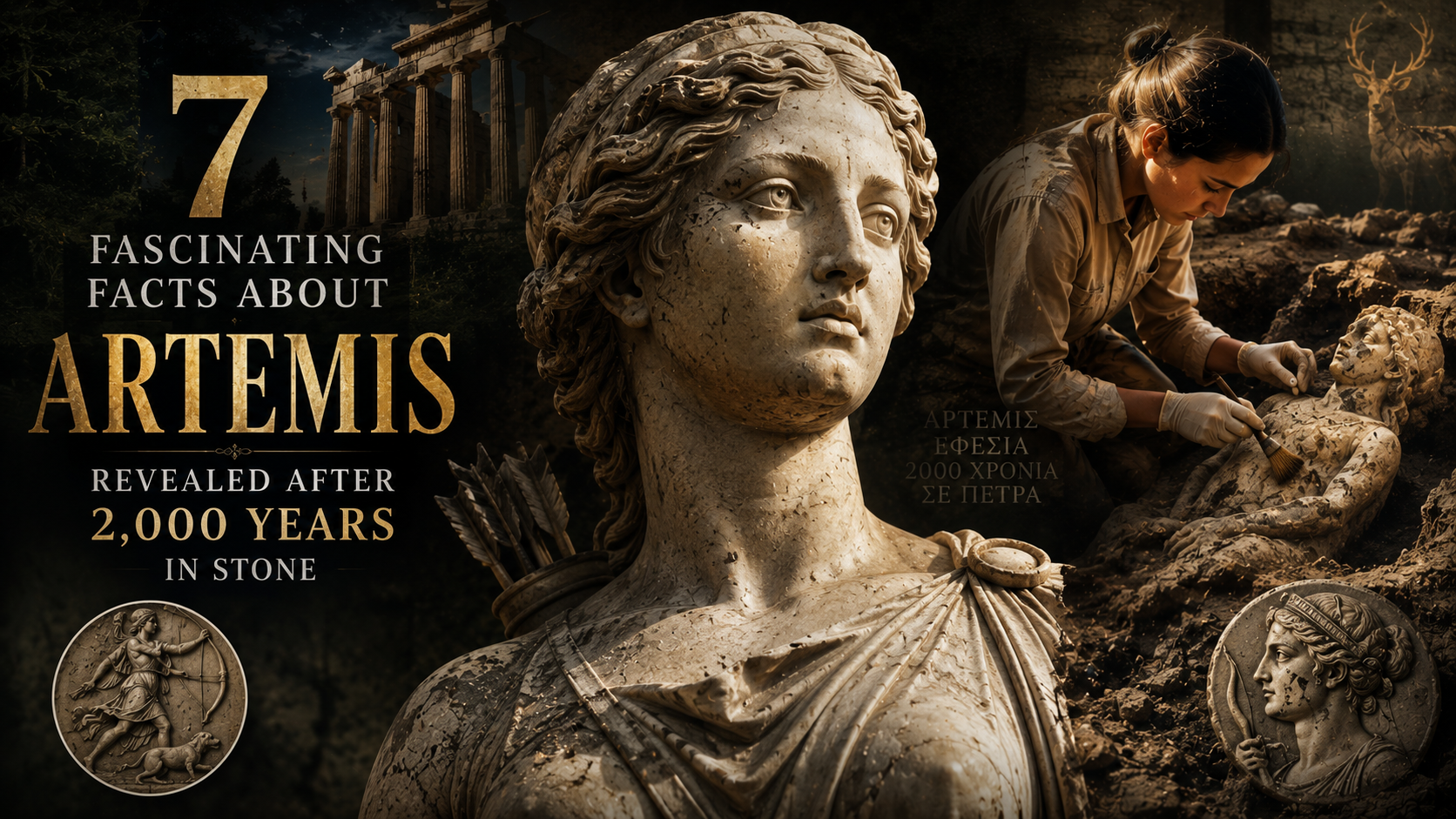
Ancient sculptures often carry more than artistic value—they preserve fragments of mythology, culture, and belief systems that shaped entire civilizations. One of the most intriguing examples is the figure of Artemis, the Greek goddess associated with the hunt, wilderness, childbirth, and protection.
After roughly 2,000 years, interpretations of Artemis carved in stone continue to reveal new insights through archaeological research, restoration studies, and historical analysis. These discoveries help modern audiences better understand how ancient societies viewed divinity, nature, and feminine power.
While Artemis appears in many artistic forms across ancient Greece and surrounding regions, each surviving sculpture or carving offers subtle clues about religious practice and cultural symbolism.
Here are seven fascinating facts about Artemis revealed after 2,000 years in stone.
1. Artemis Was Often Depicted as Both Protector and Hunter
One of the most striking aspects of Artemis imagery is her dual role.
She is frequently shown holding a bow and arrows, symbolizing her identity as a skilled huntress. At the same time, she is also portrayed as a protector of young women and children.
This combination reflects a balance between strength and guardianship.
Ancient sculptors emphasized both qualities to highlight her complex role in mythology.
2. Stone Carvings Show Regional Artistic Differences
Not all depictions of Artemis look the same.
Archaeological findings show that her representation varied significantly depending on the region in which the sculpture was created.
Some areas emphasized her connection to wildlife and forests, while others focused more on her divine authority.
These variations reveal how local cultures adapted shared myths to reflect their own values and traditions.
3. Some Sculptures Suggest Earlier Nature Deities Influenced Her Image
Researchers believe that Artemis may have absorbed characteristics from earlier pre-Greek nature goddesses.
This is suggested by older carvings that blend animal symbolism with human form.
Over time, these older deities may have merged into the more standardized image of Artemis in classical Greek mythology.
Stone artifacts provide evidence of this gradual cultural evolution.
4. Artemis Was Often Associated With Sacred Landscapes
Many ancient carvings of Artemis have been found near natural sites such as forests, mountains, and springs.
This suggests she was deeply connected to specific landscapes considered sacred by ancient communities.
These locations were often used for rituals, offerings, and ceremonies in her honor.
The placement of her images in stone reinforces her role as a nature-centered deity.
5. Facial Expressions in Stone Suggest Emotional Complexity
Despite the limitations of stone carving, many depictions of Artemis show subtle emotional expression.
Some sculptures portray her with a calm and composed demeanor, while others suggest intensity or alertness.
These artistic choices reflect the desire of ancient sculptors to capture her divine presence rather than just her physical form.
It also indicates that she was seen as a dynamic and powerful figure.
6. Artemis Symbolism Often Included Animals and Nature Motifs
Animals such as deer, dogs, and wild creatures frequently appear alongside Artemis in stone carvings.
These animals are not random decorations—they symbolize her connection to the natural world.
The deer, in particular, is strongly associated with her identity as a huntress and protector of wildlife.
These recurring motifs reinforce her role as a bridge between civilization and nature.
7. Modern Restoration Techniques Are Revealing Hidden Details
Advances in archaeological technology have allowed researchers to uncover details in ancient stone carvings that were previously invisible.
Techniques such as 3D scanning, digital reconstruction, and surface analysis have revealed faded inscriptions and fine artistic details.
These discoveries continue to reshape understanding of how Artemis was represented in antiquity.
Each restored fragment adds new depth to her historical image.
Why Artemis Continues to Fascinate Scholars Today
Artemis remains one of the most studied figures in ancient mythology because she represents multiple dimensions of human belief—nature, protection, independence, and divine authority.
Her stone depictions serve as cultural records that reflect how ancient societies understood femininity, power, and the natural world.
Each new archaeological discovery adds nuance to her story and deepens modern appreciation of ancient Greek art.
Final Thoughts
The 2,000-year legacy of Artemis carved in stone continues to reveal surprising insights about ancient civilization.
From regional artistic differences to symbolic animal motifs and evolving mythological influences, each discovery contributes to a richer understanding of her role in history.
Far from being static artifacts, these sculptures remain active sources of knowledge, connecting modern audiences with the beliefs and imagination of the ancient world.
In the end, Artemis in stone is more than a goddess carved into rock—she is a reflection of how humanity has long sought to understand nature, protection, and power through storytelling and art.







