Solar eclipses have captivated humanity for thousands of years. Ancient civilizations viewed them as supernatural events, while modern science sees them as extraordinary opportunities to study our solar system. Yet among all the eclipse-related discussions, one detail often goes unnoticed: the surprisingly short duration of totality.
For most observers, a total solar eclipse lasts only a few minutes. In fact, many of the most spectacular eclipses offer around six minutes of darkness at their peak. While people often focus on where and when an eclipse will occur, they rarely appreciate just how remarkable those few minutes truly are.
A six-minute eclipse may sound brief, but it represents one of the rarest and most breathtaking experiences nature can offer. During this short window, the Moon perfectly blocks the Sun, transforming daytime into twilight and revealing sights that are impossible to witness at any other time.
Here are seven fascinating facts about the six-minute eclipse that many people overlook.
1. Six Minutes Is Surprisingly Close to the Maximum Possible Duration
One of the most misunderstood aspects of solar eclipses is their length. Many people assume total darkness can last for an extended period, but the reality is quite different.
The absolute maximum duration of a total solar eclipse is just over seven and a half minutes under ideal conditions. This theoretical limit occurs only when several astronomical factors align perfectly. The Moon must be relatively close to Earth, the Earth must be near its farthest point from the Sun, and the eclipse path must cross regions where Earth’s rotation helps extend the event.
Because these conditions are rare, a total eclipse lasting around six minutes is already considered exceptionally long. In eclipse terms, six minutes is not average—it’s extraordinary.
For eclipse enthusiasts and astronomers, an event approaching this duration is often considered a once-in-a-lifetime experience.
2. The Moon’s Shadow Travels Faster Than a Jet Airliner
When people think of an eclipse, they often imagine the Moon slowly moving across the Sun. What they may not realize is that the Moon’s shadow races across Earth’s surface at astonishing speeds.
Depending on the location and geometry of the eclipse, the shadow can travel anywhere from roughly 1,000 to more than 5,000 miles per hour. In some cases, it moves several times faster than a commercial aircraft.
This incredible speed explains why totality is so brief. Even though the Moon itself moves gradually across the sky, the shadow it casts sweeps rapidly across the planet.
The next time you watch a total eclipse, remember that the darkness overhead is part of a giant shadow moving faster than most vehicles humans have ever created.
3. Temperatures Can Drop Noticeably in Just Minutes
A six-minute eclipse doesn’t merely darken the sky—it can actually change local weather conditions.
As sunlight disappears, the Earth’s surface receives far less solar energy. This sudden reduction in heating often causes temperatures to fall by several degrees within a remarkably short period.
Meteorologists have recorded temperature drops ranging from 5 to 15 degrees Fahrenheit during some total solar eclipses. The exact change depends on factors such as humidity, cloud cover, wind conditions, and local geography.
For people experiencing totality firsthand, the cooling effect can feel surprisingly dramatic. Many observers describe a sudden chill in the air just before complete darkness arrives.
It’s one of the few natural events where you can physically feel astronomy happening around you.
4. Animals Often React as If Night Has Arrived
Humans aren’t the only creatures affected by a solar eclipse.
Many animals become confused by the rapid shift from daylight to darkness. Birds may stop singing and return to their nests. Insects that typically emerge at dusk can suddenly become active. Livestock often display unusual behavior, while nocturnal animals may begin their nighttime routines.
Researchers have documented countless examples of wildlife responding to eclipses as though sunset has occurred hours earlier than expected.
What’s particularly fascinating is how quickly these behaviors reverse. Once sunlight returns, animals frequently resume their normal daytime activities almost immediately.
This brief disruption offers scientists a unique opportunity to study how animals respond to sudden environmental changes.
5. The Sun’s Corona Appears Only During Totality
One of the most stunning sights during a six-minute eclipse is something that remains hidden every other day of the year: the solar corona.
The corona is the Sun’s outer atmosphere, extending millions of miles into space. Despite reaching temperatures of millions of degrees, it is usually invisible because the Sun’s bright surface overwhelms it.
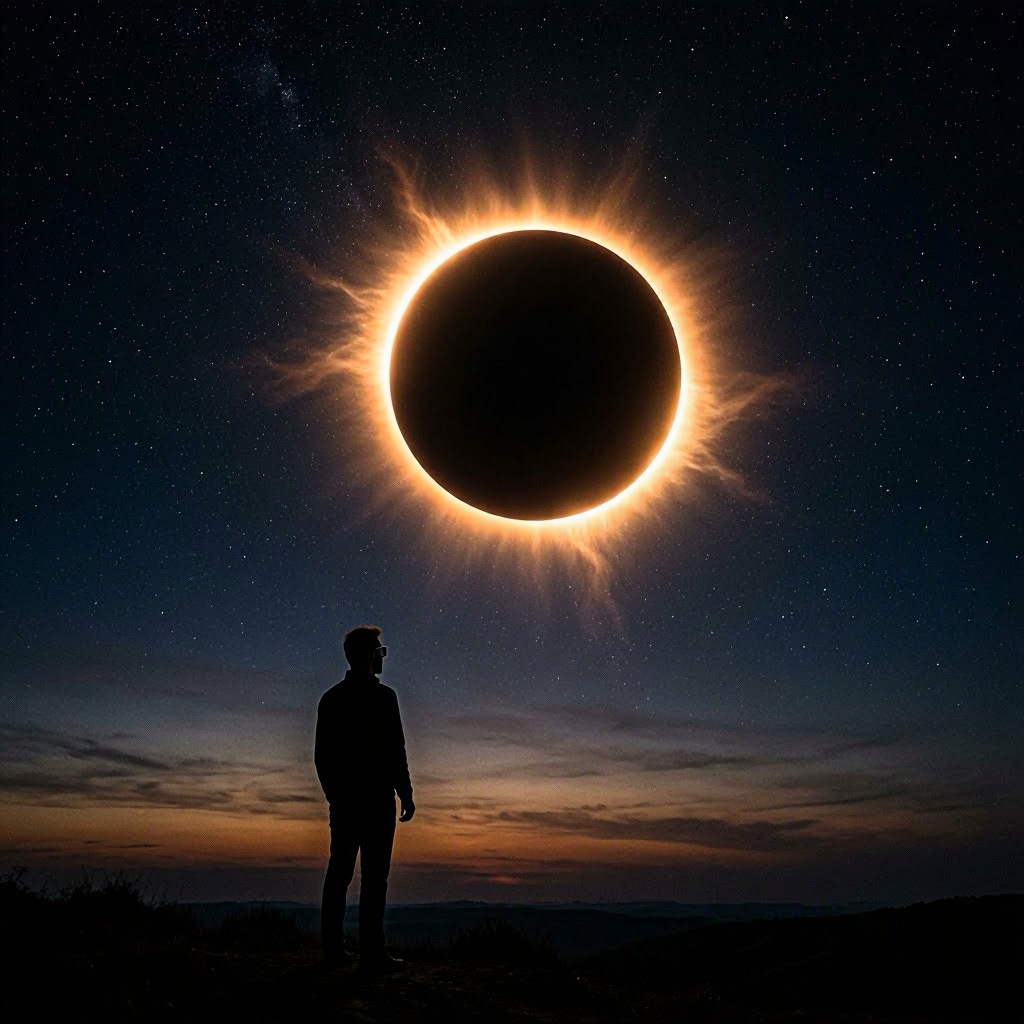
During totality, however, the Moon blocks the Sun’s intense glare, allowing the corona to emerge as a glowing halo surrounding the dark silhouette of the Moon.
The view is so striking that many first-time eclipse viewers describe it as impossible to capture accurately in photographs.
Scientists continue studying the corona because it holds important clues about solar activity, solar winds, and space weather that can affect technology here on Earth.
Without eclipses, observing the corona would be far more difficult.
6. Total Darkness Is Not the Most Memorable Part
Many people assume that the darkness itself is the highlight of a total eclipse. Surprisingly, experienced eclipse chasers often disagree.
Instead, they point to the moments immediately before and after totality as the most unforgettable.
Just seconds before the Sun disappears completely, sunlight shines through valleys along the Moon’s edge, creating sparkling points known as “Baily’s Beads.” Moments later, a brilliant flash called the “Diamond Ring Effect” appears, resembling a dazzling gemstone set against the dark sky.
These fleeting visual phenomena can last only a few seconds, yet they are among the most photographed and celebrated aspects of any eclipse.
For many observers, these brief transitions create an emotional impact even greater than the darkness itself.
7. A Six-Minute Eclipse Can Leave a Lifelong Impression
Perhaps the most remarkable fact about a six-minute eclipse is the lasting effect it has on those who witness it.
Countless observers report feeling a deep sense of awe during totality. Scientists, photographers, travelers, and casual skywatchers alike often describe the experience as one of the most powerful natural events they have ever seen.
Unlike a sunrise or sunset, a total eclipse combines multiple extraordinary phenomena at once. The sky darkens unexpectedly. Stars become visible during the day. Temperatures fall. Wildlife reacts. A glowing solar corona appears around a blackened Sun.
All of this unfolds in just a few minutes.
Many eclipse enthusiasts travel thousands of miles and spend years planning for an opportunity that lasts less time than a coffee break. Yet after witnessing totality, most agree the effort is worth it.
The emotional impact comes not only from the visual spectacle but also from the realization that you are observing a rare alignment of celestial bodies occurring with astonishing precision.
Why These Six Minutes Matter
In our fast-paced world, six minutes may not seem significant. We spend more time scrolling through social media, waiting at traffic lights, or standing in line at a store. Yet during a total solar eclipse, those six minutes become some of the most valuable moments nature can offer.
They remind us of the incredible mechanics of the universe. The Moon, despite being 400 times smaller than the Sun, appears almost exactly the same size in our sky because it is roughly 400 times closer to Earth. This cosmic coincidence allows total solar eclipses to occur and creates one of astronomy’s greatest spectacles.
These events also connect people across cultures and generations. Whether viewed by ancient astronomers or modern scientists, eclipses inspire curiosity, wonder, and a renewed appreciation for our place in the cosmos.
The next time a total solar eclipse is announced, don’t focus solely on where it will happen. Think about what those six minutes truly represent: a rare and fleeting opportunity to witness one of nature’s most extraordinary performances.
For a few brief moments, day becomes night, the Sun reveals its hidden atmosphere, and the universe puts on a show that few people ever forget. That is what makes the six-minute eclipse so remarkable—and why it deserves far more attention than it usually receives.







