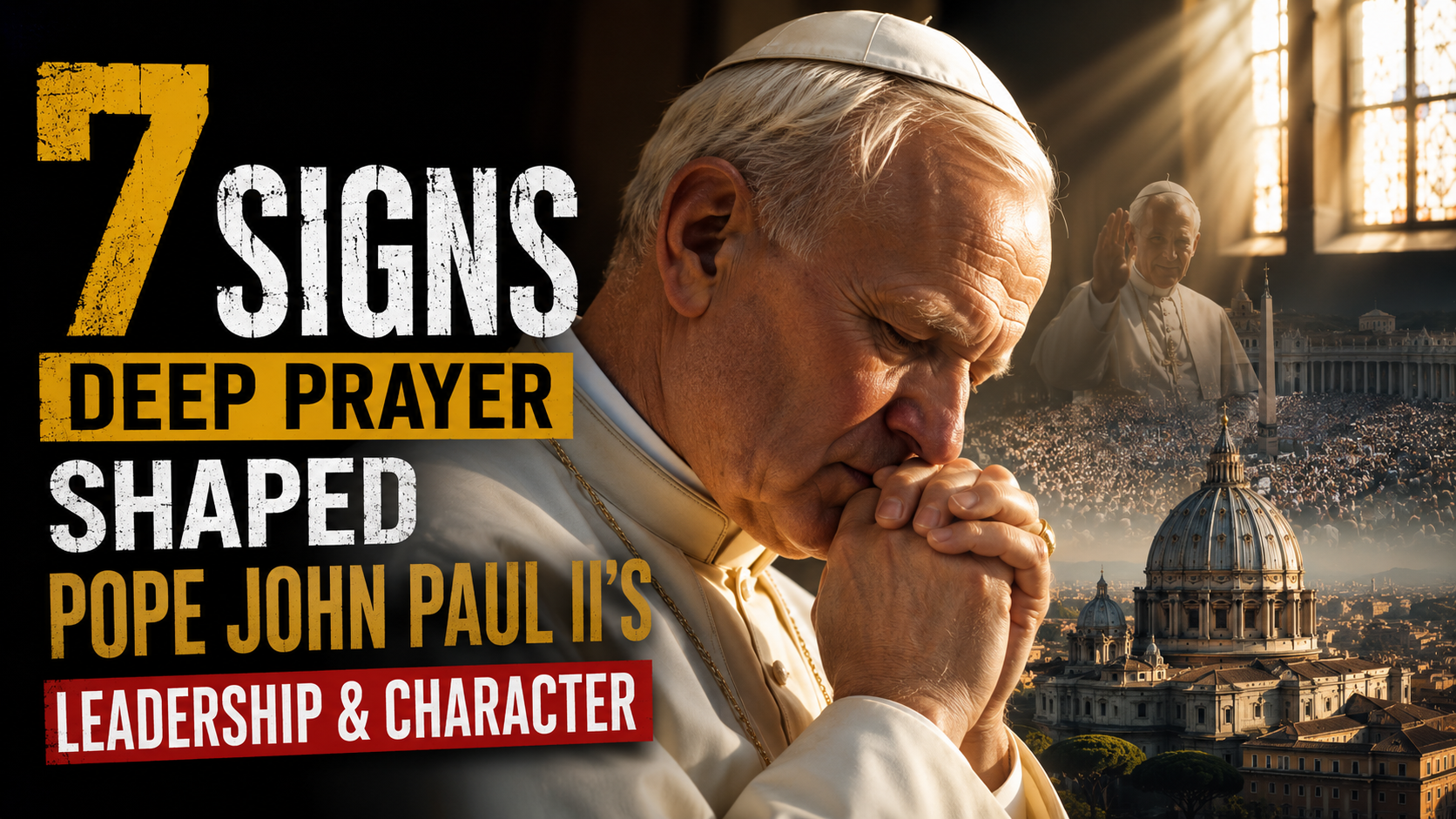
Pope John Paul II is remembered as one of the most influential spiritual leaders of the modern era. His papacy, which lasted from 1978 to 2005, left a lasting impact on the Catholic Church and the wider world. Beyond his public speeches, global travels, and diplomatic influence, one of the most defining aspects of his life was his deep commitment to prayer.
Many who studied his life closely believe that prayer was not just a private practice for him—it was the foundation of his leadership style, decision-making, and personal resilience. It shaped how he approached suffering, dialogue, forgiveness, and global issues.
Rather than separating faith from leadership, he integrated prayer into every aspect of his role. This spiritual discipline became visible in his actions, priorities, and the way he interacted with people from all walks of life.
Here are seven clear signs that deep prayer played a central role in shaping Pope John Paul II’s leadership and character.
1. He Began Each Day With Structured Prayer
One of the most consistent aspects of Pope John Paul II’s life was his disciplined prayer routine.
He reportedly began each day with early morning prayer before engaging in any public duties or meetings.
This practice helped him center his thoughts and align his actions with his spiritual values.
For him, prayer was not occasional—it was a daily foundation that guided everything that followed.
2. He Sought Silence in the Midst of Responsibility
Despite his demanding global responsibilities, he regularly made time for silence and reflection.
Even during intense schedules involving travel and public appearances, he would withdraw for moments of quiet prayer.
This balance between action and contemplation allowed him to remain grounded despite constant external pressure.
His ability to maintain inner stillness became a defining trait of his leadership.
3. He Drew Strength From Prayer During Physical Suffering
Later in his life, Pope John Paul II faced significant health challenges, including Parkinson’s disease.
Rather than stepping away from public life entirely, he continued his duties while visibly enduring physical decline.
Many observers noted that prayer appeared to be a source of strength and endurance for him during this period.
His willingness to remain active despite suffering reflected a deep spiritual resilience.
4. His Decisions Were Guided by Moral Reflection
Pope John Paul II was known for taking time to reflect deeply before making major decisions.
Rather than reacting impulsively, he often turned to prayer as a way of seeking clarity and moral guidance.
This reflective approach influenced his teachings on human dignity, social justice, and global peace.
His leadership style emphasized thoughtfulness over haste.
5. He Emphasized Forgiveness Even in Difficult Circumstances
One of the most widely remembered moments of his papacy was his forgiveness of the man who attempted to assassinate him in 1981.
This act of forgiveness was not seen as spontaneous but as rooted in his long-standing spiritual practice.
Prayer played a key role in shaping his belief in compassion and reconciliation, even in the face of extreme personal harm.
This example became a powerful global symbol of mercy.
6. He Connected Prayer With Service to Others
For Pope John Paul II, prayer was never isolated from action.
He believed that spiritual life should naturally lead to service, compassion, and engagement with the world.
This belief influenced his extensive travels, during which he met people in diverse cultural and political contexts.
His leadership consistently reflected the idea that faith should be lived through service.
7. He Viewed Prayer as a Source of Inner Stability
Throughout his life, Pope John Paul II demonstrated remarkable emotional and spiritual stability despite global challenges.
Whether addressing political tensions, social issues, or internal Church matters, he maintained a steady presence.
Many believe this stability came from his consistent prayer life, which provided a sense of grounding amid uncertainty.
Prayer, in his view, was not an escape from the world but a way to engage it more fully and calmly.
Why Prayer Was Central to His Leadership
Pope John Paul II’s leadership cannot be fully understood without recognizing the role of prayer in his daily life.
It shaped his values, influenced his decisions, and helped him remain steady during moments of global and personal crisis.
Rather than separating spirituality from leadership, he merged the two into a unified approach to life and service.
This integration is part of why his influence extended far beyond religious circles.
Final Thoughts
The life of Pope John Paul II offers a powerful example of how inner spiritual practices can shape outward leadership.
His commitment to prayer influenced not only his personal resilience but also his global message of peace, dignity, and compassion.
The seven signs outlined above show that prayer was not simply a private habit for him—it was the foundation of his character and leadership style.
In a world often driven by speed and external pressure, his life serves as a reminder that deep reflection and inner grounding can lead to more thoughtful, compassionate, and enduring leadership.







