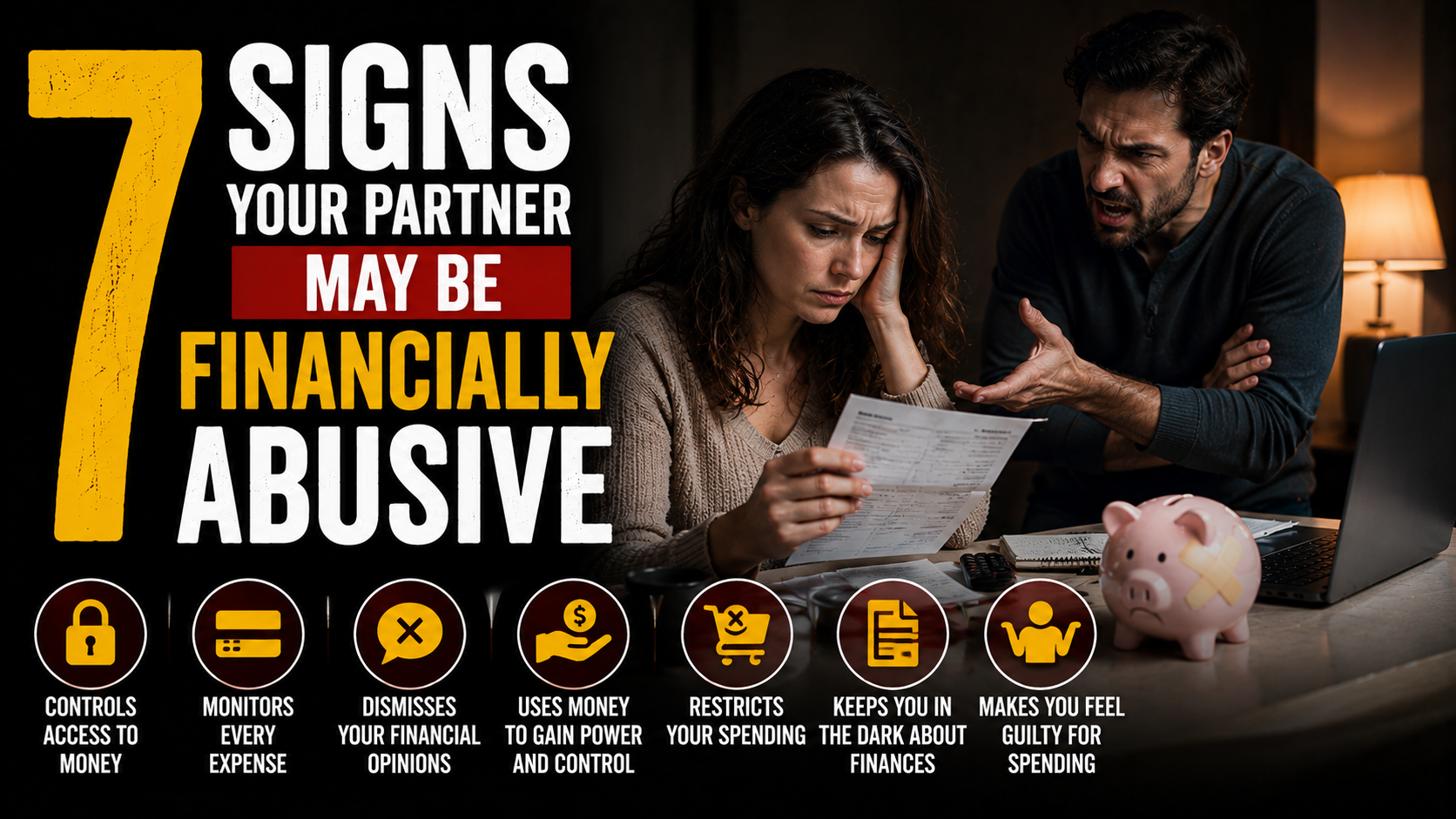
When people think of abuse, physical violence and emotional manipulation are often the first things that come to mind. However, there is another form of abuse that frequently goes unnoticed: financial abuse.
Financial abuse occurs when one person uses money, financial resources, or economic control to dominate another person. While it may not leave visible bruises, it can severely affect a person’s independence, confidence, and ability to make decisions about their own life.
Understanding the warning signs can help individuals recognize unhealthy patterns before they become deeply entrenched.
Financial Abuse Is More Common Than Many Realize

Financial control is one of the most common components of abusive relationships. Despite this, many people don’t immediately recognize it as a form of abuse.
Research has shown that economic control often accompanies other forms of domestic abuse. By limiting a partner’s access to money, employment opportunities, or financial information, an abuser can create dependence and make it more difficult for the victim to leave the relationship.
The impact extends beyond finances. Losing control over your own money can affect self-esteem, personal freedom, and overall emotional well-being.
Why Financial Independence Matters

Financial independence provides more than just the ability to pay bills. It offers security, confidence, and the freedom to make choices about your future.
When someone controls your income, spending, or access to resources, it can gradually erode your sense of autonomy. Over time, you may feel trapped, powerless, or unable to meet even basic needs without the other person’s approval.
Recognizing these behaviors early can help prevent long-term harm.
1. They Interfere With Your Job or Education

One major warning sign is when a partner intentionally disrupts your ability to work or pursue educational opportunities.
This may include:
- Constantly calling or texting while you’re working
- Creating conflicts before important shifts or exams
- Discouraging you from accepting promotions
- Pressuring you to quit your job
- Sabotaging your education or career plans
By limiting your earning potential, an abusive partner increases your dependence on them for financial support.
2. They Control Your Major Life Decisions

Healthy relationships involve discussion, compromise, and mutual respect.
Financial abuse often appears when one person dictates what the other can or cannot do regarding employment, education, or personal goals.
While offering advice is normal, consistently telling you what job to take, whether you can return to school, or how you should manage your career is a sign of unhealthy control rather than partnership.
3. They Become Angry When You Spend Money

Money disagreements happen in most relationships. However, there’s a significant difference between responsible budgeting and controlling behavior.
Warning signs include:
- Becoming excessively upset over routine purchases
- Monitoring every dollar you spend
- Demanding explanations for small expenses
- Restricting your access to your own money
- Refusing to allow you to participate in financial decisions
When one partner uses money as a tool to exert power, it can create an atmosphere of fear and dependence.
4. They Maintain Complete Financial Control

In some financially abusive relationships, one person controls every aspect of the household finances.
This may involve:
- Managing all bank accounts
- Holding all credit cards
- Refusing to share account information
- Preventing access to financial records
- Keeping assets solely in their name
Without access to financial information or resources, the other partner may struggle to build credit, save money, or establish financial security.
5. They Hide Financial Information

Secrecy surrounding money can be another red flag.
Examples include:
- Opening accounts without your knowledge
- Hiding debt
- Making large purchases secretly
- Using joint funds without discussion
- Concealing financial problems
Trust and transparency are essential components of a healthy relationship. Repeatedly hiding financial activity can be a form of economic manipulation and control.
6. They Give You an “Allowance”

Some couples agree to budgets or spending limits as part of their financial planning. That is very different from one partner controlling all the money and giving the other a limited amount to survive on.
This type of financial control may involve:
- Receiving money only when approved
- Being required to justify every purchase
- Having spending monitored closely
- Being punished for exceeding limits
Over time, this behavior can leave a person feeling powerless and dependent on their partner for even basic needs.
7. They Constantly Take Advantage of Your Generosity

Financial abuse doesn’t always involve restricting money. Sometimes it involves exploiting another person’s willingness to give.
Common examples include:
- Frequently borrowing money without repayment
- Expecting financial support while contributing little
- Taking advantage of shared resources
- Pressuring you into paying for everything
- Using guilt to obtain financial assistance
Healthy relationships involve mutual support. When one person continually takes while rarely giving back, it may indicate a deeper pattern of financial exploitation.
The Impact of Financial Abuse

The consequences of financial abuse often extend far beyond money.
Victims may experience:
- Loss of confidence
- Increased stress and anxiety
- Difficulty leaving the relationship
- Damaged credit
- Career setbacks
- Reduced financial security
In many cases, financial abuse works alongside emotional or psychological abuse, creating a cycle that becomes increasingly difficult to escape.
Protecting Yourself
While no relationship is completely risk-free, maintaining some degree of financial independence can help protect you.
Consider:
- Keeping access to your own bank account
- Understanding shared finances
- Monitoring your credit report
- Maintaining employment when possible
- Learning about household finances
- Discussing financial expectations openly
Strong relationships are built on trust, transparency, and mutual respect—not control.
The Bottom Line
Financial abuse can be difficult to recognize because it often develops gradually. What starts as concern about spending or offers to “handle the finances” can evolve into controlling behavior that limits a person’s independence and freedom.
If you notice patterns such as restricted access to money, excessive financial control, workplace interference, or financial secrecy, it’s important to take those concerns seriously.
A healthy partnership should empower both individuals—not leave one person financially dependent, isolated, or unable to make decisions about their own future.







