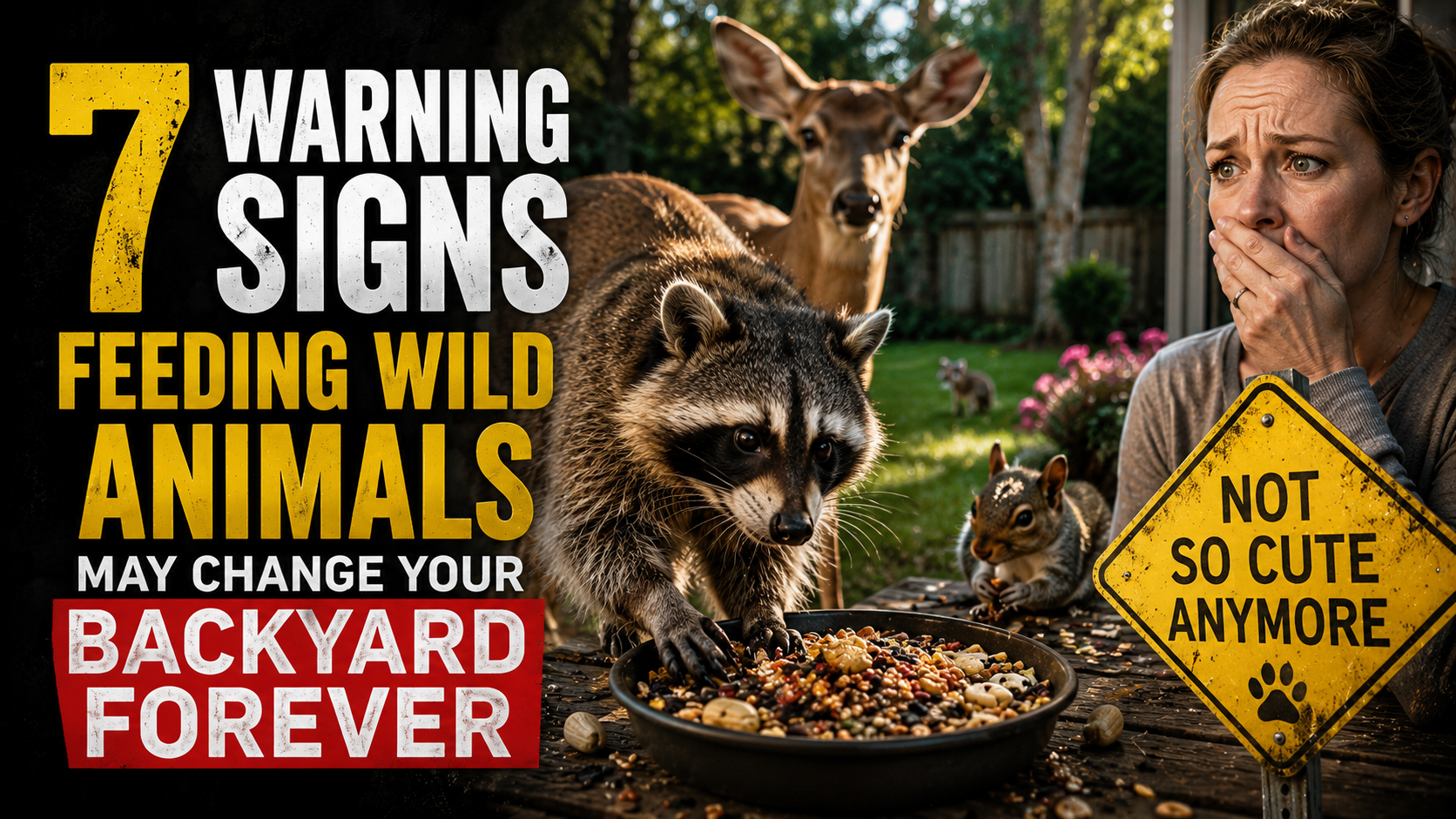
There’s something undeniably charming about watching wildlife visit your backyard. A squirrel balancing on a fence, a family of rabbits grazing in the grass, or a colorful bird landing near your window can make even an ordinary day feel special. For many homeowners, leaving out food seems like a harmless way to attract more of these visitors and enjoy a closer connection with nature.
At first, the results often seem positive. Animals appear regularly, children enjoy observing them, and the yard feels more alive. But wildlife experts frequently caution that feeding wild animals can have unintended consequences that many people don’t anticipate.
What begins as a simple act of kindness can gradually alter animal behavior, attract unexpected visitors, and change the balance of your local ecosystem. In some cases, the effects can last long after the food source is removed.
Before turning your backyard into a feeding station, it’s worth understanding the warning signs that wildlife habits may be changing in ways that aren’t always beneficial.
Here are seven signs that feeding wild animals could be transforming your backyard—and not necessarily for the better.
1. Animals Start Appearing in Larger Numbers
One of the earliest signs that feeding is affecting local wildlife is a noticeable increase in animal activity.
At first, you may see a few birds or squirrels. Over time, word seems to spread through the animal kingdom. More creatures begin arriving, often at predictable times of day.
Wild animals are highly skilled at locating reliable food sources. Once they discover an easy meal, they tend to return repeatedly.
The problem is that food doesn’t just attract the animals you want to see.
A feeding area may draw larger populations than your yard can naturally support. What begins as a pleasant wildlife encounter can eventually feel more like an invasion.
When animal numbers increase beyond normal levels, competition, territorial disputes, and property damage often follow.
2. Wildlife Becomes Less Fearful of Humans
Many people enjoy the idea of animals becoming comfortable around them.
However, experts often view excessive familiarity as a warning sign.
Wild animals survive partly because they maintain a healthy fear of humans. This caution helps protect both people and wildlife.
When animals repeatedly associate humans with food, that natural wariness can fade.
Squirrels may approach more closely. Raccoons might begin visiting porches. Larger animals may lose their instinct to keep a safe distance.
This behavioral shift can create problems over time.
Animals that become overly comfortable around humans are more likely to enter homes, damage property, or engage in risky interactions.
In some situations, they may even need to be relocated if conflicts become severe.
3. Unwanted Species Begin Showing Up
Most people who feed wildlife imagine attracting songbirds, butterflies, or other appealing backyard visitors.
Unfortunately, food sources rarely discriminate.
The same offerings that attract desirable animals can also draw less welcome guests.
Rodents, raccoons, skunks, opossums, crows, and even predators may be attracted to the area.
As prey animals gather around food, larger predators sometimes follow.
A backyard feeding station can unintentionally create a small ecosystem centered around an artificial food source.
While this may sound fascinating from a scientific perspective, it often creates challenges for homeowners.
Unexpected wildlife encounters become much more common once feeding patterns are established.
4. Property Damage Starts Increasing
One of the most common consequences of feeding wildlife is damage to landscaping and structures.
Animals searching for food often dig in gardens, chew on plants, scratch fences, or investigate buildings.
Squirrels may gnaw on wood and wiring.
Raccoons can damage roofs and attic vents.
Birds may leave droppings on decks, vehicles, and outdoor furniture.
As wildlife populations increase around a property, opportunities for damage increase as well.
Many homeowners don’t connect the problem to feeding until significant issues develop.
What seemed like a harmless hobby can sometimes lead to expensive repairs and ongoing maintenance concerns.
5. Natural Foraging Behaviors Begin to Change
Wild animals evolved to spend much of their time searching for food.
Foraging helps regulate movement patterns, population distribution, and ecological balance.
Artificial feeding can disrupt these natural behaviors.
When food becomes easy to obtain, some animals spend less time gathering resources from their normal habitats.
This shift may affect migration routes, feeding schedules, and social dynamics.
In extreme cases, animals can become partially dependent on human-provided food.
Wildlife experts often emphasize that even well-intentioned feeding may alter behaviors that have developed over thousands of years.
The consequences are not always immediately visible, but they can influence local ecosystems over time.
6. Disease Risks Increase
Whenever animals gather in concentrated numbers, the potential for disease transmission rises.
In nature, wildlife populations are often spread across large areas.
Feeding stations bring animals into close contact with one another.
Bird feeders, feeding platforms, and food piles can become gathering points where diseases spread more easily.
Contaminated food, shared surfaces, and increased interaction all contribute to risk.
Some illnesses can move quickly through wildlife populations under these conditions.
Although most backyard feeding efforts are motivated by care and appreciation for animals, improper feeding practices may unintentionally create health challenges for the very species people hope to help.
Regular cleaning and responsible wildlife management become increasingly important when food sources are involved.
7. The Backyard Ecosystem Begins to Depend on Human Activity
Perhaps the most significant warning sign occurs when wildlife activity becomes closely tied to human feeding schedules.
Animals are remarkably adaptable.
If food appears consistently at the same time each day, many species learn to anticipate it.
Over time, wildlife behavior may begin revolving around that artificial resource.
This dependency creates vulnerability.
If the food source suddenly disappears due to travel, relocation, weather, or changing circumstances, animals that have adjusted their routines may struggle temporarily.
While most wild animals eventually adapt, experts generally encourage maintaining conditions that support natural independence whenever possible.
The healthiest ecosystems are typically those that rely on natural resources rather than regular human intervention.
Why Feeding Wildlife Feels So Rewarding
If feeding wildlife can create problems, why do so many people continue doing it?
The answer is understandable.
Humans naturally enjoy connecting with animals.
Watching birds visit a feeder or seeing a rabbit in the yard creates feelings of relaxation, curiosity, and appreciation for nature.
For families, wildlife encounters can also become educational experiences.
Children learn about animal behavior, seasonal changes, and local ecosystems through direct observation.
These benefits are real.
The challenge is finding ways to enjoy wildlife without creating unintended consequences.
Fortunately, there are alternatives that support animals while preserving natural behaviors.
Better Ways to Attract Wildlife Naturally
Wildlife experts often recommend focusing on habitat rather than feeding.
Instead of providing food directly, homeowners can create environments that naturally support local species.
Native plants are among the most effective tools.
They provide nectar, seeds, berries, shelter, and nesting opportunities that wildlife recognizes and uses naturally.
Bird baths offer water without altering feeding habits.
Trees and shrubs create protective cover.
Pollinator gardens attract butterflies, bees, and hummingbirds while benefiting local ecosystems.
These approaches encourage wildlife visits without creating the same behavioral changes associated with regular feeding.
The Difference Between Helping and Habituating
One important distinction involves the difference between helping wildlife and habituating wildlife.
Helping wildlife often means preserving habitat, reducing hazards, and supporting healthy ecosystems.
Habituation occurs when animals become accustomed to humans and alter their behavior as a result.
Not all interactions are harmful.
However, experts generally agree that maintaining natural boundaries benefits both people and animals.
Wild creatures thrive best when they remain wild.
The goal should be coexistence rather than dependence.
Understanding this distinction can help homeowners make more informed decisions about how they interact with local wildlife.
Seasonal Considerations Matter
There are situations where supplemental feeding may be appropriate, particularly when conducted responsibly and according to guidance from wildlife organizations.
For example, bird feeding is common in many regions and can be beneficial when feeders are maintained properly.
Seasonal conditions also influence animal needs.
Harsh winters, droughts, and habitat loss can affect local wildlife populations in different ways.
Because circumstances vary by region and species, local wildlife agencies often provide the most reliable recommendations.
What works well in one area may not be suitable in another.
Understanding local conditions helps ensure that any wildlife-support efforts are both safe and effective.
Finding the Right Balance
The desire to connect with wildlife is not a problem.
In fact, appreciation for nature often leads people to become better environmental stewards.
The key is balance.
A backyard can support birds, pollinators, and other wildlife without becoming dependent on artificial feeding.
Thoughtful landscaping, water sources, native vegetation, and habitat preservation often provide longer-lasting benefits than food alone.
These approaches encourage healthy wildlife populations while maintaining natural ecological relationships.
In many cases, they create richer and more diverse backyard environments as well.
Final Thoughts
Feeding wild animals may seem like a simple act of kindness, but it can produce lasting changes that many homeowners never expect. Increased animal populations, altered behavior, property damage, disease risks, and ecosystem imbalances are all potential consequences of providing regular food sources.
That doesn’t mean people should avoid enjoying wildlife. Quite the opposite.
The most sustainable approach is often to create a welcoming habitat that allows animals to thrive naturally rather than encouraging dependence on human-provided food.
By understanding the warning signs and supporting wildlife responsibly, homeowners can enjoy the beauty of nature while helping preserve the behaviors and ecosystems that keep wild animals truly wild.
In the end, the best backyard for wildlife isn’t necessarily the one offering the most food—it’s the one providing the healthiest environment.