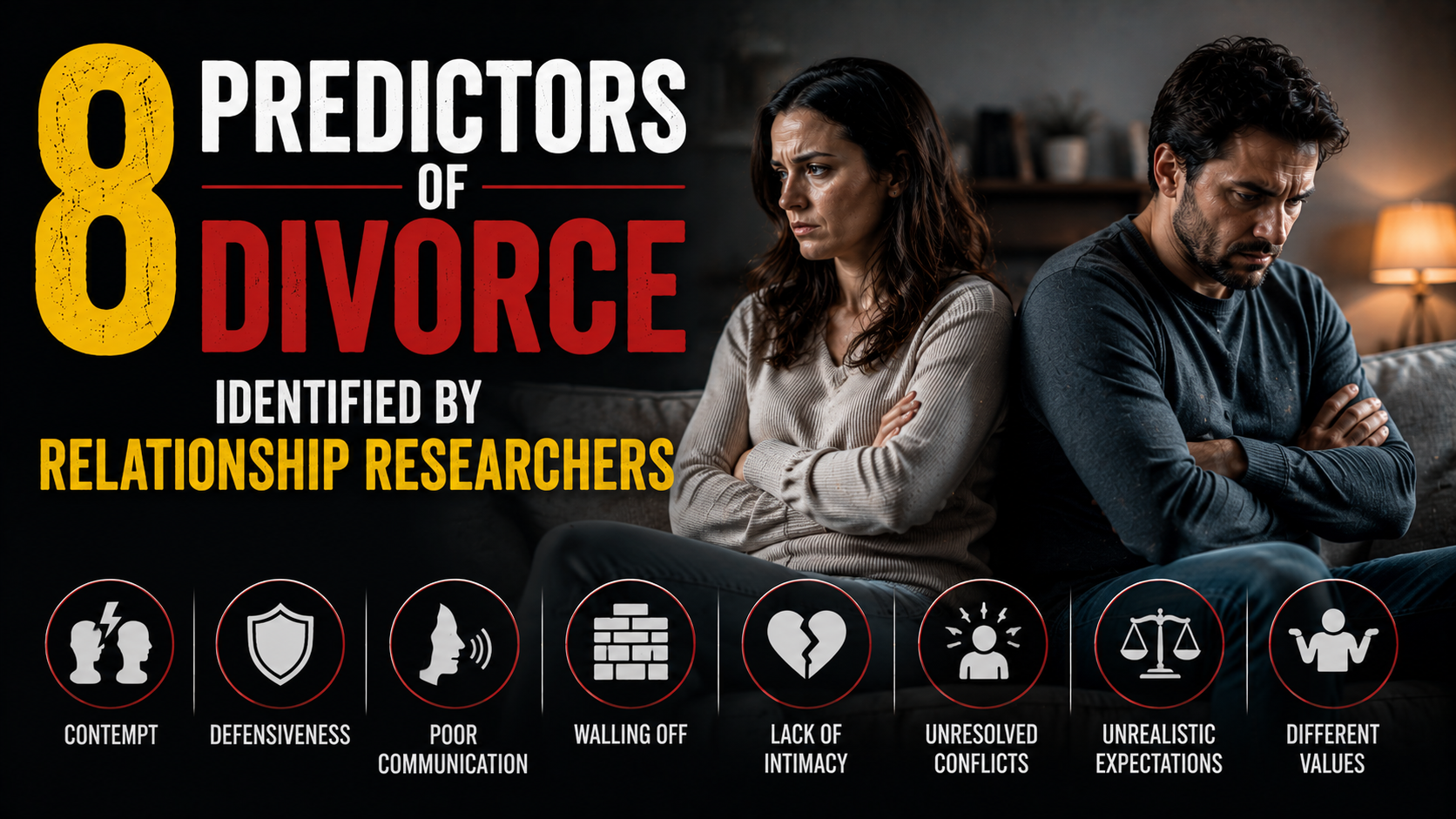
No one can predict the future of a marriage with complete certainty. Every relationship is unique, shaped by individual personalities, life experiences, and circumstances. However, decades of research have helped social scientists identify certain patterns that are more commonly associated with marital difficulties and, in some cases, divorce.
These factors don’t guarantee a relationship will fail, nor do they determine a couple’s fate. Instead, they highlight areas that may require greater attention, communication, and effort. Understanding these risk factors can help couples strengthen their relationships and address potential challenges before they become serious problems.
1. The Age You Marry Matters

Research has found that the age at which people marry can influence their long-term relationship outcomes.
Couples who marry very young, particularly during their teenage years, tend to face a higher risk of divorce compared to those who marry later. This may be because younger individuals are still developing emotionally, financially, and personally.
Interestingly, some studies have also suggested that divorce risk begins to increase again for people who marry later in life, particularly after their early thirties. While age alone doesn’t determine success, timing can play a role in relationship stability.
2. A Larger Age Gap Can Create Challenges

Age differences between partners don’t automatically lead to relationship problems. Many couples with significant age gaps enjoy happy and lasting marriages.
However, research suggests that as the age difference between spouses grows, the likelihood of divorce tends to increase. Differences in life stages, priorities, energy levels, and long-term goals can sometimes create additional challenges that couples must navigate together.
The greater the age gap, the more likely these differences may affect compatibility over time.
3. Employment and Financial Stability

Money is one of the most common sources of conflict in relationships.
Studies have found that employment status can influence marital satisfaction and stability. Financial uncertainty often creates stress that affects communication, emotional well-being, and relationship dynamics.
Researchers have noted that couples may experience additional strain when one partner is unemployed for extended periods, particularly when financial expectations within the relationship are unclear or unmet.
The issue is often less about income itself and more about the stress, insecurity, and pressure that financial difficulties can create.
4. Education Level Can Play a Role

Educational attainment has also been linked to divorce rates.
Couples in which one or both partners have lower levels of formal education statistically experience higher rates of divorce than couples with advanced education. Experts believe this connection may be partially related to financial opportunities, job stability, and access to resources.
Education itself isn’t the determining factor. Instead, the economic and social advantages that often accompany higher education may contribute to greater relationship stability.
5. Communication Habits Are Critical

One of the strongest predictors of relationship success is the way couples communicate with one another.
Relationship researcher and psychologist John Gottman identified four communication behaviors that are particularly damaging to marriages. He referred to them as the “Four Horsemen” because of their strong association with relationship breakdown.
These include:
- Criticism: Attacking a partner’s character rather than addressing a specific issue.
- Contempt: Treating a partner with disrespect, sarcasm, or superiority.
- Defensiveness: Refusing to accept responsibility and constantly shifting blame.
- Stonewalling: Withdrawing from conversations and shutting down communication.
When these behaviors become frequent patterns, they can slowly erode trust, intimacy, and emotional connection.
6. Intimacy and Emotional Connection

Physical intimacy is important in many relationships, but emotional intimacy matters just as much.
When couples begin to lose their emotional closeness, affection, or physical connection, it can signal deeper relationship challenges. A noticeable decline in intimacy often reflects unresolved issues such as stress, resentment, poor communication, or emotional distance.
Interestingly, some experts have also noted that extremely intense affection early in a relationship isn’t always a guarantee of long-term success. Relationships built on intense emotions alone may struggle if deeper foundations of trust, communication, and compatibility are missing.
7. Everyday Stress Can Take a Bigger Toll Than You Think

Major life events aren’t the only things that challenge marriages.
Small daily frustrations can gradually accumulate and create tension over time. Work pressure, financial worries, parenting responsibilities, household duties, and everyday inconveniences can all affect relationship satisfaction.
When couples don’t effectively manage stress together, these seemingly minor frustrations can slowly undermine emotional connection and increase conflict.
Many relationship experts argue that how couples handle everyday stress is often more important than how they handle occasional major crises.
8. Mutual Respect Is Essential

Respect forms the foundation of every healthy relationship.
When one partner consistently criticizes, controls, manipulates, belittles, or dismisses the other, the relationship can become emotionally unsafe. Over time, a lack of respect damages trust, communication, and emotional intimacy.
Healthy couples may disagree, argue, and experience conflict, but they continue to treat one another with dignity and consideration.
Many therapists consider ongoing disrespect to be one of the clearest warning signs of relationship trouble because it affects nearly every aspect of the partnership.
No Single Factor Determines a Marriage’s Future

While researchers have identified several factors associated with higher divorce rates, it’s important to remember that statistics do not predict individual outcomes.
A couple may possess several risk factors and still enjoy a long, happy marriage. Likewise, a couple with none of these risk factors may still face challenges.
Relationships are influenced by countless variables, including personality, emotional maturity, shared values, life circumstances, commitment, and willingness to grow together.
The Bottom Line
Research can offer valuable insights into the patterns and behaviors that contribute to relationship success or difficulty. Factors such as age at marriage, financial stability, communication habits, intimacy, stress management, and mutual respect can all influence a couple’s long-term happiness.
However, these factors should be viewed as opportunities for awareness rather than predictions of failure.
Strong relationships aren’t built on perfect circumstances. They are built through trust, communication, respect, emotional connection, and a shared commitment to working through life’s challenges together. By understanding potential risk factors and addressing them proactively, couples can create a stronger foundation for a lasting and fulfilling partnership.







