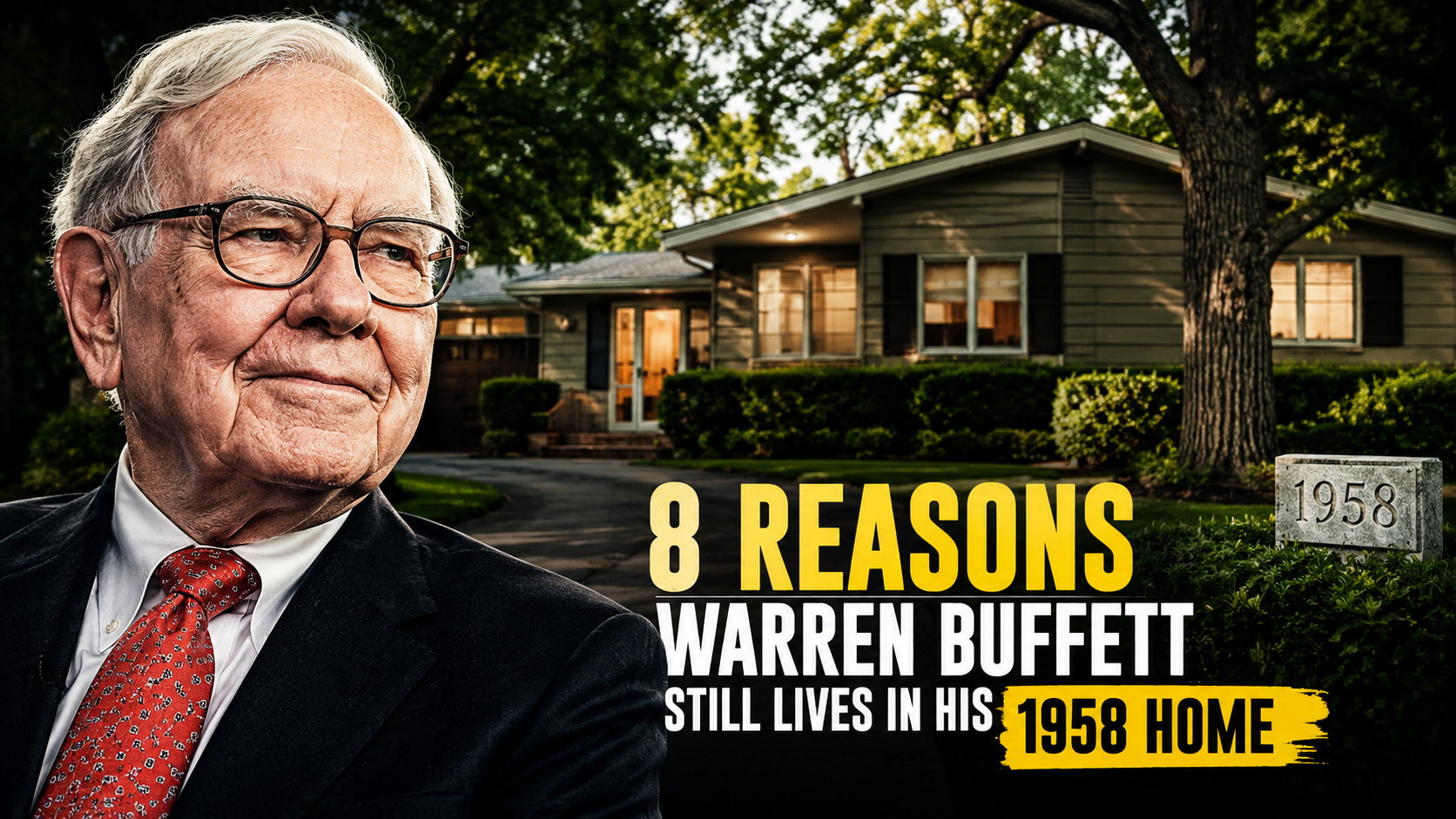
When people think of billionaires, they often picture sprawling mansions, private islands, luxury penthouses, and extravagant lifestyles. Yet one of the wealthiest individuals in history has consistently defied those expectations. Warren Buffett, the legendary investor and chairman of Berkshire Hathaway, continues to live in the same Omaha, Nebraska home he purchased in 1958 for $31,500.
Today, Buffett’s net worth is worth tens of billions of dollars, yet he has never felt the need to move into a mega-mansion or showcase his wealth through lavish real estate. His modest home has become a symbol of the values that helped him build his fortune: discipline, patience, practicality, and long-term thinking.
Many people wonder why someone with virtually unlimited financial resources chooses to stay in a house that most middle-class families could imagine owning. The answer goes far beyond money. Buffett’s decision reflects a philosophy about life, success, and happiness that has inspired investors and entrepreneurs around the world.
Here are eight key reasons Warren Buffett still lives in the house he bought more than six decades ago.
1. He Values Simplicity Over Luxury
One of Buffett’s most well-known traits is his commitment to a simple lifestyle. While many wealthy individuals upgrade their homes as their fortunes grow, Buffett has never seen luxury as a necessity.
For him, a house serves a practical purpose: it provides comfort, security, and a place to live. Once those needs are met, spending millions more on a larger property offers little additional value.
Buffett has often emphasized that happiness does not come from owning bigger and more expensive things. Instead, he believes fulfillment comes from meaningful work, strong relationships, and personal freedom.
His home reflects that mindset. Rather than chasing status symbols, he focuses on what genuinely improves his quality of life. Staying in the same house allows him to avoid unnecessary complications and remain grounded despite his extraordinary wealth.
2. The House Holds Personal Memories
A home is more than just a financial asset. It is often the backdrop for life’s most important moments.
Buffett’s Omaha residence has been part of his life for decades. It is where he raised his family, celebrated milestones, and built the foundations of his business empire. Every room likely carries memories that cannot be replaced by a newer or larger property.
For many people, emotional value outweighs market value. Buffett is no exception. Leaving behind a home filled with cherished memories would mean giving up a significant part of his personal history.
This emotional connection helps explain why he has remained there for so long. The house is not merely a building—it is a symbol of a life well lived.
3. He Believes in Long-Term Thinking
One of Buffett’s most famous investment principles is buying quality assets and holding them for the long term. He often advises investors to avoid making decisions based on short-term trends or emotions.
Interestingly, he applies the same philosophy to his personal life.
Rather than constantly upgrading to newer and more expensive homes, Buffett made a purchase he was satisfied with and saw no reason to change. His home serves as a real-world example of the long-term mindset he teaches investors.
In a society that often encourages constant consumption and upgrading, Buffett demonstrates that lasting satisfaction comes from making thoughtful choices and sticking with them.
His decision to stay put reinforces the idea that not everything in life needs to be replaced simply because something newer becomes available.
4. He Doesn’t Feel the Need to Impress Others
Many luxury purchases are driven by social expectations. Expensive homes, luxury cars, and designer goods are often used to signal status and success.
Buffett has never been interested in playing that game.
Throughout his career, he has shown little concern for impressing others with displays of wealth. He is known for his practical habits, modest spending, and straightforward lifestyle.
By continuing to live in his longtime home, Buffett sends a powerful message: true confidence comes from knowing who you are, not from showing others what you own.
This attitude has earned him admiration from people around the world. Instead of chasing appearances, he focuses on substance, character, and results.
His example challenges the common belief that success must be accompanied by extravagance.
5. Financial Discipline Never Goes Out of Style
Even though Buffett can afford virtually anything, he remains disciplined with money.
Financial discipline is one of the cornerstones of his success. Throughout his life, he has consistently emphasized the importance of avoiding wasteful spending and making thoughtful financial decisions.
Buying a larger mansion would hardly affect his finances, but Buffett evaluates spending based on value rather than affordability.
This distinction is important. Just because someone can afford something does not mean it is a wise purchase.
Buffett has often encouraged people to think carefully before spending money on items that provide limited long-term benefit. His decision to remain in his Omaha home demonstrates that he practices what he preaches.
The lesson is simple but powerful: wealth is often built by making smart financial choices repeatedly over time.
6. Comfort Matters More Than Size
Many people assume bigger homes automatically provide a better lifestyle. Buffett’s experience suggests otherwise.
A larger house often comes with more maintenance, higher operating costs, increased security concerns, and additional responsibilities. More space does not necessarily lead to greater happiness.
Buffett already has everything he needs in his current home. He knows the neighborhood, feels comfortable in the environment, and enjoys the familiarity that comes with staying in one place for many years.
Comfort is often underrated in discussions about wealth. Yet for Buffett, being content with his surroundings is more valuable than owning a property designed to impress visitors.
His choice highlights an important truth: the best home is not always the largest or most expensive one. It is the place where you feel most at ease.
7. He Stays Connected to His Roots
Despite becoming one of the richest people on the planet, Buffett has never forgotten where he came from.
Remaining in Omaha has helped him stay connected to the community that shaped him. While many billionaires relocate to exclusive neighborhoods or luxury destinations, Buffett has maintained close ties to his hometown.
This connection keeps him grounded and reminds him of the values that guided his journey to success.
Living in the same community for decades also allows him to maintain long-standing relationships and remain part of everyday life rather than isolating himself in a world of extreme privilege.
Many successful people struggle with staying connected to their roots as their circumstances change. Buffett’s decision to remain in Omaha demonstrates that success does not require abandoning the places and people that helped you along the way.
8. He Understands That Happiness Isn’t Bought
Perhaps the most important reason Buffett still lives in his 1958 home is that he understands a fundamental truth about life: happiness cannot simply be purchased.
Numerous studies have shown that while money can improve comfort and reduce stress, its ability to increase happiness eventually reaches a limit. Beyond a certain point, additional possessions often provide only temporary satisfaction.
Buffett has repeatedly expressed the idea that meaningful relationships, purposeful work, and good health contribute far more to long-term happiness than luxury items.
Because he already enjoys these things, moving into a larger mansion would likely do little to improve his overall well-being.
His lifestyle serves as a reminder that success is not measured by the size of your home, but by the quality of your life.
The Bigger Lesson Behind Buffett’s Home
The story of Warren Buffett’s house resonates because it challenges many modern assumptions about wealth.
In today’s world, people are constantly encouraged to upgrade—to buy bigger homes, newer cars, and more expensive possessions. Social media often amplifies the pressure to display success through material goods.
Buffett offers a different perspective.
His decision to stay in the same home for decades illustrates the value of contentment. It demonstrates that having more money does not automatically mean needing more things.
Instead, he focuses on what truly matters: financial independence, meaningful relationships, intellectual curiosity, and a sense of purpose.
These priorities have not only helped him build immense wealth but have also allowed him to maintain a remarkably balanced and fulfilling life.
Final Thoughts
Warren Buffett’s continued residence in the home he purchased in 1958 is not about saving money. It is about staying true to a philosophy that has guided him throughout his life.
He values simplicity over excess, memories over status, and comfort over luxury. He remains financially disciplined, connected to his roots, and focused on what genuinely creates happiness.
For many people, the most surprising aspect of Buffett’s story is not how much wealth he accumulated, but how little that wealth changed his lifestyle.
His modest house stands as a powerful reminder that success does not have to be flashy. Sometimes, the smartest investment is appreciating what you already have.
In a culture obsessed with bigger, newer, and more expensive, Warren Buffett’s home offers a timeless lesson: true wealth is not about owning more—it is about needing less.







