Cancer treatment has come a long way over the past few decades. What was once largely limited to surgery, chemotherapy, and radiation has evolved into a rapidly advancing field driven by genetics, immunology, artificial intelligence, and personalized medicine. Today, researchers are not only finding new ways to fight cancer but are also rethinking how treatment should be designed in the first place.
While cancer remains one of the world’s leading health challenges, experts are increasingly optimistic about the future. New discoveries are helping doctors understand tumors at a deeper level, opening doors to therapies that are more precise, more effective, and often less damaging to healthy tissue.
Although no single breakthrough will eliminate cancer entirely, many specialists believe the next generation of treatments could dramatically improve outcomes for millions of patients.
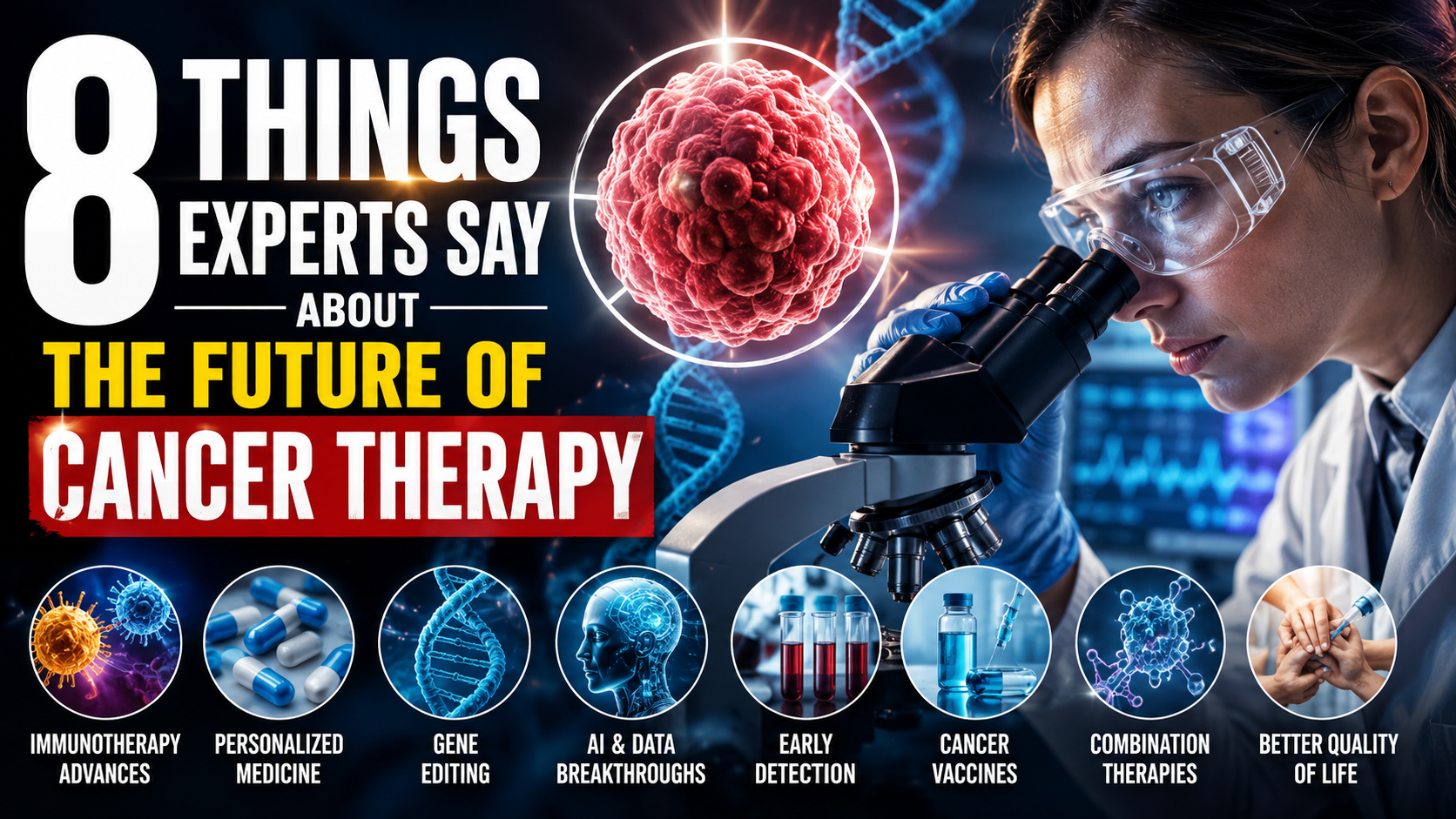
Here are eight key developments that experts say could shape the future of cancer therapy.
1. Personalized Medicine Will Become the Standard Approach
One of the biggest shifts occurring in cancer care is the move away from one-size-fits-all treatment plans.
In the past, patients with the same type of cancer often received similar therapies regardless of their individual genetic differences. However, scientists now understand that two tumors that appear identical under a microscope can behave very differently at the molecular level.
Advances in genomic testing allow doctors to analyze the specific mutations driving a person’s cancer. This information can help identify treatments that are more likely to work for that particular patient.
As genetic testing becomes faster and more affordable, experts expect personalized medicine to become routine. Instead of treating cancer based solely on where it originates, doctors may increasingly treat it based on its unique biological characteristics.
This personalized approach could improve treatment success while reducing unnecessary side effects.
2. Immunotherapy Will Continue to Expand
Immunotherapy has emerged as one of the most important advances in cancer treatment in recent years.
Unlike traditional therapies that directly attack tumors, immunotherapy helps the body’s immune system recognize and destroy cancer cells more effectively.
Several types of immunotherapy are already being used successfully for cancers such as melanoma, lung cancer, and certain blood cancers. However, researchers believe this is only the beginning.
Future immunotherapies may become more targeted, more powerful, and effective against a wider range of cancers.
Scientists are exploring new ways to activate immune responses, overcome resistance mechanisms, and identify patients most likely to benefit from these treatments.
Many experts believe immunotherapy will play an increasingly central role in cancer care over the coming decades.
3. Gene Editing Could Unlock New Treatment Possibilities
Gene-editing technologies such as CRISPR have created enormous excitement throughout the medical community.
These tools allow researchers to make highly precise changes to DNA, potentially correcting genetic abnormalities or enhancing the body’s ability to fight disease.
In cancer research, gene editing is being used to modify immune cells so they can better identify and attack tumors. Scientists are also studying ways to target specific genetic mutations that contribute to cancer growth.
Although much work remains before gene-editing therapies become widely available, experts see tremendous potential.
Future treatments may be able to address cancer at its genetic roots rather than simply controlling its symptoms.
4. Artificial Intelligence Will Improve Diagnosis and Treatment Decisions
Cancer generates enormous amounts of medical data, including imaging scans, pathology reports, genetic information, and clinical records.
Analyzing all of this information can be challenging, even for experienced specialists.
Artificial intelligence is helping bridge that gap.
AI systems can identify patterns in medical data that might otherwise go unnoticed. Researchers are already using machine learning to detect cancers earlier, predict treatment responses, and assist with diagnosis.
In the future, AI may help doctors create highly personalized treatment plans by combining information from multiple sources and generating data-driven recommendations.
Rather than replacing healthcare professionals, experts expect AI to become a powerful tool that supports clinical decision-making and improves patient care.
5. Cancer Vaccines May Become More Common
Vaccines are often associated with preventing infectious diseases, but researchers are increasingly developing vaccines designed to fight cancer.
Some cancer vaccines aim to prevent cancer from developing, while others are designed to help the immune system attack existing tumors.
Recent advances in mRNA technology have accelerated interest in this area. The same scientific principles used to develop certain modern vaccines may eventually be applied to personalized cancer treatments.
Researchers are testing vaccines tailored to the unique genetic profile of individual tumors.
If successful, these therapies could help train the immune system to recognize cancer cells more effectively and reduce the likelihood of recurrence.
Many experts view cancer vaccines as one of the most promising areas of ongoing research.
6. Earlier Detection Will Save More Lives
When cancer is identified early, treatment is often more successful.
For this reason, many researchers believe future breakthroughs in early detection may have just as much impact as new therapies themselves.
Scientists are developing innovative screening tools capable of identifying cancer long before symptoms appear.
Blood-based tests, often referred to as liquid biopsies, are attracting particular attention. These tests analyze fragments of tumor DNA circulating in the bloodstream.
A simple blood sample may one day help detect multiple types of cancer at extremely early stages.
Earlier diagnosis could allow treatment to begin sooner, improving survival rates and reducing the need for aggressive interventions.
Experts believe advances in detection technology could transform cancer outcomes worldwide.
7. Combination Therapies Will Become More Effective
Cancer is highly adaptable.
Tumors often evolve over time, developing resistance to treatments that initially worked well. This is one reason why many researchers are focusing on combination therapies.
Instead of relying on a single treatment, doctors may use multiple approaches simultaneously to attack cancer from different angles.
For example, immunotherapy might be combined with targeted drugs, radiation, or chemotherapy.
The goal is to make it more difficult for cancer cells to survive and adapt.
Researchers are also exploring combinations involving gene therapy, vaccines, and experimental treatments.
As scientists learn more about how cancers respond to treatment, combination strategies are expected to become increasingly sophisticated and effective.
8. Quality of Life Will Become a Bigger Priority
Historically, cancer treatment focused primarily on extending survival.
While survival remains the ultimate goal, experts increasingly emphasize the importance of maintaining quality of life during and after treatment.
Future therapies are expected to be more precise, reducing damage to healthy tissues and minimizing side effects.
Researchers are also paying closer attention to emotional health, cognitive function, pain management, and long-term recovery.
Advances in supportive care, rehabilitation, nutrition, and mental health services are becoming essential components of comprehensive cancer treatment.
The future of cancer care is not only about helping patients live longer—it is also about helping them live better.
Why These Developments Matter
The significance of these innovations extends far beyond scientific laboratories.
Every breakthrough brings researchers closer to treatments that are safer, more personalized, and more effective.
For patients and families facing a cancer diagnosis, improved therapies can mean fewer complications, better outcomes, and greater hope for the future.
The pace of progress is particularly encouraging because many of these advances are happening simultaneously. Genetic research, immunology, artificial intelligence, and precision medicine are increasingly working together rather than developing in isolation.
This collaboration is accelerating discoveries and creating opportunities that were unimaginable only a decade ago.
Challenges Still Ahead
Despite the optimism surrounding cancer research, important challenges remain.
Cancer is not a single disease. It includes hundreds of different conditions, each with unique characteristics and biological behaviors.
What works for one cancer may not work for another.
Cost is another concern. Many cutting-edge therapies are expensive, and ensuring widespread access will require continued innovation and healthcare investment.
Researchers must also carefully evaluate the long-term safety and effectiveness of emerging treatments through rigorous clinical trials.
While progress is exciting, experts stress that scientific advances require patience, careful testing, and responsible implementation.
Looking Toward the Future
Cancer therapy is entering one of the most transformative periods in medical history.
Advances in personalized medicine, immunotherapy, gene editing, artificial intelligence, cancer vaccines, and early detection are reshaping how doctors approach the disease. At the same time, a growing focus on quality of life is ensuring that patient well-being remains at the center of treatment decisions.
Although significant challenges remain, the direction of research offers genuine reason for optimism.
The future of cancer treatment will likely be smarter, more precise, and more individualized than ever before. Rather than relying on broad treatment strategies, doctors may soon have the ability to target each patient’s cancer with extraordinary accuracy.
For millions of people around the world, that future cannot arrive soon enough. Every new discovery moves medicine one step closer to transforming cancer from one of humanity’s most feared diseases into a condition that can be managed, treated, and in many cases potentially overcome.