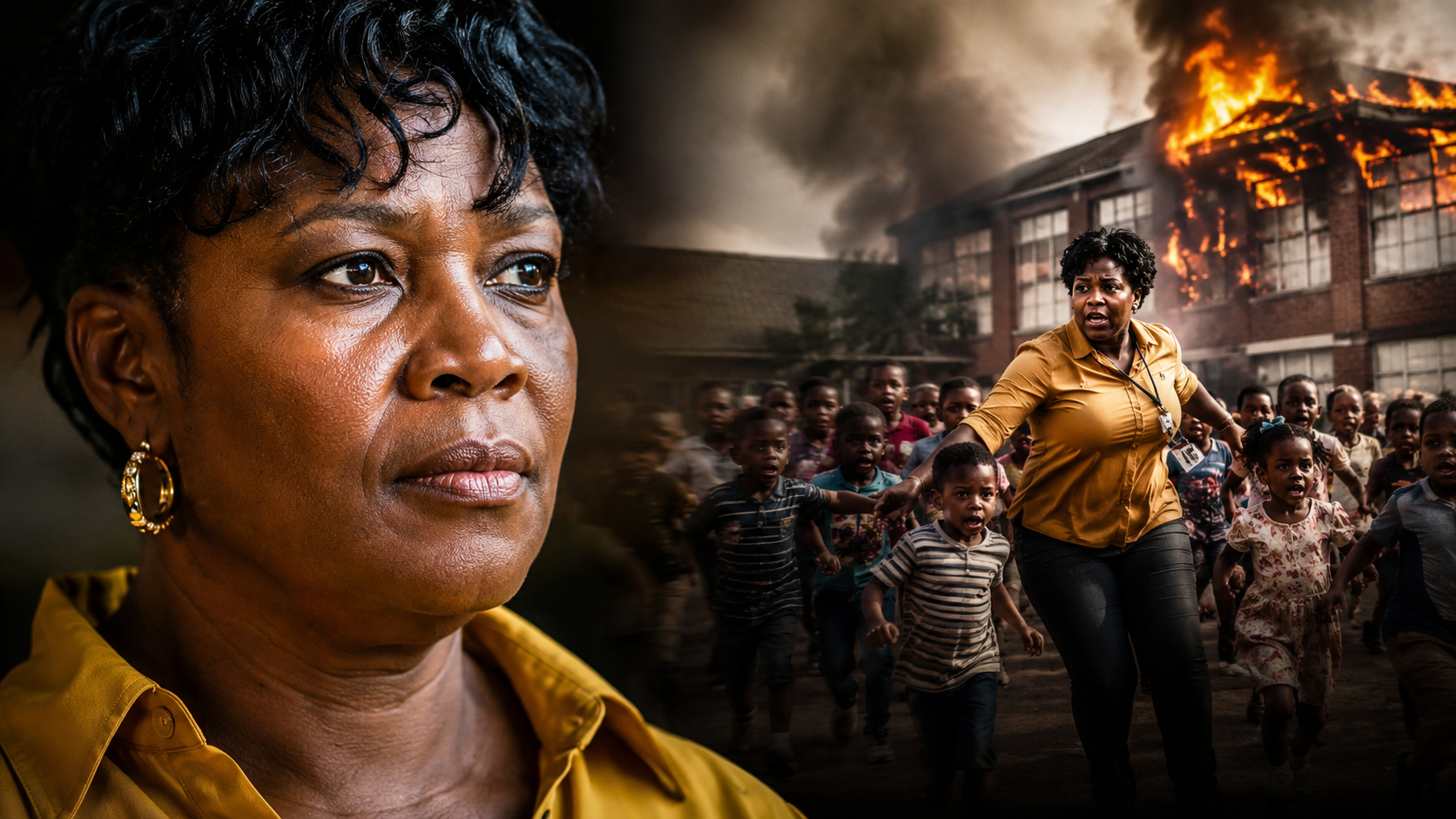
Stories of extraordinary courage often leave us asking the same question: What would I do in that situation? When faced with danger, most people instinctively focus on protecting themselves. Yet throughout history, there have been remarkable individuals who chose to put the safety of others ahead of their own.
One such example is Renita Smith, whose courageous actions in a life-threatening situation helped save the lives of 20 children. While many people recognize the bravery behind her decision, the psychological factors that drove her actions are equally fascinating.
What motivates someone to run toward danger when everyone else is trying to escape it? Why do certain individuals remain calm under pressure and make life-saving decisions in moments of chaos?
The answers often lie deep within human psychology. Courage isn’t simply the absence of fear. In many cases, it’s the ability to act despite fear because something else feels even more important.
Here are nine psychological reasons that may explain why Renita Smith risked everything to protect the children in her care—and what her actions teach us about the best qualities of human nature.
1. A Powerful Sense of Responsibility
One of the strongest psychological motivators is responsibility.
When people are entrusted with the well-being of others, especially children, they often develop a deep commitment to protecting them. This sense of duty can become so strong that personal safety temporarily takes a back seat.
For caregivers, teachers, school staff, and parents, responsibility is more than a job description. It becomes part of their identity.
In moments of crisis, individuals with a strong sense of responsibility often act automatically because their minds are focused on fulfilling that obligation.
For Renita Smith, protecting the children may not have felt like a choice at all. It may have felt like the only acceptable course of action.
2. The Protective Instinct Toward Children
Human beings are naturally wired to protect children.
Psychologists believe that throughout human evolution, safeguarding younger generations became essential for the survival of communities. As a result, people often experience a powerful emotional response when children are threatened.
This protective instinct can override fear and trigger immediate action.
Even strangers frequently risk their safety to help children in danger because the urge to protect vulnerable individuals is deeply rooted in human behavior.
When faced with a situation involving multiple children, that instinct may become even stronger, creating a powerful drive to ensure their safety at all costs.
3. Courage Is Acting Despite Fear
Many people mistakenly believe brave individuals don’t feel fear.
In reality, psychologists consistently find that courageous people experience fear just like everyone else. The difference is that they choose to move forward anyway.
Fear alerts us to danger, but courage allows us to focus on a higher priority.
During emergencies, brave individuals often recognize the risks involved yet refuse to let fear dictate their decisions. Instead, they focus on what needs to be done.
Renita Smith’s actions demonstrate an important truth: courage isn’t the absence of fear—it’s the decision that something else matters more.
4. Training and Experience Shape Responses
In high-pressure situations, people often fall back on habits, training, and experience.
Professionals who work with children regularly practice safety procedures, emergency planning, and crisis management. These preparations can significantly influence how someone responds during a real emergency.
Rather than becoming overwhelmed by panic, trained individuals often focus on specific actions that increase safety.
Psychologists call this “automaticity”—the ability to perform critical tasks quickly because the brain has rehearsed them repeatedly.
While training alone doesn’t create heroism, it provides a framework that helps people make effective decisions when seconds matter.
5. Empathy Creates Immediate Action
Empathy is the ability to understand and share another person’s feelings.
Research consistently shows that highly empathetic individuals are more likely to help others, even when doing so involves personal risk.
When empathetic people witness fear, suffering, or vulnerability, they often feel a strong emotional connection that motivates action.
Instead of focusing solely on their own safety, they instinctively consider what others are experiencing.
For someone responsible for a group of children, seeing their fear can trigger an overwhelming desire to protect and reassure them.
Empathy transforms concern into action, making it one of the most powerful forces behind acts of heroism.
6. Strong Moral Values Guide Decisions
Every person develops a personal set of values that influences how they respond to difficult situations.
Values such as compassion, integrity, responsibility, and selflessness often shape behavior long before a crisis occurs.
When emergencies arise, people frequently rely on these deeply held beliefs to guide their decisions.
Individuals with strong moral convictions tend to focus less on what is easiest and more on what they believe is right.
For someone like Renita Smith, protecting children may have aligned so closely with her personal values that stepping forward felt natural despite the risks involved.
Psychologists often find that heroic actions are rooted in years of character development rather than a single spontaneous decision.
7. Leadership Emerges During Crisis
Not everyone responds to emergencies in the same way.
While some individuals become frozen by uncertainty, others naturally assume leadership roles.
Crisis situations often reveal qualities that may not be obvious during ordinary circumstances. Effective leaders provide direction, reassurance, and confidence when people are frightened.
In environments involving children, leadership becomes especially important because young people often look to trusted adults for guidance.
When children see a calm and decisive adult, they are more likely to follow instructions and remain focused.
Renita Smith’s actions illustrate how leadership can make a life-saving difference during moments of extreme pressure.
8. Human Connection Is Stronger Than Self-Interest
Psychological research repeatedly challenges the idea that people are motivated only by self-interest.
While self-preservation is a natural instinct, human beings are also capable of extraordinary acts of sacrifice.
Relationships, emotional bonds, and social connections often become more important than personal comfort or safety.
People who work closely with children frequently develop genuine affection and protective feelings toward them. These connections create a powerful motivation to help during emergencies.
In situations where others are vulnerable, the desire to protect can outweigh concerns about personal risk.
This reflects one of humanity’s most inspiring traits: our ability to care deeply about the well-being of others.
9. Purpose Can Override Panic
One of the most fascinating findings in psychology is that having a clear purpose can reduce panic during stressful situations.
When people know exactly what they need to do, their attention shifts away from fear and toward action.
Purpose provides direction.
Instead of becoming overwhelmed by uncertainty, individuals focus on accomplishing a specific goal.
For Renita Smith, that goal was simple but critical: keep the children safe.
This sense of purpose likely helped her remain focused under immense pressure.
Psychologists have found that individuals with a strong mission often perform better during crises because their minds become centered on solving the problem rather than dwelling on the danger.
What Her Story Teaches Us About Human Nature
Stories like Renita Smith’s are powerful because they reveal the very best aspects of human behavior.
In a world where negative news often dominates headlines, acts of courage remind us that compassion, responsibility, and selflessness still exist in abundance.
Her actions demonstrate that ordinary people are capable of extraordinary things when faced with extraordinary circumstances.
Most heroes don’t wake up expecting to become heroes. They simply respond to a difficult moment with courage, determination, and concern for others.
Psychologists often emphasize that heroism is not reserved for a special group of people. Under the right circumstances, many individuals possess the capacity to act bravely.
The difference often comes down to values, preparation, empathy, and a willingness to put others first.
Why Courage Inspires Us
There is a reason stories of heroism resonate across cultures and generations.
They provide evidence that people are capable of rising above fear.
When we hear about someone risking their safety to protect others, it challenges us to think about our own choices and priorities.
These stories inspire confidence in humanity because they show that kindness and bravery remain powerful forces in the world.
They remind us that character matters, especially when circumstances are difficult.
Most importantly, they demonstrate that true courage often appears in the form of everyday individuals making extraordinary decisions.
Final Thoughts
Renita Smith’s decision to risk everything in order to save 20 children was more than an act of bravery—it was a reflection of powerful psychological forces that shape human behavior during moments of crisis.
A strong sense of responsibility, empathy, moral conviction, leadership, and purpose likely played important roles in her actions. Combined with the natural instinct to protect children, these qualities helped transform a dangerous situation into a story of hope and survival.
While most people will never face such a dramatic challenge, the lessons behind her actions remain relevant to everyone.
Her story reminds us that courage is not about being fearless. It is about choosing to do what is right, even when it is difficult. It shows that compassion can overcome panic, responsibility can overcome hesitation, and human connection can overcome self-interest.
Above all, Renita Smith’s example demonstrates that some of the greatest heroes are not celebrities or public figures. They are ordinary people who choose extraordinary courage when others need them most.







