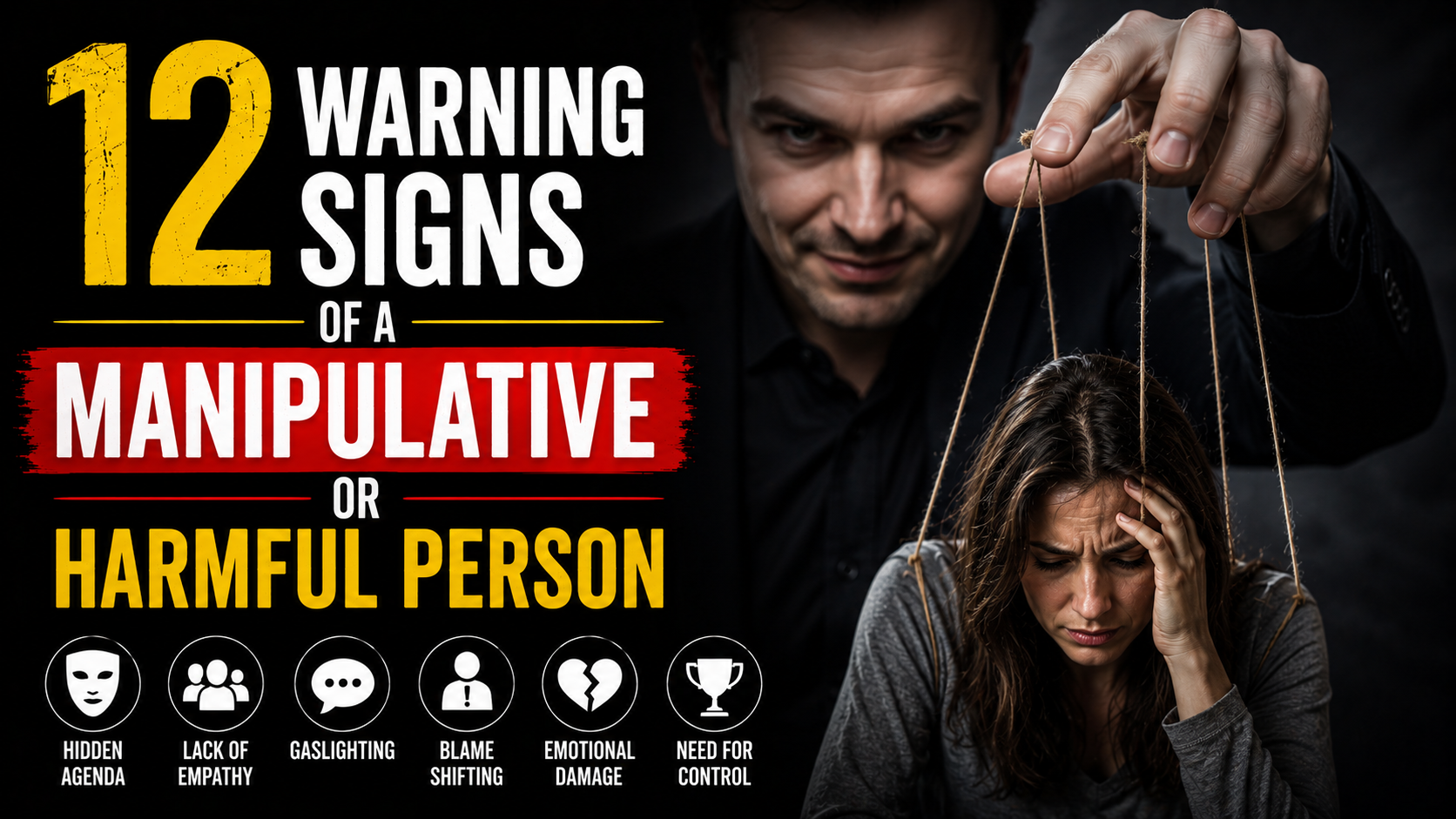
Most of us have experienced that uneasy feeling about someone we just met. Sometimes there’s no obvious reason for it—you simply sense that something isn’t quite right. While first impressions aren’t always accurate, our instincts can occasionally pick up on behaviors and patterns that deserve closer attention.
Rather than labeling someone as “evil,” it’s more helpful to focus on identifying toxic, manipulative, or harmful behaviors. These traits can negatively impact relationships, workplaces, friendships, and even family dynamics.
No single behavior automatically makes someone a bad person. However, when several of these patterns consistently appear together, they may indicate a person who lacks empathy, thrives on manipulation, or causes emotional harm to others.
Here are 12 signs that someone may have unhealthy or toxic tendencies.
1. They Take Pleasure in Other People’s Problems

Everyone laughs at the occasional harmless mishap. However, there’s a difference between lighthearted humor and genuinely enjoying someone else’s suffering.
Pay attention to how a person reacts when others experience setbacks.
Do they seem delighted when someone fails? Do they eagerly discuss another person’s embarrassment or misfortune? Do they celebrate bad news that affects others?
People who consistently find satisfaction in another person’s pain may struggle with empathy and compassion. Instead of supporting others through difficult moments, they may secretly enjoy seeing them fall.
Healthy individuals typically feel concern when others are hurting, even if they don’t particularly like the person involved.
2. They Create Their Own Version of Reality
Some individuals refuse to acknowledge facts, even when clear evidence exists.
Rather than accepting reality, they construct narratives that support their beliefs, protect their ego, or justify their actions. When confronted with information that contradicts their viewpoint, they may ignore it entirely.
This isn’t simply stubbornness. In many cases, it becomes a pattern where facts no longer matter.
Trying to reason with someone who constantly rewrites reality can be exhausting because the goalposts are always moving.
3. They Regularly Twist the Truth
There’s a difference between misunderstanding a situation and intentionally distorting it.
Toxic individuals often manipulate facts to make themselves appear innocent, heroic, or misunderstood. They may exaggerate details, leave out important information, or completely alter events to gain sympathy or support.
Over time, these distortions can create confusion among friends, family members, and coworkers.
You may notice that their stories frequently change depending on who they’re speaking to or what outcome they’re trying to achieve.
4. They Lie Habitually

Most people tell occasional small lies. Chronic dishonesty is something entirely different.
Compulsive liars often deceive others even when there is little reason to do so. Sometimes the lies are intended to gain attention, avoid accountability, manipulate situations, or damage another person’s reputation.
The challenge is that repeated dishonesty gradually erodes trust.
Once someone develops a pattern of lying, it becomes difficult to know when they’re being truthful.
Trust is one of the foundations of every healthy relationship, and habitual deception undermines it completely.
5. They Treat Animals Poorly
How people treat animals can reveal a great deal about their character.
Animals are vulnerable and depend heavily on human care and compassion. Someone who is consistently cruel, neglectful, or unnecessarily aggressive toward animals may also struggle to show empathy toward people.
This doesn’t mean everyone must be an animal lover. Some people simply prefer not to have pets, and that’s perfectly normal.
The concern arises when a person shows deliberate cruelty, indifference to suffering, or enjoyment in causing distress.
Kindness often reveals itself in how people treat those who cannot offer anything in return.
6. They Constantly Put Others Down
Supportive people encourage growth, celebrate accomplishments, and provide comfort during difficult times.
Toxic individuals often do the opposite.
Whenever you share an idea, achievement, dream, or goal, they find a way to criticize it. Instead of offering encouragement, they may mock your ambitions, dismiss your concerns, or minimize your accomplishments.
Common phrases may include:
- “That’s never going to work.”
- “You’re not good enough for that.”
- “Why would you even try?”
- “You’re overreacting.”
Over time, this behavior can damage confidence and self-esteem.
Healthy relationships should leave you feeling supported, not diminished.
7. They Are Highly Manipulative
Manipulation is one of the most damaging interpersonal behaviors because it often operates beneath the surface.
Manipulative people influence others through guilt, pressure, emotional tactics, deception, or subtle control. Rather than making direct requests, they attempt to steer situations in their favor while avoiding responsibility.
Some common manipulation tactics include:
- Guilt-tripping
- Playing the victim
- Emotional blackmail
- Gaslighting
- Withholding affection or approval
The goal is usually control rather than mutual understanding.
Manipulation can be difficult to recognize because skilled manipulators often disguise their intentions behind charm or concern.
8. They Rarely Feel Genuine Remorse

Everyone makes mistakes.
The difference lies in how people respond after they’ve caused harm.
Emotionally healthy individuals typically experience guilt, regret, or concern when their actions hurt someone else. They apologize, take responsibility, and attempt to make things right.
People with harmful tendencies often show little or no remorse.
Instead, they may:
- Shift blame
- Make excuses
- Minimize the damage
- Ignore the consequences
- Act as though nothing happened
Their primary concern is often avoiding accountability rather than repairing the harm they’ve caused.
9. They Need to Control Everything
Control is a common theme among toxic personalities.
Some people feel the need to dominate situations, relationships, and decisions because uncertainty makes them uncomfortable.
This behavior may appear as:
- Monitoring your activities
- Dictating your choices
- Controlling finances
- Limiting who you spend time with
- Constantly demanding updates
At first, these actions may seem protective or caring. Over time, however, they can become restrictive and emotionally exhausting.
Healthy relationships involve trust, mutual respect, and personal freedom—not constant control.
10. They Lack Empathy
Empathy is the ability to understand and share another person’s feelings.
It’s one of the most important traits in healthy relationships because it allows people to connect, communicate, and support one another during difficult times.
Individuals who lack empathy often struggle to:
- Understand emotional pain
- Recognize how their actions affect others
- Offer meaningful support
- Show compassion
When someone consistently dismisses your feelings, ignores your struggles, or seems indifferent to suffering, it may indicate an empathy deficit.
Without empathy, relationships often become one-sided and emotionally draining.
11. They Sabotage Your Success
Not everyone wants to see others succeed.
Some toxic individuals feel threatened by another person’s growth, achievements, or ambitions. As a result, they may intentionally or subtly interfere with progress.
Examples include:
- Distracting you from important goals
- Discouraging your efforts
- Undermining your confidence
- Creating unnecessary drama
- Making negative comments at critical moments
Instead of celebrating your victories, they may appear irritated, dismissive, or resentful.
True friends and supportive partners generally want to see you thrive.
12. They Struggle to Maintain Healthy Relationships
One warning sign that often goes unnoticed is a long pattern of unstable relationships.
This doesn’t mean someone is problematic simply because they have a small social circle. Many introverts prefer a few close friendships over a large network of acquaintances.
The concern arises when someone consistently experiences:
- Constant conflicts
- Broken friendships
- Family estrangement
- Frequent falling-outs
- A history of toxic relationships
If every former friend, coworker, partner, or family member is supposedly the problem, it may be worth considering whether there’s a common denominator.
Patterns often reveal more than isolated incidents.
Trust Actions More Than Words
One of the biggest mistakes people make is focusing on what someone says rather than what they consistently do.
Most people can present themselves positively for a short period of time. Character becomes visible through repeated behavior over weeks, months, and years.
Pay attention to:
- How they treat others
- How they handle conflict
- Whether they take responsibility
- How they react to your success
- Whether their actions match their words
Consistency often reveals a person’s true nature far more clearly than charm or promises ever could.
Final Thoughts
While no one is perfect, certain behavioral patterns can indicate that a person may be emotionally unhealthy, manipulative, or harmful to those around them. Enjoying others’ failures, lacking empathy, lying frequently, controlling others, and avoiding accountability are all signs that deserve attention.
It’s important to remember that one or two of these traits do not automatically make someone a bad person. Human behavior is complex, and everyone has flaws. However, when multiple warning signs appear consistently over time, it’s wise to proceed with caution.
Healthy relationships should leave you feeling respected, valued, supported, and safe. If someone consistently leaves you feeling diminished, manipulated, anxious, or emotionally drained, trusting your instincts may be one of the best decisions you can make.







