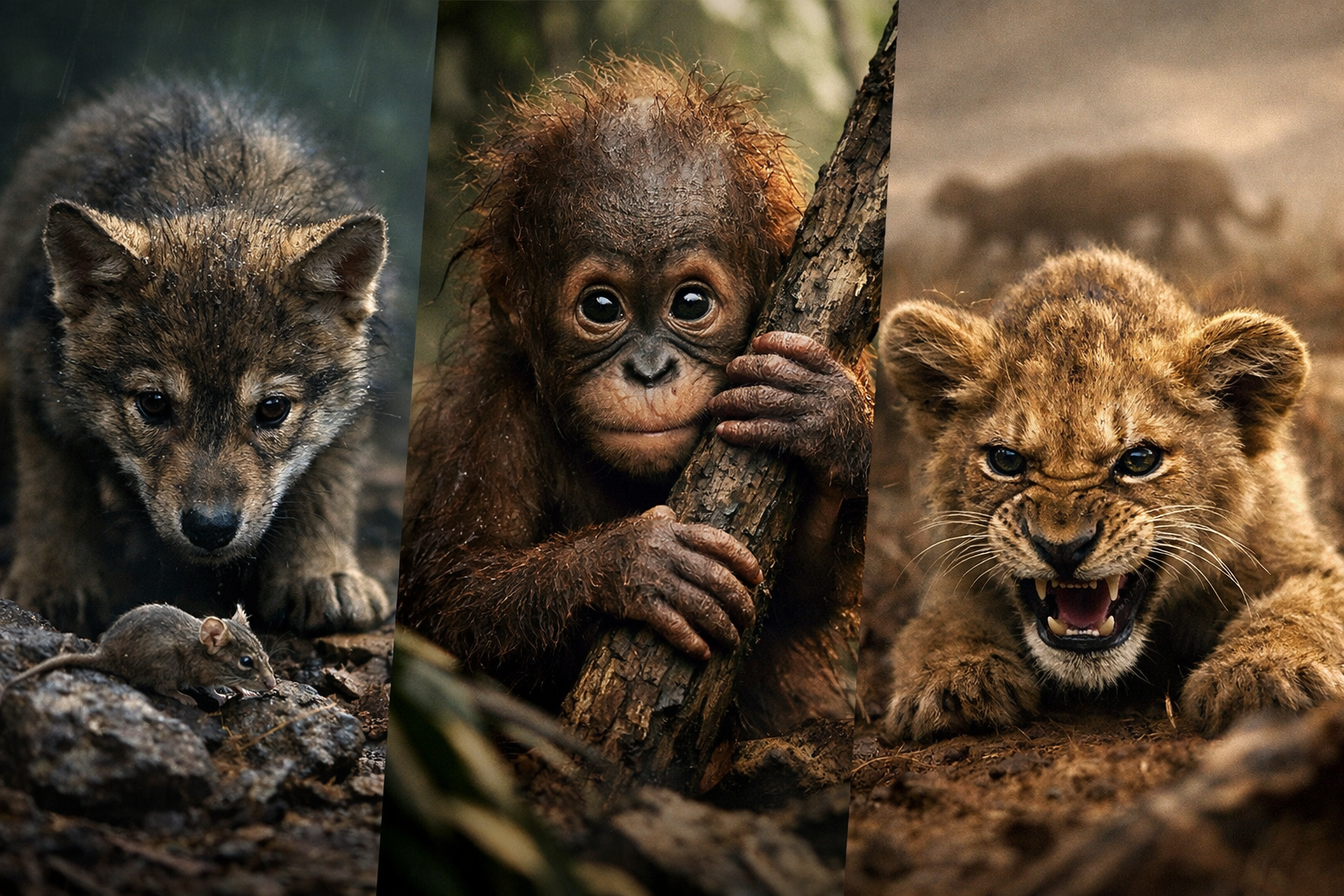
Life in the wild is never easy, especially for young animals. From the moment they are born, many species depend heavily on their parents for food, protection, and guidance. Mothers teach their offspring how to find shelter, recognize danger, hunt, forage, and navigate complex environments. Without that support, survival becomes significantly more difficult.
Yet nature has equipped many animals with powerful instincts that help them overcome extraordinary challenges. Even when separated from their parents at an early age, some orphaned wildlife display remarkable behaviors that increase their chances of survival. These natural instincts often emerge when they are needed most, allowing young animals to adapt to harsh conditions and unexpected circumstances.
While not every orphaned animal survives on its own, countless examples from the natural world demonstrate the incredible resilience of wildlife. Here are six fascinating survival instincts commonly seen in orphaned animals and how these behaviors help them endure in the wild.
1. Seeking Shelter and Safe Hiding Places
One of the first survival instincts displayed by many orphaned animals is the ability to find safe places to hide.
Young wildlife is particularly vulnerable to predators. Without the protection of a parent, staying concealed becomes a critical priority. Many species instinctively seek dense vegetation, burrows, hollow logs, rock crevices, or other protected locations where they can remain hidden.
For example, orphaned fawns often stay motionless in tall grass or under shrubs for long periods. This behavior reduces the likelihood of being spotted by predators. Similarly, young rabbits rely on camouflage and secluded nesting areas to remain safe until they become strong enough to move independently.
Even without parental guidance, these animals often know exactly what type of shelter provides the best protection, demonstrating how deeply survival instincts are embedded in their behavior.
2. Learning to Find Food Independently
Finding food is one of the greatest challenges faced by orphaned wildlife. However, many animals possess natural instincts that help them begin searching for nourishment even when parental care is absent.
Young birds may start pecking at insects, seeds, or fruits based on instinctive feeding behaviors. Mammals often experiment with available food sources while gradually learning which items are safe to eat.
Some species are surprisingly adaptable. Young raccoons, for instance, can quickly begin exploring their surroundings in search of berries, insects, small animals, and other food sources. Their curiosity becomes a valuable survival tool, helping them discover resources in unfamiliar environments.
Although experience improves their success over time, instinct often provides the initial foundation needed to avoid starvation.
3. Recognizing and Avoiding Danger
Predator awareness is essential for survival in the wild, and many orphaned animals display this instinct from an early age.
Even without parental warnings, young wildlife frequently react to threatening sounds, sudden movements, unfamiliar scents, or signs of nearby predators. These responses are often automatic and deeply ingrained.
Bird chicks may freeze when shadows pass overhead, reducing their visibility to hunting hawks. Small mammals often flee at the first sign of danger or remain perfectly still to avoid detection.
This instinctive caution helps compensate for the lack of parental protection. Animals that quickly recognize potential threats are more likely to survive long enough to gain experience and develop stronger defensive behaviors.
4. Adapting Their Behavior to New Conditions
One of the most impressive traits seen in orphaned wildlife is adaptability.
When parental support is unavailable, young animals often modify their behavior to meet changing circumstances. They may alter feeding schedules, explore new habitats, or adopt different strategies for avoiding predators.
For example, orphaned foxes may expand their hunting territory more rapidly than they otherwise would. Young birds may begin foraging earlier than normal. Some animals become more cautious and independent as they learn to rely solely on their own abilities.
This flexibility allows them to respond to challenges that would otherwise threaten their survival. Adaptability is often the difference between success and failure in unpredictable environments.
5. Forming Temporary Social Bonds
Although many species are known for independence, some orphaned animals seek companionship when possible.
Young animals may join groups of their own species, benefiting from collective protection and shared awareness of danger. Herds, flocks, and social groups provide valuable opportunities for learning and increased safety.
For example, orphaned elephants have been observed forming strong bonds with other members of their herd. Young birds may integrate into existing flocks, where they gain access to information about food sources and migration routes.
Even temporary social connections can improve survival odds by reducing isolation and providing additional opportunities for learning essential behaviors.
6. Demonstrating Extraordinary Resilience
Perhaps the most remarkable survival instinct of all is resilience.
Orphaned wildlife often face challenges that would seem overwhelming. They must navigate unfamiliar environments, avoid predators, locate food, and survive harsh weather without parental assistance. Yet many continue to persevere despite these obstacles.
Resilience isn’t a single behavior but a combination of instincts that drive animals to keep adapting and responding to threats. It can be seen in a young bird making repeated attempts to fly, a fox cub learning to hunt after multiple failures, or a deer fawn cautiously exploring new territory in search of resources.
These animals demonstrate an extraordinary determination to survive, highlighting the remarkable strength of natural instincts.
Why Survival Instincts Matter
The survival behaviors displayed by orphaned wildlife reveal just how powerful evolution can be. Over countless generations, animals have developed instinctive responses that increase their chances of enduring difficult circumstances.
These behaviors don’t guarantee survival, but they provide a critical advantage when parental care is unavailable. Shelter-seeking, predator avoidance, food gathering, adaptability, social bonding, and resilience all contribute to an animal’s ability to navigate a challenging world.
For wildlife researchers and conservationists, understanding these instincts offers valuable insight into how different species cope with adversity and environmental pressures.
The Challenges Orphaned Wildlife Still Face
Despite their remarkable instincts, orphaned animals remain vulnerable. Young wildlife often lack the experience needed to identify all food sources, avoid every danger, or cope with extreme weather conditions.
Many species depend on parents not only for nourishment but also for learning complex survival skills. Hunting techniques, migration routes, social behaviors, and territory selection are often taught through observation and experience.
As a result, orphaned wildlife generally faces lower survival rates than animals raised with parental care. However, the individuals that do survive often demonstrate an extraordinary ability to adapt and overcome adversity.
Final Thoughts
Nature is filled with examples of resilience, and orphaned wildlife provides some of the most inspiring. Faced with challenges that would overwhelm many creatures, these young animals rely on deeply rooted instincts to guide them through uncertain circumstances.
From finding shelter and locating food to avoiding predators and adapting to changing environments, orphaned animals showcase the remarkable survival mechanisms built into the natural world. Their determination and adaptability remind us that even in the face of adversity, life often finds a way to endure.
These six survival instincts highlight the incredible resilience of wildlife and offer a fascinating glimpse into the hidden strengths that help animals navigate one of the toughest journeys imaginable—growing up alone in the wild.







