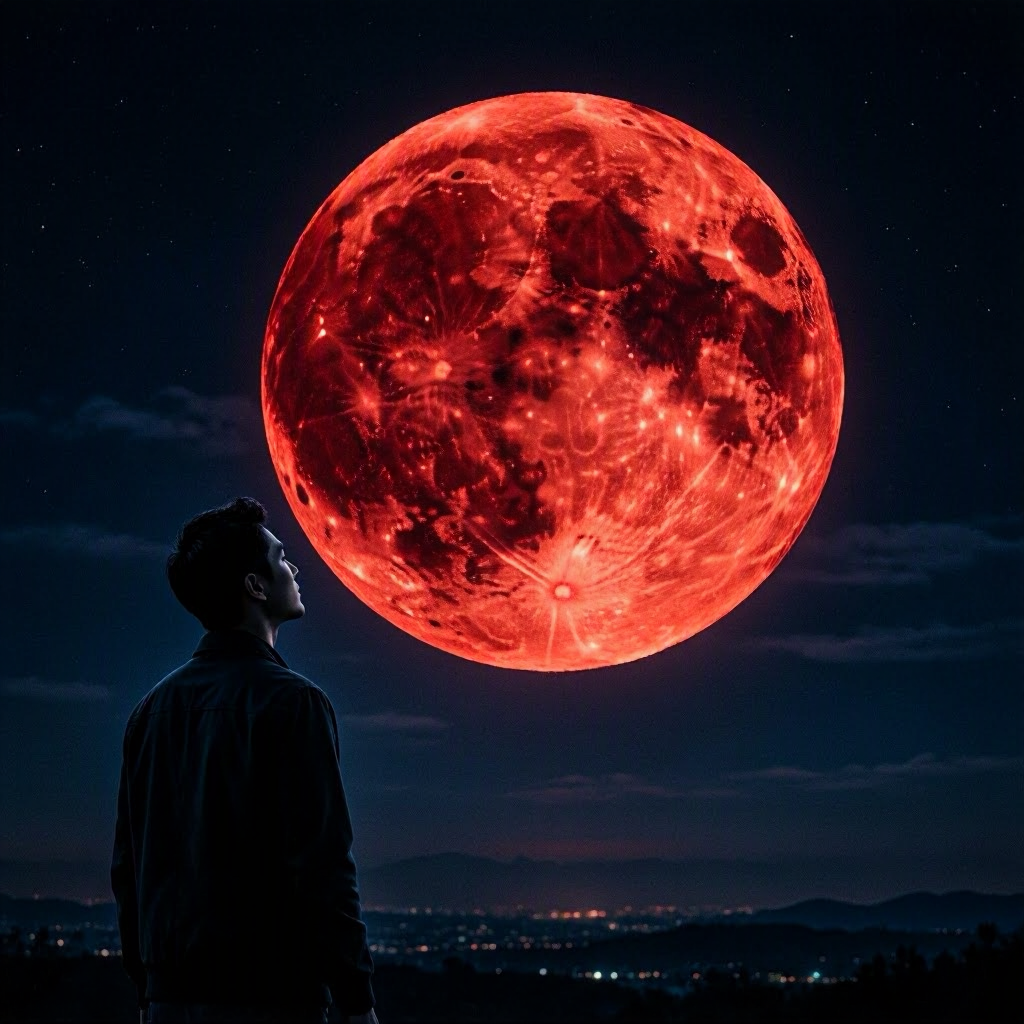
Few celestial events capture global attention quite like a Blood Supermoon. When the Moon transforms into a glowing reddish orb and appears larger than usual in the night sky, millions of people pause what they’re doing to witness the spectacle. For astronomers, it’s a fascinating alignment of cosmic forces. For casual observers, it’s a breathtaking reminder of the wonders that exist beyond our planet.
The upcoming Blood Supermoon is expected to be visible to a significant portion of the world’s population, making it one of the most widely shared astronomical experiences of the year. But what makes this event so special? Why does it generate excitement among scientists, photographers, travelers, and families alike?
Here are eight surprising reasons the Blood Supermoon continues to captivate billions of people around the globe.
1. It’s a Rare Combination of Two Celestial Events
A Blood Supermoon isn’t just a full moon with a dramatic nickname. It occurs when two separate astronomical events happen simultaneously: a total lunar eclipse and a supermoon.
A supermoon takes place when the Moon reaches its closest point to Earth during its orbit, making it appear slightly larger and brighter than a typical full moon. A total lunar eclipse occurs when Earth moves directly between the Sun and the Moon, casting its shadow across the lunar surface.
The combination of these two events is relatively uncommon, making every Blood Supermoon an occasion worth watching.
2. The Moon Turns a Stunning Shade of Red
The most recognizable feature of a Blood Supermoon is its striking color.
During totality, the Moon doesn’t disappear into darkness. Instead, it often glows in shades of copper, orange, or deep red. This happens because Earth’s atmosphere bends sunlight toward the Moon while filtering out shorter blue wavelengths.
The same process that creates colorful sunrises and sunsets is responsible for the Moon’s dramatic transformation. As a result, observers get to witness a giant red Moon hanging in the sky—a sight that feels almost otherworldly.
3. Billions Can Watch It at the Same Time
Unlike a total solar eclipse, which is visible only along a narrow path, a lunar eclipse can be seen from anywhere the Moon is above the horizon.
This means that entire continents can enjoy the event simultaneously. Families, friends, and astronomy enthusiasts separated by thousands of miles can all witness the same celestial show.
Few natural phenomena offer such a powerful sense of shared global experience.
4. No Telescope Is Required
One reason the Blood Supermoon attracts such a large audience is its accessibility.
You don’t need expensive equipment, advanced knowledge of astronomy, or special viewing glasses. Anyone with a clear view of the night sky can enjoy the event.
While binoculars and telescopes can reveal additional details, the eclipse is impressive even to the naked eye. This simplicity makes it one of the easiest astronomical events for the public to observe.
5. The Moon Appears Larger Than Usual
During a supermoon, the Moon is closer to Earth than it is during an average full moon.
Although the difference in size may seem modest from a scientific perspective, many observers notice that the Moon appears unusually large and bright, especially when it rises near the horizon.
Combined with the red coloring of a total lunar eclipse, the enlarged appearance creates a truly unforgettable visual experience.
6. Ancient Cultures Viewed It as a Powerful Omen
Long before scientists understood the mechanics of eclipses, people around the world interpreted Blood Moons in fascinating ways.
Many ancient civilizations associated lunar eclipses with myths, prophecies, or supernatural events. Some cultures believed celestial creatures were consuming the Moon, while others saw eclipses as warnings from the heavens.
Today, we understand the science behind the phenomenon, but the sense of mystery and awe remains. The event still evokes powerful emotions, connecting modern observers with generations of skywatchers who came before them.
7. It Creates Incredible Photography Opportunities
Photographers eagerly anticipate every Blood Supermoon because it offers a rare chance to capture dramatic images of the night sky.
The combination of a larger-than-average Moon and its reddish hue creates stunning visual compositions. Whether framed against city skylines, mountain ranges, historic landmarks, or natural landscapes, the Blood Supermoon often produces some of the year’s most memorable photographs.
For many photographers, these events provide opportunities that may not return for years.
8. It Reminds Us of Our Place in the Universe
Perhaps the most compelling reason the Blood Supermoon fascinates billions of people is the perspective it provides.
In an age dominated by screens, schedules, and constant distractions, looking up at a Blood Supermoon can be a humbling experience. The event highlights the precise cosmic dance between Earth, the Moon, and the Sun—a process that has been unfolding for billions of years.
For a few hours, people around the world are united by the same view of the sky. Differences in geography, language, and culture seem less significant when everyone is witnessing the same celestial phenomenon.
That sense of connection—to nature, to science, and to one another—is part of what makes the Blood Supermoon so unforgettable.
Final Thoughts
The Blood Supermoon is much more than an astronomical curiosity. It’s a rare blend of science, beauty, and shared human experience. Its glowing red color, enlarged appearance, and worldwide visibility make it one of the most captivating events in the night sky.
Whether you’re an experienced stargazer or someone who rarely looks beyond the city lights, the next Blood Supermoon offers a perfect opportunity to step outside and witness something extraordinary. For a brief moment, the universe puts on a show that billions can enjoy together—a reminder that some of the most remarkable experiences in life require nothing more than looking up.







