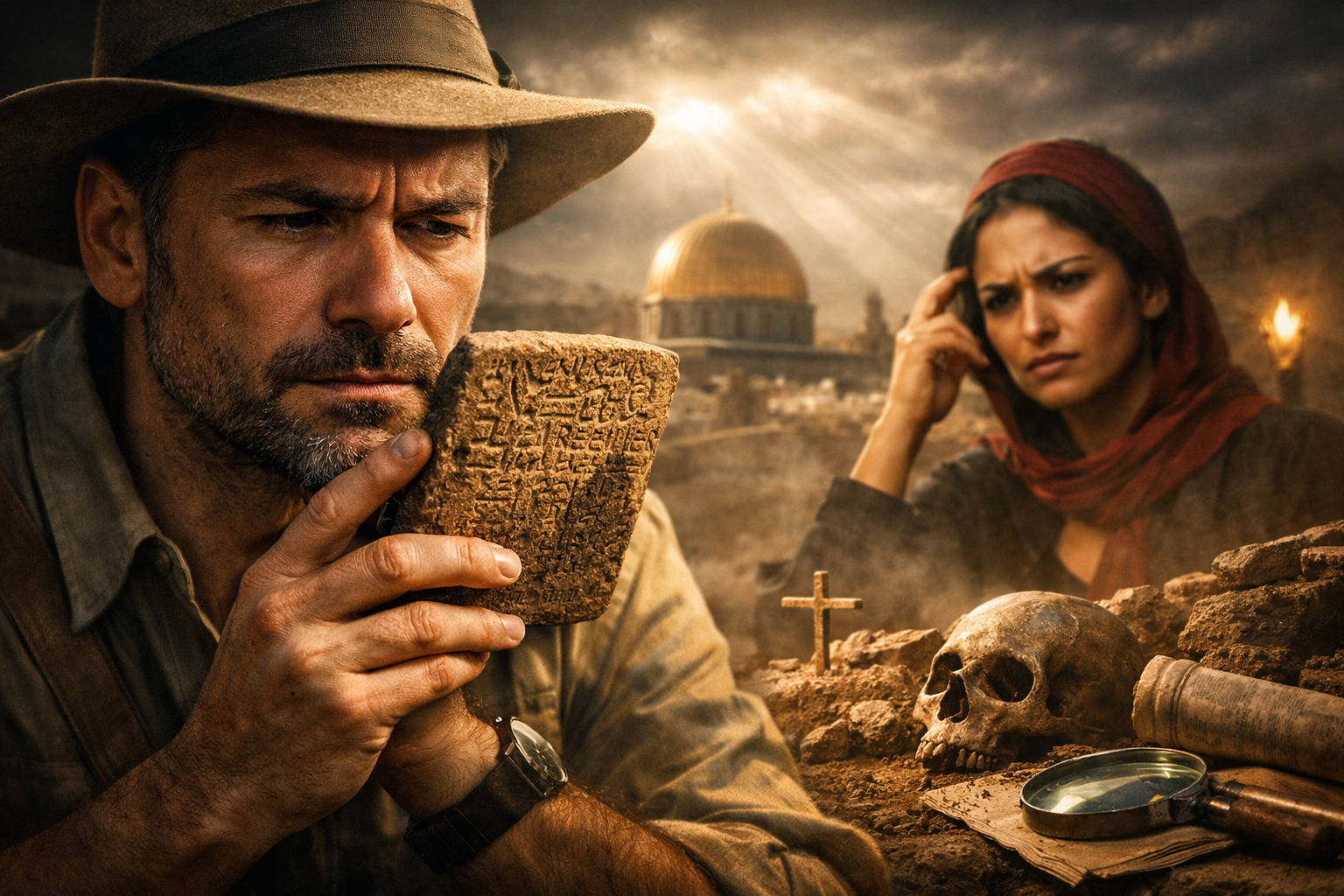
Few subjects generate as much excitement among history enthusiasts, archaeologists, and people of faith as biblical archaeology. Every year, new discoveries emerge from excavations across the Middle East, offering fascinating glimpses into the ancient world described in the Bible. From inscriptions and ancient cities to pottery fragments and burial sites, these findings often capture headlines and spark intense discussions.
For many people, biblical archaeology provides a tangible connection to history. It helps bring ancient cultures, places, and events into clearer focus. However, the excitement surrounding new discoveries can sometimes lead to misunderstandings. Archaeological findings are often complex, and interpreting them requires patience, context, and careful analysis.
One artifact or excavation rarely provides all the answers. Yet many people rush to conclusions, misread evidence, or misunderstand what archaeologists are actually claiming.
To better appreciate the value of biblical archaeology, it is important to avoid some of the most common interpretation mistakes. Here are eleven errors people frequently make when evaluating discoveries connected to the biblical world.
1. Assuming Every Discovery Directly Proves a Biblical Event
Perhaps the most common mistake is believing that every archaeological find serves as direct proof of a specific biblical story.
Archaeology rarely works that way. Most discoveries provide pieces of a much larger puzzle rather than definitive confirmation of a single event.
An inscription, building foundation, or ancient artifact may help historians better understand the culture, geography, politics, or daily life of a particular period. While such findings can support the historical context of biblical narratives, they do not automatically verify every detail of a specific account.
Understanding this distinction helps people appreciate discoveries for what they genuinely reveal rather than expecting them to answer every historical question.
2. Confusing Possibility With Certainty
Archaeologists often use cautious language when discussing their findings.
Terms such as “likely,” “possible,” “probable,” or “suggests” are common because historical evidence is frequently incomplete. Unfortunately, these careful conclusions are sometimes transformed into absolute claims by media reports or enthusiastic commentators.
A discovery that may be connected to a biblical figure does not automatically mean the identification is certain. Archaeological interpretation often involves multiple competing theories.
Wise readers recognize the difference between a strong possibility and a proven fact.
Maintaining that distinction leads to a more balanced understanding of the evidence.
3. Ignoring the Historical Context
Artifacts rarely tell meaningful stories when viewed in isolation.
A single object becomes valuable because of where it was found, what was discovered alongside it, and how it fits into the broader historical landscape.
Many people focus exclusively on a headline-making artifact while overlooking the surrounding context that helps explain its significance.
Without historical context, even remarkable discoveries can be misunderstood.
Archaeologists spend years studying excavation layers, regional history, cultural practices, and comparative evidence because context often reveals far more than the artifact itself.
4. Expecting Archaeology to Answer Every Religious Question
Biblical archaeology and religious faith are related, but they serve different purposes.
Archaeology investigates physical evidence from the past. Faith addresses spiritual beliefs, theological teachings, and personal convictions.
Some people expect archaeological discoveries to settle every debate about religion, doctrine, or belief. This expectation often leads to disappointment because archaeology has limitations.
While archaeology can illuminate historical settings and cultural realities, it cannot fully answer questions involving spiritual meaning, divine action, or personal faith.
Understanding the distinct roles of archaeology and theology allows both fields to be appreciated on their own terms.
5. Overreacting to Sensational Headlines
Modern media thrives on attention-grabbing stories.
As a result, archaeological discoveries are sometimes presented in dramatic ways that exaggerate their importance. Headlines may claim that researchers have uncovered “definitive proof” of a biblical figure or “solved” a centuries-old mystery.
In reality, archaeological research is usually more nuanced.
The most reliable information often appears in scholarly publications and detailed reports rather than simplified headlines designed to attract clicks.
Readers who go beyond sensational summaries are more likely to gain an accurate understanding of what was actually discovered.
6. Dismissing Discoveries That Don’t Match Personal Expectations
Another common mistake occurs when people reject evidence simply because it challenges their assumptions.
Whether someone approaches biblical archaeology from a religious or secular perspective, personal bias can influence interpretation.
Some individuals readily accept discoveries that support their views while ignoring findings that raise questions or introduce complexity.
Good scholarship requires openness to evidence, even when it does not align perfectly with existing expectations.
Intellectual honesty means evaluating discoveries based on their merits rather than their convenience.
7. Treating Archaeology as a Debate to Be Won
Discussions about biblical archaeology often become polarized.
People sometimes approach discoveries as ammunition for arguments rather than opportunities for learning.
This mindset can reduce complex historical research to simplistic “proof versus disproof” debates.
In reality, archaeology is an ongoing process of investigation. New evidence emerges, interpretations evolve, and scholars continue refining their understanding.
The goal is not to score points in an argument but to gain deeper insight into the ancient world.
Approaching discoveries with curiosity rather than defensiveness often leads to more productive conversations.
8. Misunderstanding How Archaeological Dating Works
Dating ancient artifacts is rarely as straightforward as many people assume.
Researchers use multiple methods, including radiocarbon analysis, pottery comparisons, inscriptions, architectural styles, and stratigraphy—the study of soil layers.
Each method has strengths and limitations.
Because archaeological dating involves careful analysis and interpretation, estimates can sometimes change as new information becomes available.
When people assume dating methods provide exact answers without margins of uncertainty, misunderstandings often occur.
Recognizing the complexity of archaeological dating helps create more realistic expectations.
9. Believing One Discovery Changes Everything
Every major archaeological announcement tends to generate excitement, but history is rarely rewritten overnight.
Most discoveries contribute incremental knowledge rather than revolutionary transformations.
A newly discovered inscription, structure, or artifact typically adds another piece to a much larger historical framework. It may clarify existing theories, challenge assumptions, or provide additional context.
However, genuine historical understanding usually develops through the accumulation of evidence over many years.
People who expect a single discovery to solve every mystery often underestimate the gradual nature of archaeological research.
10. Forgetting That Scholars Can Disagree
Archaeology is not a field where every expert reaches identical conclusions.
Different scholars may interpret the same evidence in different ways. These disagreements are a normal and healthy part of academic research.
Unfortunately, many people assume that expert disagreement means no useful conclusions can be reached. Others mistakenly believe that only one interpretation deserves consideration.
In reality, competing viewpoints often encourage deeper investigation and more refined analysis.
Healthy scholarly debate is a sign of active research rather than weakness in the discipline.
Understanding this can help readers evaluate discoveries more thoughtfully.
11. Overlooking the Human Stories Behind the Artifacts
Perhaps the most overlooked mistake is focusing solely on objects while forgetting the people connected to them.
Archaeological discoveries are not merely collections of stones, inscriptions, tools, or pottery fragments. They represent real individuals who lived, worked, worshipped, traded, celebrated, and struggled thousands of years ago.
Biblical archaeology offers valuable insight into the daily experiences of ancient communities. It helps modern readers understand how people lived within the historical settings described in biblical texts.
When we focus only on proving or disproving specific events, we may miss the broader human story that archaeology reveals.
The greatest value of many discoveries lies not in controversy but in the deeper understanding they provide about ancient civilizations and cultures.
Why Biblical Archaeology Continues to Fascinate People
The enduring appeal of biblical archaeology stems from its unique ability to connect the modern world with ancient history.
For believers, discoveries can provide greater appreciation for the historical environments in which biblical events unfolded. For historians, archaeologists, and students, these findings offer valuable information about cultures that shaped the development of civilization.
Each excavation adds detail to a larger historical picture. Ancient roads, cities, inscriptions, homes, marketplaces, and religious sites help illuminate how people lived thousands of years ago.
This combination of history, culture, faith, and discovery explains why biblical archaeology continues to attract worldwide interest.
The Importance of Responsible Interpretation
As new discoveries continue to emerge, responsible interpretation becomes increasingly important.
The most meaningful approach combines curiosity with caution. It recognizes both the strengths and limitations of archaeological evidence.
Rather than seeking immediate confirmation of preconceived ideas, thoughtful readers examine discoveries within their broader historical context. They remain open to new information while avoiding exaggerated conclusions.
This balanced perspective allows people to appreciate archaeology as a powerful tool for understanding the past without demanding more from it than it can reasonably provide.
Final Thoughts
Biblical archaeology offers remarkable opportunities to explore the ancient world and gain deeper insight into the historical settings connected to Scripture. Yet the value of these discoveries depends largely on how they are interpreted.
By avoiding common mistakes—such as jumping to conclusions, relying on sensational headlines, ignoring context, or expecting archaeology to answer every question—readers can develop a more informed and balanced perspective.
The most rewarding approach is one that combines enthusiasm with critical thinking. Archaeological discoveries are fascinating not because they provide simple answers, but because they help us better understand the complex and rich history of the people and cultures that shaped the biblical world.
As future excavations uncover new evidence, maintaining this thoughtful perspective will allow us to appreciate each discovery for what it truly contributes: a deeper connection to humanity’s shared past.







