For most of human history, aging was viewed as an unavoidable process that simply happened to everyone. While people searched for ways to stay healthy and live longer, there was little scientific understanding of what actually causes the body to age over time.
Today, that situation is changing rapidly.
Researchers around the world are studying aging with a level of precision that was unimaginable just a few decades ago. Advances in genetics, biotechnology, artificial intelligence, cellular biology, and medical research are helping scientists uncover the mechanisms that influence how we age and how long we remain healthy.
As a result, longevity science has moved from a niche research field into mainstream conversations. News headlines regularly highlight discoveries related to lifespan, biological aging, cellular health, and emerging therapies that may one day influence how people experience the later stages of life.
While many of these developments remain in the research phase, public interest continues to grow. The reason is simple: nearly everyone wants to understand how to live a longer, healthier life.
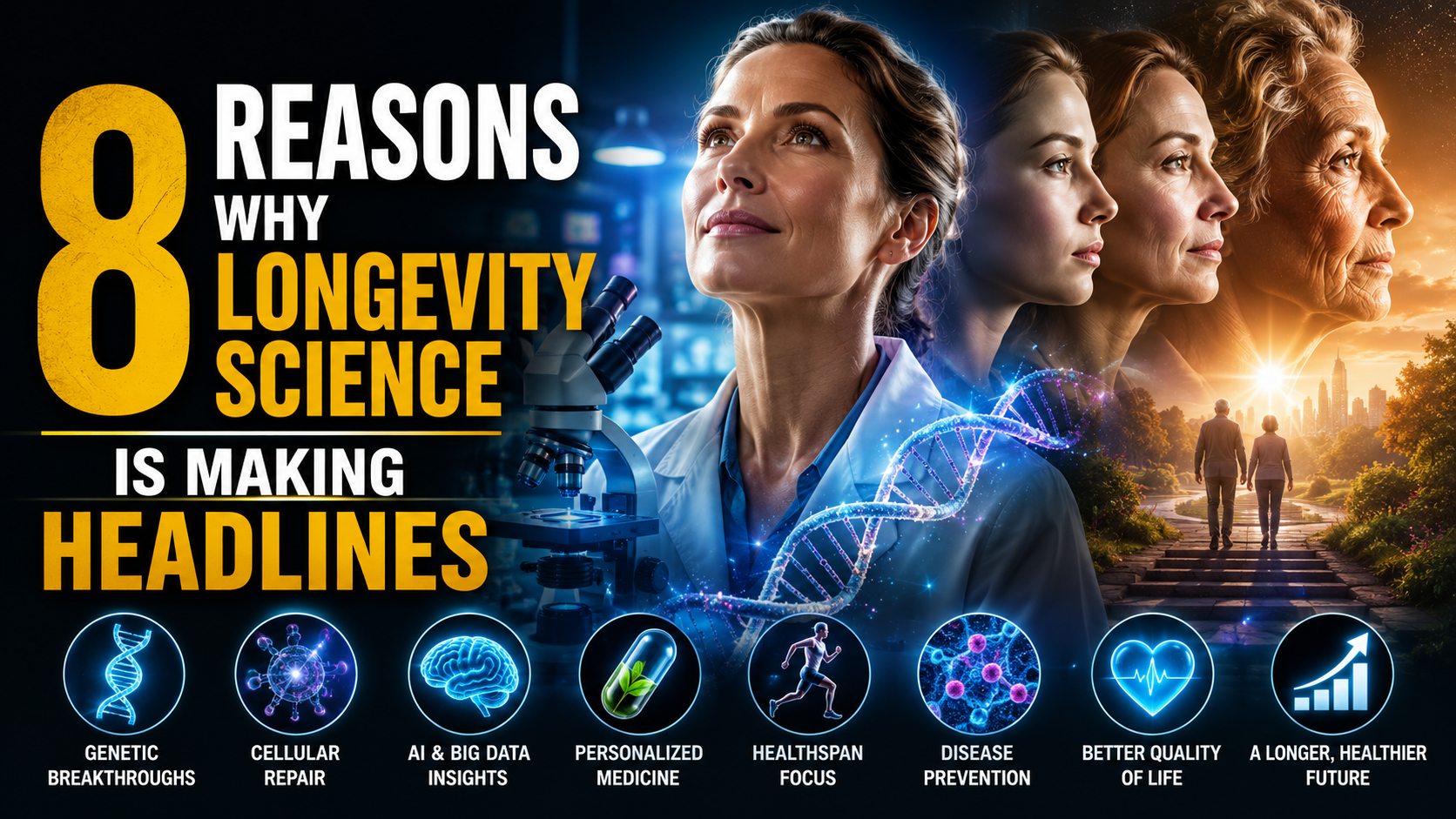
Here are eight major reasons why longevity science is attracting so much attention.
1. Scientists Are Learning That Aging Is More Complex Than Previously Thought
For many years, aging was viewed primarily as a gradual decline caused by the passage of time.
Modern research suggests the reality is far more complicated.
Scientists now understand that aging involves a wide range of biological processes occurring simultaneously throughout the body. These include changes in DNA, cellular repair systems, immune function, metabolism, and communication between cells.
Rather than being driven by a single cause, aging appears to result from multiple interconnected mechanisms.
This deeper understanding has opened entirely new areas of research. Instead of simply treating age-related diseases after they occur, scientists are investigating the underlying biological changes that contribute to aging itself.
The possibility of understanding these mechanisms more clearly has generated enormous scientific interest.
2. People Are Becoming More Interested in Healthspan, Not Just Lifespan
Living longer is appealing, but most people care just as much about how they feel during those extra years.
This has led researchers to focus on a concept known as healthspan.
Healthspan refers to the portion of life spent in good health, free from serious disability or chronic illness.
Many experts argue that increasing healthspan may be even more important than increasing lifespan.
For example, adding five healthy years may be more meaningful than adding five years marked by significant health challenges.
Modern longevity research increasingly focuses on helping people remain active, independent, and healthy as they age.
This shift resonates with the public because it aligns with a common goal: not simply living longer, but living better.
3. Advances in Genetics Are Revealing New Clues
One of the biggest drivers of longevity science is the rapid progress in genetics.
Researchers can now analyze DNA more quickly and affordably than ever before.
These advances have helped scientists identify genetic factors that may influence aging, disease risk, and lifespan.
By studying populations with unusually long lifespans, researchers have uncovered valuable clues about biological resilience and healthy aging.
Although genetics is only one piece of the puzzle, these discoveries are helping scientists understand why some individuals appear to age differently than others.
The growing ability to examine the genetic foundations of health has contributed significantly to public fascination with longevity research.
4. Cellular Biology Is Uncovering Hidden Aging Processes
Much of the excitement surrounding longevity science comes from discoveries occurring at the cellular level.
Cells constantly perform essential tasks that keep the body functioning. Over time, however, various biological processes can affect cellular performance.
Researchers are studying factors such as:
- DNA repair
- Cellular communication
- Protein maintenance
- Mitochondrial function
- Cellular stress responses
Understanding these mechanisms may provide insights into why aging occurs and how it influences health.
While many questions remain unanswered, advances in cellular biology have revealed that aging is not simply a passive process. Instead, it involves highly complex biological systems that scientists are beginning to understand in greater detail.
5. Technology Is Accelerating Research
The pace of scientific discovery has increased dramatically in recent years.
Technologies such as artificial intelligence, advanced imaging systems, gene sequencing, and high-powered computing allow researchers to analyze enormous amounts of data quickly and efficiently.
AI, in particular, is helping scientists identify patterns that would be difficult for humans to detect on their own.
These tools enable researchers to:
- Analyze biological data
- Model aging processes
- Identify potential treatment targets
- Predict health outcomes
As technology continues to improve, the speed of discovery in longevity science may increase even further.
This rapid progress naturally attracts media attention and public curiosity.
6. Aging Is Linked to Many Major Health Conditions
One reason longevity science receives widespread attention is that aging influences many of the health challenges people face later in life.
Researchers have found connections between aging-related processes and conditions such as:
- Cardiovascular disease
- Neurodegenerative disorders
- Certain cancers
- Metabolic diseases
- Immune system changes
Because aging affects multiple body systems, understanding it may help scientists develop strategies that support overall health across a wide range of conditions.
Rather than focusing on a single disease, longevity research often examines broader biological processes that influence many aspects of health simultaneously.
This comprehensive approach has generated significant interest among both researchers and the public.
7. Personalized Medicine Is Changing the Conversation
The future of healthcare is becoming increasingly personalized.
Researchers now recognize that individuals age differently due to variations in genetics, environment, lifestyle, and medical history.
As a result, longevity science is moving away from universal recommendations and toward more individualized approaches.
Future strategies may incorporate information such as:
- Genetic profiles
- Biomarkers
- Lifestyle factors
- Health history
- Biological age measurements
The goal is to better understand each person’s unique aging trajectory.
This personalized approach reflects a broader trend in medicine and contributes to growing excitement about the future of longevity research.
8. The Potential Impact Is Enormous
Perhaps the biggest reason longevity science attracts attention is the sheer scale of its potential impact.
Everyone ages.
Unlike many scientific fields that focus on specific populations or conditions, aging affects virtually every person.
If researchers can better understand the biological processes involved in healthy aging, the implications could extend across society.
Potential benefits may include:
- Improved quality of life
- Greater independence in later years
- Reduced healthcare burdens
- Better disease prevention strategies
- Healthier aging populations
While many discoveries remain experimental, the potential societal significance of longevity research continues to drive public interest.
Why Longevity Science Feels Different From Previous Health Trends
Health trends come and go, but longevity science differs because it is rooted in rapidly expanding scientific research.
Rather than focusing on quick fixes or simple lifestyle hacks, researchers are examining fundamental biological processes.
This evidence-driven approach appeals to people who want a deeper understanding of health and aging.
Scientists are not merely asking how long humans can live. They are asking why aging occurs and how health can be maintained throughout life.
That distinction helps explain why the field has gained credibility and attention.
Common Misconceptions About Longevity Research
Despite growing interest, several misconceptions remain.
Myth 1: Longevity Research Is About Living Forever
Most researchers are focused on improving health during aging, not achieving immortality.
Myth 2: Aging Can Be Completely Stopped
Current science does not support the idea that aging can be eliminated.
Myth 3: One Discovery Will Solve Everything
Aging is highly complex and influenced by many factors.
Myth 4: Genetics Determines Everything
Genes matter, but lifestyle, environment, and healthcare also play important roles.
Understanding these misconceptions helps create more realistic expectations about what longevity science can achieve.
What Researchers Are Studying Right Now
Current areas of longevity research include:
- Cellular resilience
- Biological age measurement
- Healthy immune aging
- Metabolic health
- Brain aging
- Regenerative medicine
- Genetic influences on lifespan
- Biomarkers of aging
Each of these areas contributes valuable information to the broader effort of understanding healthy aging.
Researchers often compare the field to assembling a giant puzzle. Every discovery adds another piece, bringing the overall picture into sharper focus.
The Role of Lifestyle in Longevity
Although advanced technologies receive much of the attention, scientists continue emphasizing the importance of everyday habits.
Research consistently suggests that factors such as:
- Physical activity
- Sleep quality
- Nutrition
- Stress management
- Social connection
play important roles in long-term health.
Longevity science does not replace these fundamentals. Instead, it helps explain why they matter from a biological perspective.
This connection between cutting-edge research and practical daily habits makes the field especially relevant to the general public.
Looking Ahead
The future of longevity science is likely to involve even greater integration of biology, technology, and personalized healthcare.
Researchers continue developing tools that may improve the ability to measure biological aging, identify risk factors earlier, and better understand individual differences in health trajectories.
While many questions remain unanswered, progress continues at an impressive pace.
The coming decades may provide insights that fundamentally change how society thinks about aging and long-term wellness.
Final Thoughts
Longevity science is making headlines because it sits at the intersection of some of the most important questions in medicine, biology, and public health. Researchers are uncovering new information about genetics, cellular function, healthspan, disease prevention, and the biological processes that influence aging.
What makes this field particularly compelling is its relevance to nearly everyone. Aging is a universal experience, and understanding it more deeply has the potential to improve quality of life for millions of people.
Although many discoveries remain in the research stage, the growing momentum behind longevity science reflects a broader shift in healthcare—from simply treating disease to understanding how people can maintain health, vitality, and independence throughout their lives.
As scientific knowledge continues to expand, longevity research may become one of the most influential fields shaping the future of medicine and human health.







