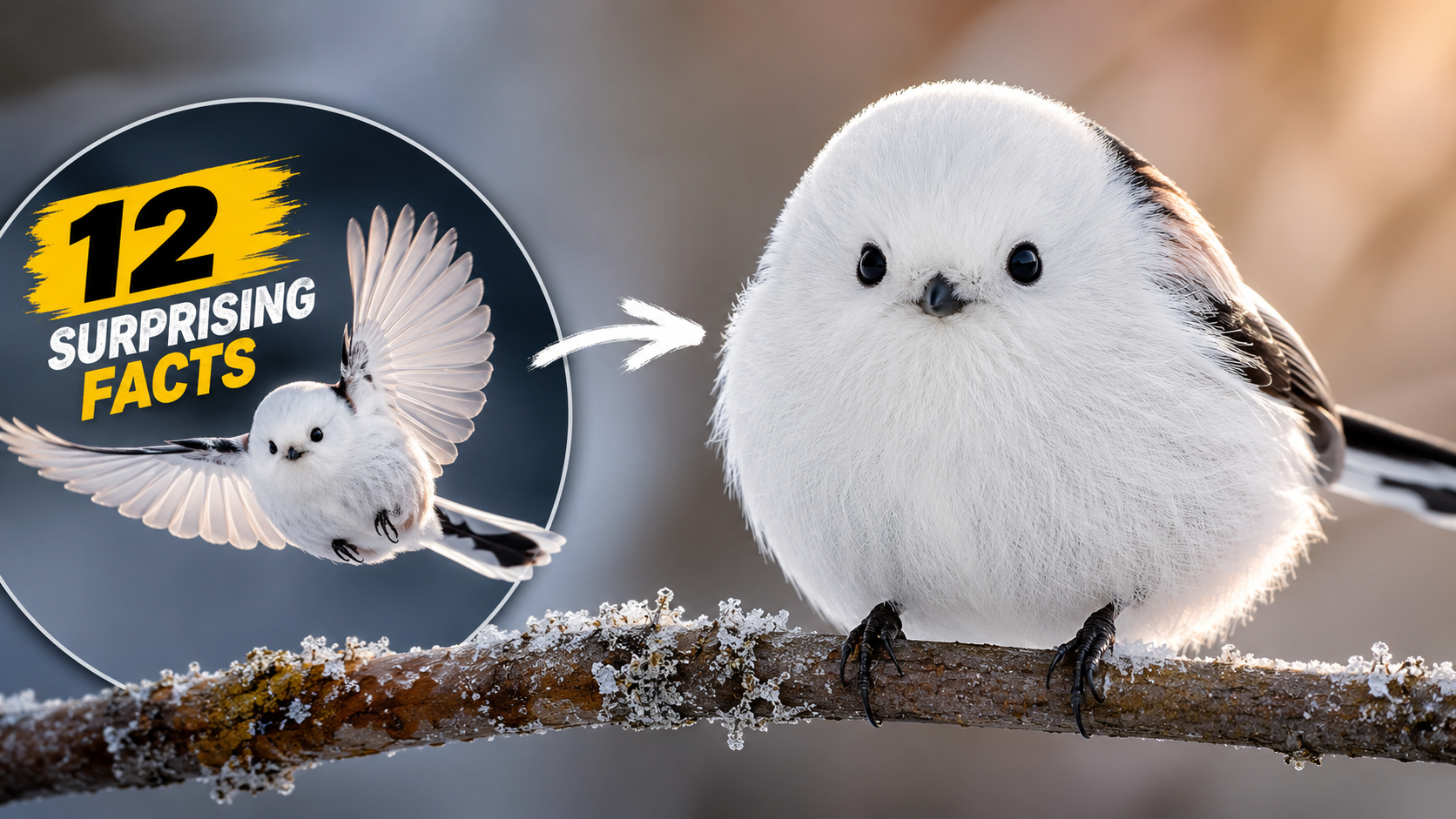
Every once in a while, a bird becomes an internet sensation simply because of its appearance. Few species have earned that distinction as completely as the tiny white bird often described as a “flying marshmallow.” With its fluffy feathers, round body, and irresistibly cute expression, this little bird has captured the hearts of birdwatchers and casual animal lovers alike.
The nickname usually refers to the Hokkaido long-tailed tit, a striking subspecies of the long-tailed tit found in northern Japan. Its snow-white head and puffball-like appearance make it look almost too adorable to be real. Yet beneath that charming exterior is a remarkably resilient wild bird perfectly adapted to life in cold northern forests.
Here are 12 surprising facts about the tiny bird that looks like a flying marshmallow.
1. Its Famous Appearance Is Completely Natural
Many people assume photographs of the bird have been edited.
In reality, its fluffy white appearance is entirely natural. The bird’s bright plumage, tiny black eyes, and rounded body combine to create an almost cartoon-like look.
The result is a bird that often resembles a miniature stuffed animal more than a wild creature.
Its unusual appearance is one of the main reasons it has become so popular online.
2. It’s a Type of Long-Tailed Tit
Despite looking unique, the bird belongs to the long-tailed tit family.
Long-tailed tits are small songbirds found across Europe and Asia. The Hokkaido population is especially famous because of its nearly all-white head, which differs from many of its relatives elsewhere.
Its distinctive coloration has helped turn it into one of the world’s most recognizable small birds.
3. Its Tail Is Surprisingly Long
The bird’s round body often draws so much attention that people overlook one of its defining features.
Its tail can actually be longer than the rest of its body.
This elongated tail helps the bird maintain balance as it hops through branches and performs quick aerial maneuvers among dense vegetation.
The contrast between its tiny body and elegant tail gives it a unique silhouette.
4. It Fluffs Up to Stay Warm
That marshmallow-like shape serves an important purpose.
During cold weather, the bird puffs out its feathers to trap pockets of warm air close to its skin. This natural insulation helps it maintain body temperature during harsh winter conditions.
The fluffier it looks, the better protected it often is from the cold.
Its adorable appearance is actually a highly effective survival strategy.
5. It Lives in Snowy Forests
The bird is particularly associated with the forests of Hokkaido, Japan’s northernmost main island.
Winters in this region can be extremely cold, with heavy snowfall covering much of the landscape.
The bird’s pale coloration often blends beautifully with the snowy environment, creating some of the stunning photographs that have made it famous worldwide.
6. It’s Constantly on the Move
Although it appears soft and cuddly, this tiny bird is remarkably energetic.
It spends much of the day searching for food among branches, twigs, and tree bark. Its quick movements help it locate insects, larvae, spiders, and other tiny food sources.
Because of its small size, it must feed regularly to maintain the energy needed for survival.
Observers rarely see it sitting still for long.
7. It Travels With Friends
Long-tailed tits are highly social birds.
Rather than living in isolation, they often travel in small groups that move together through forests. These flocks communicate through soft calls and remain in close contact while foraging.
Group living provides several advantages, including better protection from predators and improved chances of finding food.
Watching a flock of fluffy white birds moving through snowy trees is an unforgettable sight.
8. It Builds Remarkably Complex Nests
The bird’s nesting skills are surprisingly advanced.
Long-tailed tits construct intricate dome-shaped nests using moss, spider silk, feathers, and other natural materials. The finished structure is flexible, well-insulated, and carefully camouflaged.
Some nests contain thousands of feathers lining the interior.
For such a small bird, the engineering involved is remarkably sophisticated.
9. It Has Become a Social Media Star
The bird’s popularity extends far beyond its natural habitat.
Photos and videos shared online have introduced millions of people to the species. Its cute appearance makes it a frequent subject of wildlife photography pages, nature accounts, and viral animal content.
Many people encounter the bird online long before learning its name or where it lives.
Its internet fame has helped spark greater interest in birdwatching and wildlife appreciation.
10. It Plays an Important Ecological Role
Like many small birds, the long-tailed tit contributes to the health of its ecosystem.
By feeding on insects and other invertebrates, it helps regulate populations that might otherwise become problematic. It also participates in complex food webs that support forest biodiversity.
Even tiny species can have significant ecological impacts.
The bird’s importance extends far beyond its charming appearance.
11. Its Survival Depends on Healthy Forests
The flying marshmallow relies on well-preserved woodland habitats.
Forests provide food, shelter, nesting sites, and protection from predators. Habitat degradation can reduce the resources available to small birds and affect their long-term survival.
Protecting forest ecosystems benefits not only this species but also countless other plants and animals that share the same environment.
12. It Reminds Us That Small Wildlife Can Be Extraordinary
Perhaps the most surprising fact is how much attention this tiny bird receives.
Many people associate remarkable wildlife with large mammals, colorful tropical birds, or powerful predators. The flying marshmallow demonstrates that even a bird weighing only a few grams can inspire fascination worldwide.
Its popularity reflects a growing appreciation for the beauty and diversity of nature in all forms.
Sometimes the smallest creatures leave the biggest impressions.
Why People Are So Drawn to This Bird
Scientists believe humans are naturally attracted to certain features often associated with youthfulness and vulnerability.
Large eyes, rounded shapes, soft textures, and gentle expressions tend to evoke positive emotional responses. The flying marshmallow possesses many of these characteristics, which may explain its widespread appeal.
Combined with its snowy habitat and photogenic appearance, the bird seems almost designed to capture attention.
A Masterpiece of Cold-Weather Adaptation
While many admire the bird for its looks, its true achievement is survival.
Living through harsh winters requires efficient insulation, constant foraging, strong social bonds, and effective shelter. Every aspect of the bird’s behavior contributes to overcoming environmental challenges.
Its fluffy appearance is only one part of a sophisticated survival strategy developed over countless generations.
What Birdwatchers Love Most
For birdwatchers, spotting this species combines beauty and excitement.
The bird’s energetic behavior, social interactions, and stunning appearance make it one of the most rewarding species to observe. Photographers in particular value opportunities to capture images of the birds perched among snow-covered branches.
Many wildlife enthusiasts consider it one of the most charming birds in the world.
Conclusion
The tiny bird known as the flying marshmallow is much more than an internet favorite. Behind its adorable appearance lies a resilient and highly adapted songbird capable of thriving in some of Japan’s coldest environments. From its remarkable nests and social behavior to its role in forest ecosystems, the Hokkaido long-tailed tit proves that even the smallest wildlife can possess extraordinary qualities.
Its popularity serves as a reminder that nature’s wonders aren’t always large or dramatic. Sometimes, they arrive in the form of a fluffy white bird that looks like it drifted straight out of a winter fairy tale.







