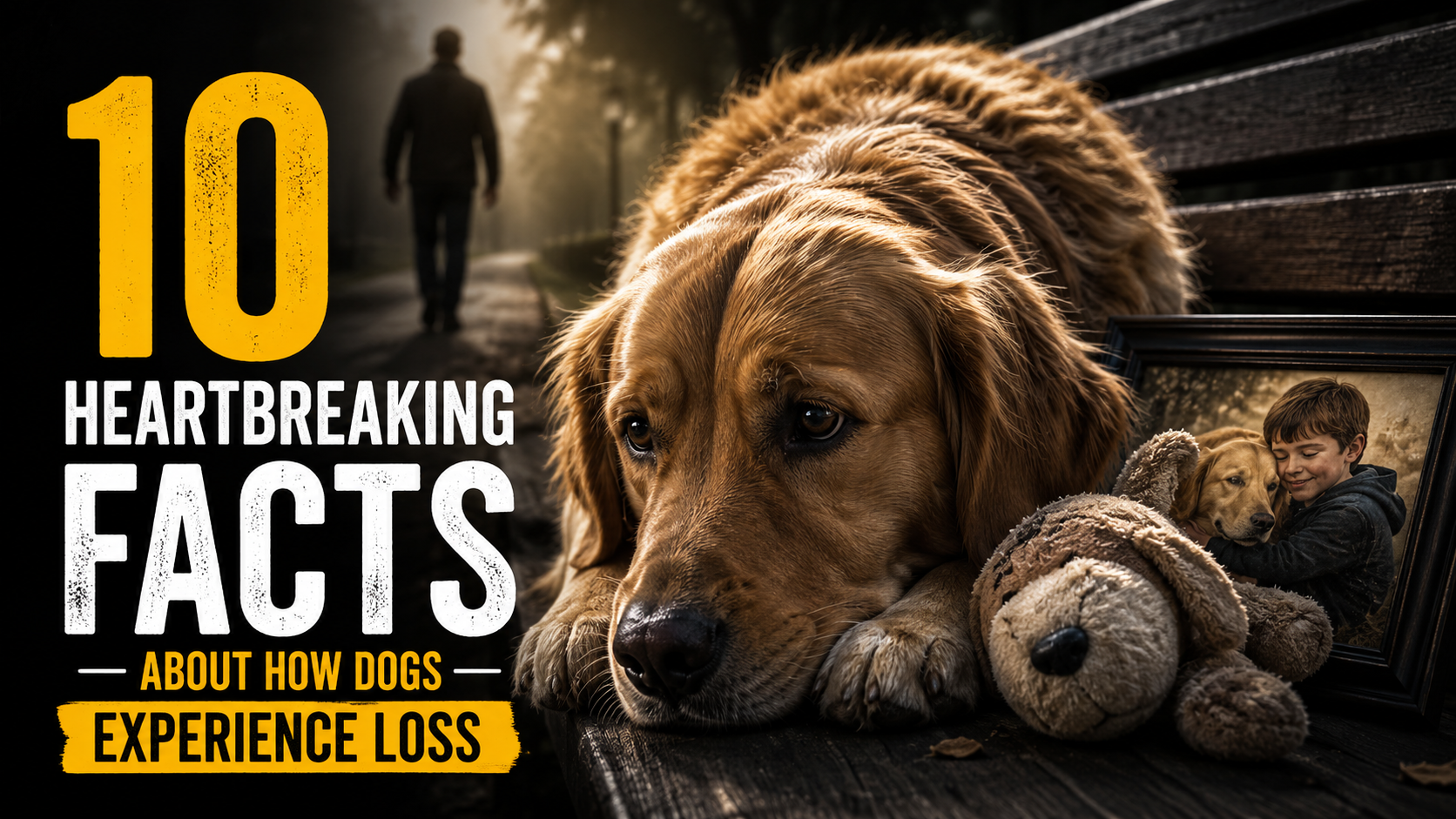
Dogs have earned the title of “man’s best friend” for a reason. They share our homes, celebrate our happiest moments, and offer comfort during difficult times. But while most people recognize a dog’s ability to feel joy, excitement, and affection, fewer realize just how deeply dogs can experience sadness and loss.
For many pet owners, the death of a family member, the loss of another pet, or even a prolonged separation can trigger noticeable changes in a dog’s behavior. These reactions often raise an important question: Do dogs grieve?
While dogs may not understand death in the same way humans do, growing research and countless observations suggest they experience a form of grief and emotional distress when someone important disappears from their lives. Their responses can be surprisingly profound, revealing just how strong their emotional bonds can be.
Here are ten heartbreaking facts about how dogs experience loss and why their loyalty continues to touch hearts around the world.
1. Dogs Form Deep Emotional Attachments
One of the reasons loss affects dogs so strongly is that they create meaningful emotional connections with the people and animals around them.
A dog doesn’t simply view its owner as someone who provides food and shelter. Over time, owners become sources of security, companionship, routine, and comfort. Dogs often build similar bonds with other pets in the household.
These attachments are strengthened through daily interactions, shared experiences, and physical affection. The longer the relationship lasts, the more significant the bond becomes.
When that connection suddenly disappears, dogs can experience confusion and emotional distress. The absence of a familiar face, voice, or scent can leave a noticeable gap in their lives.
2. Changes in Routine Can Trigger Emotional Stress
Dogs thrive on consistency. They rely heavily on routines to understand their environment and feel secure.
When someone passes away or leaves unexpectedly, many parts of a dog’s daily routine change at once. Morning walks may happen at different times. Favorite activities may disappear. Familiar sounds and interactions become absent.
Even if a dog doesn’t fully understand what happened, it recognizes that something important has changed.
This disruption can create anxiety and sadness, especially for dogs that had a particularly close relationship with the missing person or companion animal.
In many cases, it’s not only the loss itself that affects them but also the sudden shift in the structure of their daily lives.
3. Dogs Can Show Signs Similar to Human Grief
Although dogs don’t express emotions through words, their behavior often reveals what they’re feeling.
Many grieving dogs display changes that resemble human mourning. Some become quieter than usual. Others seem withdrawn or less interested in activities they once enjoyed.
Common signs may include:
- Sleeping more than normal
- Reduced enthusiasm for play
- Increased clinginess
- Restlessness
- Loss of appetite
- Decreased energy
Not every dog reacts the same way, but behavioral changes following a loss are common enough that veterinarians and animal behavior experts frequently recognize them.
4. They Often Search for the Missing Individual
One of the most heartbreaking responses to loss is a dog’s tendency to search for someone who is gone.
A dog may repeatedly visit a favorite room, wait by the door, or look out windows expecting the missing person to return. Some continue checking familiar locations for weeks.
This behavior suggests that dogs recognize an absence even if they don’t fully comprehend why it occurred.
Stories of loyal dogs waiting for owners who never return have captured attention worldwide because they highlight the remarkable strength of canine attachment.
These actions aren’t necessarily signs that a dog understands death. Rather, they demonstrate the dog’s expectation that an important member of its social group should still be present.
5. Appetite Changes Are Common After Loss
Food is usually one of the strongest motivators for most dogs. That’s why changes in eating habits can be a significant indicator of emotional distress.
After losing a loved one, some dogs show little interest in meals. Others may eat less than usual or become picky about food.
This reaction can be similar to how many humans lose their appetite during periods of grief or emotional stress.
While temporary appetite changes may be normal, prolonged refusal to eat should always be discussed with a veterinarian to rule out underlying medical issues.
A grieving dog may need extra patience, comfort, and encouragement during this adjustment period.
6. Dogs Can Become More Attached to Remaining Family Members
When dogs lose someone important, they often seek comfort from the people who remain in their lives.
You may notice a grieving dog following family members more closely, wanting extra affection, or becoming unusually protective. Physical closeness can help provide reassurance during uncertain times.
This behavior reflects a natural coping mechanism. Just as humans lean on loved ones after experiencing loss, dogs often seek emotional security from trusted companions.
For many families, this increased attachment can become a source of comfort for both the dog and the people grieving alongside them.
7. They Can Sense Human Sadness
Dogs are remarkably skilled at reading human emotions.
Numerous studies suggest dogs can recognize changes in facial expressions, tone of voice, body language, and even scent-related cues associated with emotional states.
When a family experiences loss, dogs may react not only to their own feelings but also to the sadness of the people around them.
A dog living in a grieving household is exposed to changes in behavior, routine, and emotional energy. As a result, their own distress may become amplified.
Many owners report that their dogs seem unusually attentive during difficult times, offering comfort by staying close or seeking physical contact.
8. Some Dogs Experience Depression-Like Symptoms
While it’s important not to directly compare canine emotions to human mental health conditions, some grieving dogs display behaviors that resemble depression.
These may include:
- Lack of interest in favorite activities
- Reduced social interaction
- Increased sleeping
- Low energy levels
- General withdrawal
The severity and duration vary from dog to dog.
In most cases, these symptoms improve gradually with time, routine, and support. However, severe or prolonged behavioral changes should be evaluated by a veterinarian or animal behavior specialist.
Recognizing these signs early can help ensure a grieving dog receives the care it needs.
9. Their Memories May Be Stronger Than We Realize
Dogs may not reminisce in the same way humans do, but their memories are often more powerful than many people assume.
Certain scents, sounds, locations, and objects can trigger recognizable reactions. A favorite chair, a familiar blanket, or a well-loved toy may continue to hold emotional significance long after someone is gone.
This is one reason why some dogs repeatedly return to places associated with a missing companion.
Their ability to connect experiences with people they love helps explain why loss can have a lasting impact on their behavior.
Even months later, reminders of a special person may evoke noticeable responses.
10. Most Dogs Eventually Adapt, But They Never Truly Forget
Perhaps the most touching fact about canine grief is that while most dogs eventually adjust to life after loss, many continue to carry traces of those bonds.
With time, support, and stability, dogs often regain their normal routines and enthusiasm for life. They learn to adapt to new circumstances and continue forming meaningful relationships.
However, adaptation doesn’t necessarily mean forgetting.
Many owners notice that their dogs still react to certain memories, locations, or belongings associated with loved ones who have passed away.
This lasting connection is one of the reasons stories of canine loyalty resonate so deeply with people. They remind us that love and attachment leave lasting impressions, regardless of species.
How to Help a Grieving Dog
If your dog is coping with the loss of a person or another pet, there are several ways you can provide support:
Maintain Familiar Routines
Consistency helps dogs feel secure. Try to keep feeding times, walks, and daily activities as predictable as possible.
Offer Extra Affection
Gentle attention, physical closeness, and positive interactions can provide reassurance during stressful periods.
Encourage Physical Activity
Exercise helps reduce stress and supports emotional well-being. Even short walks can improve mood and energy levels.
Provide Mental Stimulation
Interactive toys, training sessions, and enrichment activities can help redirect focus and prevent excessive withdrawal.
Monitor Health Closely
If behavioral changes become severe or persist for an extended period, consult a veterinarian for guidance.
Final Thoughts
The bond between dogs and humans is one of the most extraordinary relationships in the animal world. While dogs may not understand loss exactly as we do, their behavior clearly shows that meaningful connections matter deeply to them.
Their tendency to search for missing loved ones, seek comfort from family members, and display visible signs of sadness reveals an emotional depth that continues to fascinate researchers and pet owners alike.
Perhaps that’s why stories of loyal dogs waiting faithfully for someone they love are so moving. They remind us that love, devotion, and attachment are not uniquely human experiences.
In many ways, dogs teach us one of life’s most important lessons: the deeper the bond, the harder the goodbye. Yet even after loss, the memories of those connections remain, carried quietly in the hearts of those who loved—and were loved in return.







