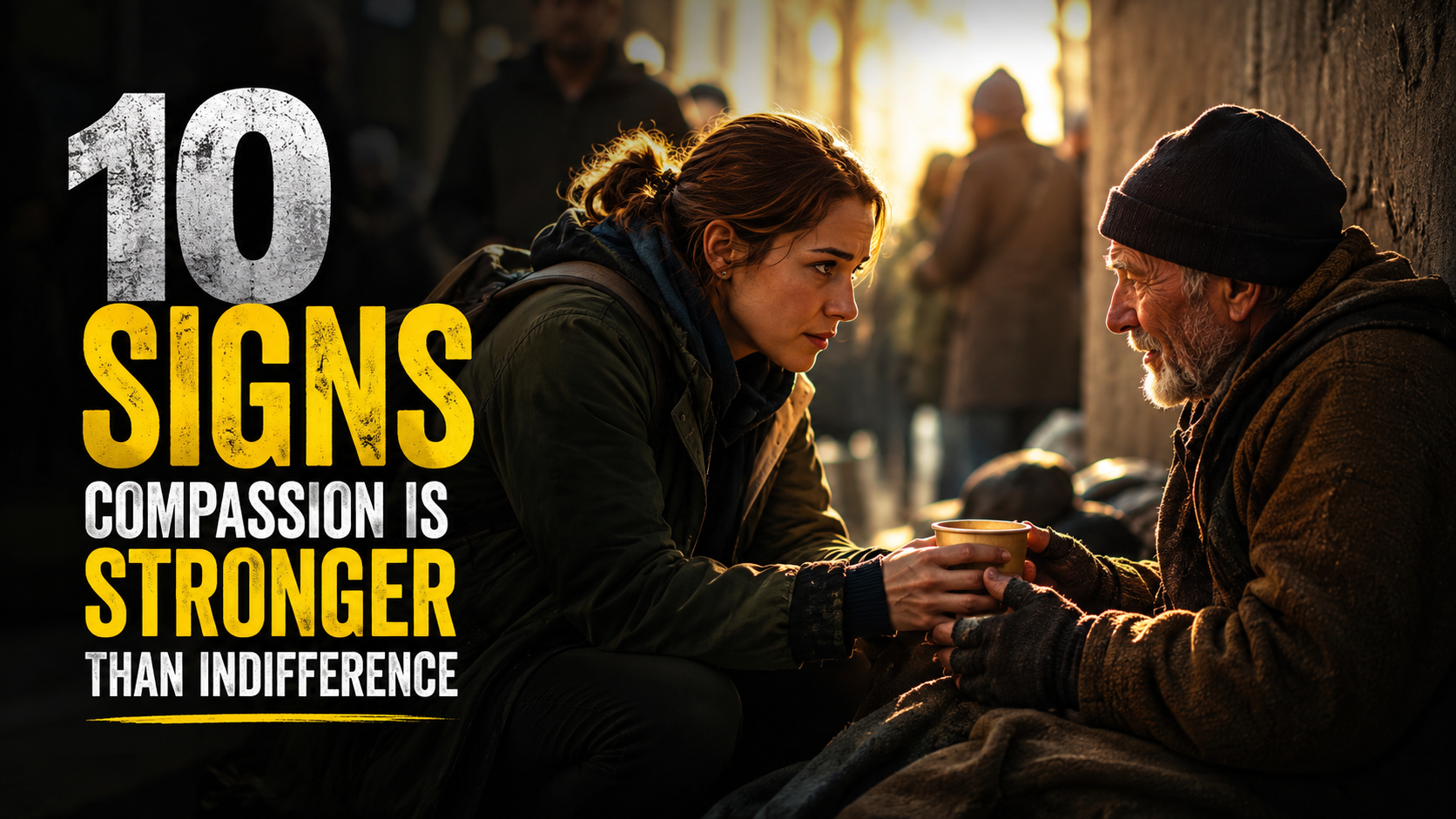
In a world filled with constant news updates, busy schedules, and endless distractions, it can sometimes feel as though people are becoming more disconnected from one another. Stories of conflict and selfish behavior often dominate headlines, leading many to believe that kindness is fading from society.
Yet every day, countless acts of compassion quietly unfold around us. A stranger helps someone carry groceries. A neighbor checks on an elderly resident during a storm. A friend listens patiently when someone is struggling emotionally. These moments rarely make front-page news, but they reveal something important: compassion remains one of the strongest forces in human nature.
Compassion is more than simply feeling sorry for someone. It involves recognizing another person’s suffering and wanting to help ease it. Indifference, on the other hand, occurs when people ignore the needs, struggles, or emotions of others.
Fortunately, examples from everyday life suggest that compassion often wins.
Here are ten signs that compassion is stronger than indifference—and why that matters more than ever.
1. People Still Help Strangers Without Expecting Anything in Return
One of the clearest signs of compassion is the willingness to help someone you don’t know.
Every day, ordinary people stop to assist stranded motorists, help lost children find their parents, or support someone facing an unexpected emergency. In many cases, they receive no reward, recognition, or benefit for their actions.
Psychologists often refer to this as prosocial behavior—the tendency to act in ways that benefit others.
These moments remind us that many people are motivated by empathy rather than personal gain. While indifference encourages people to walk away, compassion inspires them to step forward.
The fact that strangers continue helping one another in countless situations demonstrates that kindness remains deeply rooted in society.
2. Communities Come Together During Times of Crisis
Natural disasters, accidents, and emergencies often bring out the best in people.
When communities face floods, wildfires, hurricanes, or other challenges, volunteers frequently appear almost immediately. Neighbors open their homes, donate supplies, and offer support to those who have been affected.
History repeatedly shows that difficult situations often trigger cooperation rather than division.
Researchers studying disaster response have found that communities commonly experience increased solidarity during crises. Instead of focusing solely on themselves, many people instinctively work together to help others recover.
These collective efforts reveal the remarkable strength of compassion when it is needed most.
3. People Care Deeply About Animals in Need
Compassion extends beyond human relationships.
Millions of people dedicate time, money, and energy to rescuing abandoned animals, supporting wildlife conservation efforts, and caring for injured creatures.
Animal shelters rely heavily on volunteers who devote countless hours to feeding, cleaning, fostering, and rehabilitating animals. Wildlife rescue organizations often operate thanks to individuals who genuinely care about protecting vulnerable species.
These actions demonstrate that empathy is not limited by species.
The willingness to help animals that cannot advocate for themselves highlights the depth of human compassion and our desire to reduce suffering wherever possible.
4. Small Acts of Kindness Continue to Spread
Compassion is often contagious.
Have you ever noticed how one kind act can inspire another?
Someone pays for a stranger’s coffee, and that person later helps someone else. A generous donation encourages others to contribute. A supportive gesture motivates people to become more considerate in their own interactions.
Researchers have found that kindness can create a ripple effect. Witnessing compassionate behavior often increases the likelihood that observers will behave similarly.
This chain reaction shows that compassion has the power to influence entire communities, creating positive momentum that extends far beyond a single interaction.
5. People Are Increasingly Open About Mental Health Support
For many years, mental health struggles were often hidden due to stigma and misunderstanding.
Today, conversations about emotional well-being have become more common and more accepted.
Friends, family members, workplaces, and communities are increasingly encouraging open discussions about anxiety, depression, stress, and other mental health challenges.
This shift reflects a growing culture of compassion.
Rather than dismissing emotional struggles or telling people to simply “get over it,” more individuals are choosing to listen, understand, and support one another.
The willingness to acknowledge mental health concerns demonstrates a deeper appreciation for the challenges others may be facing.
6. Many People Give Their Time to Help Others
Money is valuable, but time is often even more precious.
One of the strongest signs of compassion is the willingness to devote personal time to helping others.
Volunteers mentor children, serve meals at shelters, assist senior citizens, clean public spaces, and support charitable organizations.
Unlike financial donations, volunteering requires direct personal involvement. It often involves effort, commitment, and consistency.
People who volunteer choose to invest a resource they can never recover—their time.
That decision reflects genuine concern for the well-being of others and serves as powerful evidence that compassion remains alive and well.
7. Empathy Continues to Shape Human Relationships
Healthy relationships depend heavily on empathy.
Whether between friends, family members, coworkers, or romantic partners, people often strengthen connections by understanding each other’s feelings and perspectives.
Empathy allows individuals to respond with patience, support, and understanding rather than judgment.
When someone listens carefully during a difficult conversation or offers encouragement during a challenging time, they are demonstrating compassion in action.
These everyday moments may seem ordinary, but they form the foundation of strong and meaningful relationships.
Without compassion, many of the bonds that enrich our lives would struggle to survive.
8. Younger Generations Are Increasingly Concerned About Social Issues
Many young people today show strong interest in issues involving fairness, equality, environmental protection, and social responsibility.
They volunteer, participate in community projects, raise awareness about important causes, and advocate for positive change.
While every generation faces criticism, younger generations are often highly motivated by a desire to improve conditions for others.
This concern for collective well-being reflects compassion on a broader scale.
Rather than focusing exclusively on personal success, many people seek opportunities to create benefits that extend beyond themselves.
Such efforts suggest that empathy continues to influence how people view their role in society.
9. Forgiveness Often Wins Over Resentment
Holding onto anger can feel easier than letting it go.
Yet countless stories demonstrate the remarkable power of forgiveness.
People forgive family members after misunderstandings. Friends rebuild relationships after disagreements. Communities work toward reconciliation following conflict.
Forgiveness does not mean ignoring harmful behavior or pretending pain never happened. Instead, it involves choosing healing over endless resentment.
Compassion often plays a central role in this process.
By recognizing the imperfections shared by all human beings, people become more willing to extend understanding and grace.
The ability to forgive demonstrates emotional strength and reveals how compassion can overcome bitterness.
10. Everyday Heroes Continue to Appear
Not all heroes wear uniforms or receive public recognition.
Many are ordinary people who make extraordinary choices when circumstances demand it.
They help during emergencies, support vulnerable neighbors, care for sick relatives, advocate for those who have no voice, and quietly improve the lives of people around them.
These individuals rarely seek attention.
Their actions are driven by concern for others rather than personal recognition.
Everyday heroes remind us that compassion is not limited to grand gestures. It often appears in simple decisions to help, support, and protect those who need it most.
Their stories offer powerful proof that kindness remains stronger than indifference.
Why Compassion Matters More Than Ever
Modern life presents unique challenges.
Technology allows people to connect instantly, yet many still experience loneliness. Social media can raise awareness about important issues, but it can also create division and misunderstanding.
In this environment, compassion becomes increasingly valuable.
Compassion encourages people to look beyond assumptions and see the humanity in others. It promotes cooperation, understanding, and mutual support.
Research consistently shows that compassionate individuals tend to experience stronger relationships, greater emotional well-being, and higher levels of life satisfaction.
Communities built on empathy also tend to be more resilient and supportive during difficult times.
Simply put, compassion benefits both those who receive it and those who practice it.
How to Strengthen Compassion in Everyday Life
The good news is that compassion is not a fixed trait. It can be developed and strengthened over time.
One simple approach is practicing active listening. Instead of immediately offering advice or judgment, take time to understand another person’s perspective.
Another strategy is performing small acts of kindness whenever possible. Simple gestures such as offering encouragement, expressing gratitude, or helping someone with a task can have a meaningful impact.
It’s also helpful to remain curious about other people’s experiences. Compassion grows when we recognize that everyone carries challenges we may not fully understand.
Even small efforts can contribute to a more caring and supportive environment.
Final Thoughts
Although headlines often focus on conflict, division, and negativity, everyday life tells a different story. Across neighborhoods, workplaces, schools, and communities, countless acts of kindness continue to unfold.
People help strangers. Volunteers dedicate their time. Families support one another. Communities unite during crises. Individuals forgive, encourage, and protect those in need.
These actions reveal an important truth: compassion remains one of humanity’s greatest strengths.
Indifference may exist, but it is often overshadowed by the countless examples of empathy, generosity, and understanding that occur every day.
The next time you witness a small act of kindness—or choose to perform one yourself—remember that compassion has a remarkable ability to spread. And in a world that sometimes feels divided, that may be one of the most powerful forces we have.







