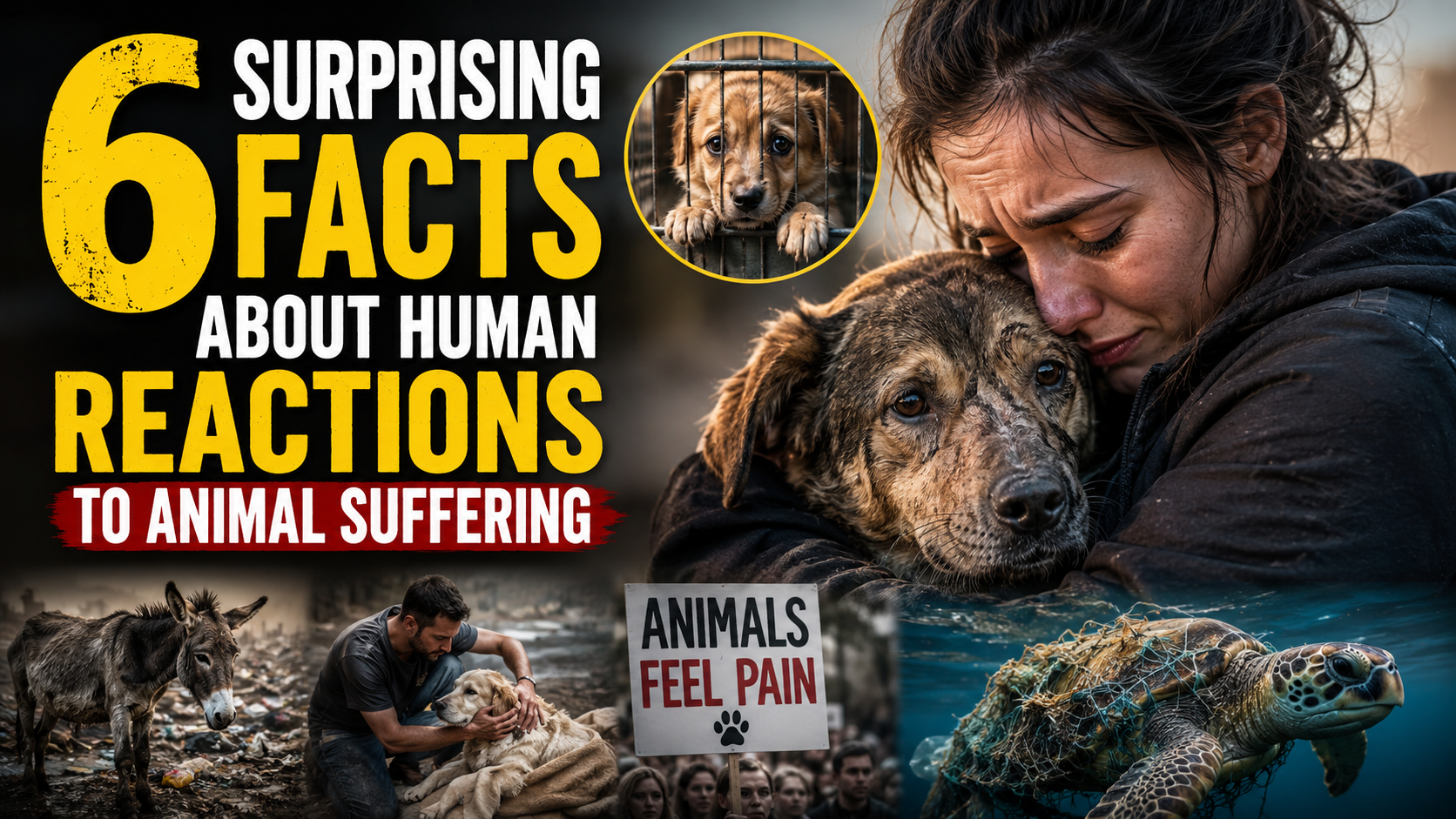
Few things evoke an emotional response as quickly as seeing an animal in distress. Whether it’s a stranded whale, an injured dog, a neglected horse, or wildlife struggling after a natural disaster, people around the world often react with deep concern. In many cases, stories involving animal suffering spread rapidly online, attract millions of views, and inspire large-scale rescue efforts.
But why do humans respond so strongly to the pain of animals? What is happening psychologically when people feel sadness, anger, compassion, or even a sense of responsibility toward creatures that belong to another species?
Scientists, psychologists, and behavioral researchers have spent years exploring the connection between humans and animals. Their findings reveal that our reactions are often driven by powerful instincts, emotional processes, and social influences that many people don’t fully recognize.
Here are six surprising facts about human reactions to animal suffering—and what they reveal about human nature itself.
1. People Often Feel Immediate Empathy for Animals
One of the most fascinating aspects of human psychology is our ability to empathize with other living beings.
Empathy allows us to imagine what another creature might be experiencing. When we see an injured animal limping, a frightened pet trembling, or wildlife struggling to survive, many people instinctively imagine pain, fear, or vulnerability.
Interestingly, this emotional response can occur almost instantly. Researchers believe humans are naturally wired to recognize signs of distress because empathy has played a critical role in social survival throughout history.
Animals often display visible cues that humans easily understand. A frightened expression, defensive posture, cries of pain, or signs of weakness can trigger emotional reactions similar to those we experience when seeing another person suffer.
Because of this, many people feel compelled to help even when the animal is completely unfamiliar to them.
This automatic emotional connection explains why animal rescue stories frequently resonate across cultures and generations.
2. Vulnerable Animals Trigger Powerful Protective Instincts
Not all animal stories generate the same level of public reaction.
People tend to respond most strongly when animals appear vulnerable, helpless, or unable to protect themselves.
Young animals often receive particularly intense emotional attention. Puppies, kittens, baby birds, koalas, and other juvenile animals frequently spark widespread concern because they activate protective instincts that humans normally associate with caring for children.
Psychologists sometimes refer to this as a nurturing response. Features such as large eyes, small bodies, and dependent behavior naturally encourage feelings of care and protection.
When people witness suffering involving vulnerable animals, these instincts can become extremely powerful.
As a result, rescue efforts involving young or defenseless animals often attract significant public support, donations, and media attention.
3. Animal Suffering Can Reveal a Person’s Core Values
The way people respond to animal suffering often reflects deeper beliefs about compassion, morality, and responsibility.
For many individuals, concern for animals is connected to broader values involving kindness and empathy toward all living creatures.
When someone intervenes to help an injured animal, reports abuse, donates to rescue organizations, or supports wildlife conservation efforts, their actions often stem from principles they apply throughout life.
Research suggests that people who show strong concern for animal welfare frequently score higher on measures related to empathy and prosocial behavior.
This doesn’t mean everyone reacts identically, but it does highlight an important truth: our responses to animal suffering often reveal how we think about care, responsibility, and ethical behavior.
In many ways, the treatment of animals serves as a reflection of societal values.
4. Stories About Animals Often Feel More Personal Than Statistics
Millions of animals may be affected by environmental issues, habitat loss, natural disasters, or neglect every year. Yet surprisingly, a single story about one suffering animal often captures more public attention than large-scale statistics.
This phenomenon is sometimes called the “identifiable victim effect.”
Humans tend to connect more deeply with specific individuals than with abstract numbers.
For example, a detailed story about one rescued dog may generate a stronger emotional reaction than a report describing thousands of animals affected by a disaster.
When people can see a face, learn a name, or follow a personal journey, emotional engagement increases dramatically.
This is why animal rescue organizations frequently share individual success stories. These narratives help people form meaningful emotional connections that statistics alone often fail to create.
The lesson is simple: people connect with stories more than numbers.
5. Witnessing Animal Suffering Can Motivate Positive Action
While sadness is a common response to animal suffering, many people don’t stop at feeling concerned.
Instead, emotional reactions often become a source of motivation.
People volunteer at shelters, support wildlife organizations, adopt rescued animals, advocate for stronger protections, donate to conservation efforts, or educate others about responsible animal care.
Psychologists refer to this as compassionate action—the process of transforming empathy into behavior.
This response is particularly important because it demonstrates that emotions can drive meaningful change.
Throughout history, public concern about animal welfare has contributed to improvements in rescue programs, wildlife protection, veterinary care, and laws designed to prevent cruelty.
Many positive developments in animal welfare began because ordinary people cared enough to take action.
What starts as a moment of empathy can eventually lead to broader social progress.
6. Concern for Animals May Reflect Human Evolution
One of the most surprising discoveries in behavioral science is that concern for animals may have deep evolutionary roots.
For thousands of years, humans have lived alongside animals in various ways. Some provided companionship, others assisted with work, and many played important roles in survival and community life.
Over time, humans developed the ability to recognize and respond to the needs of other living creatures.
Researchers believe this ability may have helped strengthen social cooperation, caregiving skills, and emotional intelligence.
The capacity to care about suffering—even when it involves another species—could be connected to broader survival mechanisms that encourage cooperation and compassion.
In other words, our concern for animals may not be accidental. It may be part of what helped humans become successful social beings.
This perspective helps explain why people from vastly different cultures often share similar emotional reactions when animals are harmed.
Why Animal Stories Capture Global Attention
In today’s digital world, stories involving animals often travel faster than many other types of news.
A rescued puppy, a rehabilitated sea turtle, a firefighter saving a trapped cat, or a wildlife rescue during a natural disaster can quickly attract worldwide attention.
Part of this popularity comes from the universal nature of animals themselves.
Unlike political issues or cultural debates, concern for animals often crosses social boundaries. People from different backgrounds may disagree on many topics, yet still share compassion for an injured animal.
Animals also represent innocence in the minds of many people. Because they cannot explain their circumstances or advocate for themselves, humans often feel a stronger sense of responsibility toward their welfare.
These factors combine to create emotionally powerful stories that resonate with broad audiences.
What Human Reactions to Animal Suffering Reveal About Us
Perhaps the most interesting aspect of this topic is that it tells us as much about people as it does about animals.
When humans respond to suffering with compassion, they demonstrate qualities such as empathy, kindness, responsibility, and emotional awareness.
These reactions reveal the capacity to care beyond immediate self-interest.
They show that many people are willing to help vulnerable creatures simply because they recognize suffering and want to reduce it.
In a world where news often focuses on conflict and division, stories of animal rescue and compassion provide a reminder that empathy remains a powerful force.
They highlight the best aspects of human nature.
The Growing Importance of Animal Welfare
Public attitudes toward animal welfare have evolved significantly over recent decades.
More people are becoming aware of issues involving wildlife conservation, responsible pet ownership, habitat protection, and humane treatment of animals.
Advances in science have also improved our understanding of animal behavior, emotions, and intelligence.
As knowledge grows, many individuals are rethinking how society interacts with animals and what responsibilities humans have toward other living beings.
This shift has influenced everything from rescue programs and veterinary care to conservation initiatives and legal protections.
The growing concern for animal welfare reflects a broader movement toward empathy and ethical responsibility.
Final Thoughts
Human reactions to animal suffering are shaped by a complex combination of empathy, protective instincts, personal values, storytelling, motivation, and evolutionary influences.
What may seem like a simple emotional response is actually connected to some of the deepest aspects of human psychology.
When people rescue injured animals, support welfare organizations, or advocate for better treatment, they are expressing qualities that have helped societies thrive for generations.
The next time you find yourself moved by a story about an animal in need, remember that your reaction is more than just sympathy. It reflects a powerful human capacity for compassion—one that continues to inspire positive action around the world.
And perhaps that is the most remarkable fact of all: our concern for animals often reveals the very best parts of ourselves.







