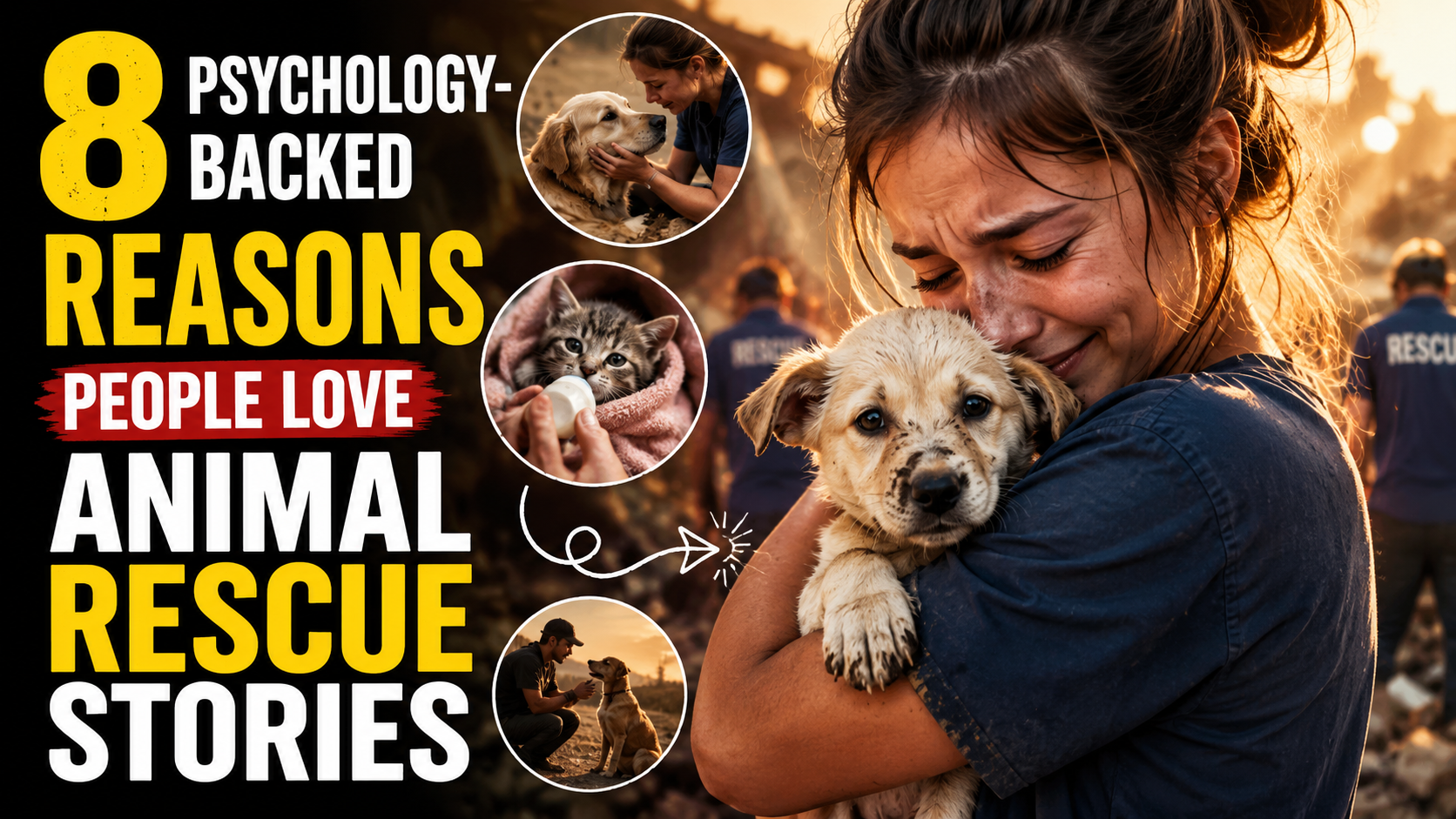
Every day, thousands of news stories compete for our attention. Headlines about politics, business, technology, and entertainment flood our screens. Yet time and again, one type of story consistently captures hearts across the world: animal rescue stories.
Whether it’s a firefighter saving a trapped kitten, volunteers rehabilitating an injured sea turtle, or a shelter dog finally finding a loving home, these stories often spread rapidly online and generate powerful emotional reactions. Millions of people watch rescue videos, share heartwarming adoption stories, and celebrate successful recoveries of animals they have never met.
But why are animal rescue stories so universally appealing?
The answer goes far beyond simply liking animals. Psychologists have discovered that these stories tap into some of the deepest parts of human nature, including empathy, compassion, hope, and our desire to see positive outcomes in a world that often feels overwhelming.
Here are eight psychology-backed reasons people are naturally drawn to animal rescue stories.
1. Animal Rescue Stories Trigger Powerful Feelings of Empathy
Empathy is one of the strongest emotional forces influencing human behavior.
When people see an animal that is injured, abandoned, frightened, or struggling to survive, they often imagine the suffering that animal may be experiencing. Even though animals cannot verbally describe their emotions, humans are remarkably skilled at recognizing signs of distress.
A trembling dog, a frightened cat, or an exhausted wildlife animal often communicates vulnerability without saying a single word.
Research suggests that witnessing suffering activates emotional processes that encourage caring and protective behaviors. This response helps explain why so many people immediately feel concern when they encounter animals in difficult situations.
Animal rescue stories satisfy this emotional response by transforming distress into relief. Viewers witness suffering, but they also see compassion and recovery. That emotional journey makes the story particularly powerful.
2. They Give People Hope in a World Filled With Negative News
Modern news cycles often focus on conflict, disasters, crime, and controversy.
While staying informed is important, constant exposure to negative information can leave people feeling emotionally drained. Psychologists sometimes refer to this phenomenon as “news fatigue,” where individuals become overwhelmed by the steady stream of troubling headlines.
Animal rescue stories offer something different.
They remind people that kindness still exists.
A volunteer helping an injured owl or a stranger rescuing a dog from dangerous conditions provides evidence that compassion remains alive in society.
These stories create emotional balance by showing positive outcomes instead of endless problems.
For many readers, they serve as a welcome reminder that good people continue to make a difference every day.
3. Humans Naturally Feel Protective Toward Vulnerable Creatures
One of the most fascinating aspects of human psychology is our instinct to protect vulnerable beings.
Researchers have found that certain characteristics—including large eyes, small bodies, and dependent behavior—often trigger nurturing responses. These traits are commonly seen in babies, but they also appear in many animals.
This helps explain why puppies, kittens, baby elephants, koalas, and other young animals often generate strong emotional reactions.
When people see an animal that appears helpless or endangered, protective instincts frequently emerge.
Animal rescue stories place vulnerable creatures at the center of the narrative, activating natural caregiving tendencies that many people share regardless of culture or background.
4. Rescue Stories Follow a Deeply Satisfying Emotional Journey
Humans love stories.
From ancient myths to modern films, people are naturally drawn to narratives that include challenges, setbacks, and eventual triumphs.
Animal rescue stories often follow a powerful storytelling structure.
First, there is a problem. An animal is injured, trapped, abandoned, or facing danger.
Then comes the struggle. Rescuers work tirelessly to help.
Finally, there is a resolution. The animal recovers, finds safety, or begins a new life.
Psychologists have long recognized that stories with positive resolutions create feelings of satisfaction and emotional reward.
Animal rescue stories provide a real-world version of this narrative structure, making them particularly engaging and memorable.
5. They Highlight the Best Qualities of Human Nature
Many people enjoy animal rescue stories because they showcase human kindness.
In daily life, it can be easy to focus on examples of selfishness, conflict, or division. Rescue stories offer a different perspective.
They highlight individuals who volunteer their time, donate resources, take risks, or dedicate themselves to helping creatures in need.
Whether it’s a veterinarian treating an injured animal, a rescue team responding to a disaster, or an adopter opening their home to a shelter pet, these actions demonstrate compassion in action.
Psychologists suggest that witnessing kindness often inspires positive emotions and strengthens trust in others.
Simply seeing people help animals can restore faith in humanity.
6. Animals Feel Innocent and Nonjudgmental
Another reason people connect strongly with animal rescue stories is the perception that animals are innocent.
Unlike human conflicts, which often involve complicated motives and disagreements, animals are generally viewed as vulnerable beings that rely on human care and protection.
Because animals cannot advocate for themselves in the same way humans can, people often feel a heightened sense of responsibility toward their welfare.
This perception creates strong emotional investment.
When an animal is rescued, many people experience a sense of justice and relief because a vulnerable creature has been given a second chance.
The emotional reward feels especially meaningful because the animal is seen as deserving of compassion without conditions.
7. Rescue Stories Inspire People to Take Positive Action
Animal rescue stories don’t just make people feel good—they often motivate behavior.
Studies in psychology suggest that witnessing acts of kindness can encourage others to behave more compassionately themselves.
This phenomenon is sometimes called “moral elevation.”
When people observe generosity, courage, or selflessness, they often feel inspired to contribute in positive ways.
Animal rescue stories frequently lead to real-world action.
Readers may donate to shelters, volunteer with rescue organizations, adopt pets, support wildlife conservation efforts, or become advocates for animal welfare.
In this way, a single rescue story can create a ripple effect that extends far beyond the original event.
The story becomes a catalyst for broader compassion.
8. They Remind Us of the Emotional Bond Between Humans and Animals
Humans have shared their lives with animals for thousands of years.
Dogs, cats, horses, birds, and countless other species have served as companions, helpers, protectors, and sources of comfort throughout history.
As a result, many people feel a deep emotional connection to animals.
Pet owners often describe their animals as family members. Even people without pets frequently feel affection toward wildlife and other creatures.
Animal rescue stories reinforce this bond.
They remind us that the relationship between humans and animals is built on care, trust, and companionship.
When an animal receives help and survives, people often celebrate because it reflects a connection they personally understand.
The rescue feels meaningful because it speaks to a relationship that many individuals have experienced firsthand.
Why Animal Rescue Stories Go Viral So Often
In today’s digital world, certain stories spread faster than others.
Animal rescue stories possess several characteristics that make them highly shareable.
They are emotional without being divisive.
They appeal to people of different ages and backgrounds.
They offer a clear narrative with a positive outcome.
They feature visual transformations that are easy to understand.
Most importantly, they make people feel something.
Research consistently shows that emotionally engaging content is more likely to be shared online. Because rescue stories evoke empathy, hope, happiness, and inspiration, they naturally attract attention across social media platforms.
This explains why videos of rescued animals often generate millions of views within days.
The Science Behind Feel-Good Emotions
Scientists have discovered that positive emotional experiences can have meaningful effects on mental well-being.
When people encounter uplifting stories, the brain may release chemicals associated with pleasure, connection, and emotional reward.
While a rescue story may seem like a small moment, these positive emotions can contribute to reduced stress and improved mood.
This may explain why many people actively seek out animal rescue content during difficult times.
The stories provide a brief emotional reset—a reminder that kindness and compassion still exist.
In a fast-paced and often stressful world, that reassurance can be incredibly valuable.
What These Stories Reveal About Human Nature
Perhaps the most interesting aspect of animal rescue stories is what they reveal about us.
The popularity of these stories suggests that many people genuinely care about reducing suffering and helping vulnerable beings.
Despite differences in culture, language, politics, or background, compassion for animals often creates common ground.
The widespread appeal of rescue stories demonstrates that empathy remains a powerful force in human society.
People want to see suffering reduced.
They want to see kindness rewarded.
And they want to believe that positive change is possible.
Animal rescue stories provide all three.
Final Thoughts
Animal rescue stories are much more than feel-good headlines. They resonate because they tap into fundamental aspects of human psychology, including empathy, hope, compassion, storytelling, and our instinct to protect vulnerable creatures.
These stories remind us that acts of kindness can make a real difference, whether the recipient is a person or an animal.
They showcase the best qualities of humanity while celebrating the deep bond humans share with the animal world.
Most importantly, they offer proof that even in difficult circumstances, compassion has the power to change lives.
That may be the biggest reason people never grow tired of reading, watching, and sharing animal rescue stories. They remind us not only of the resilience of animals, but also of the extraordinary capacity for kindness that exists within people.







