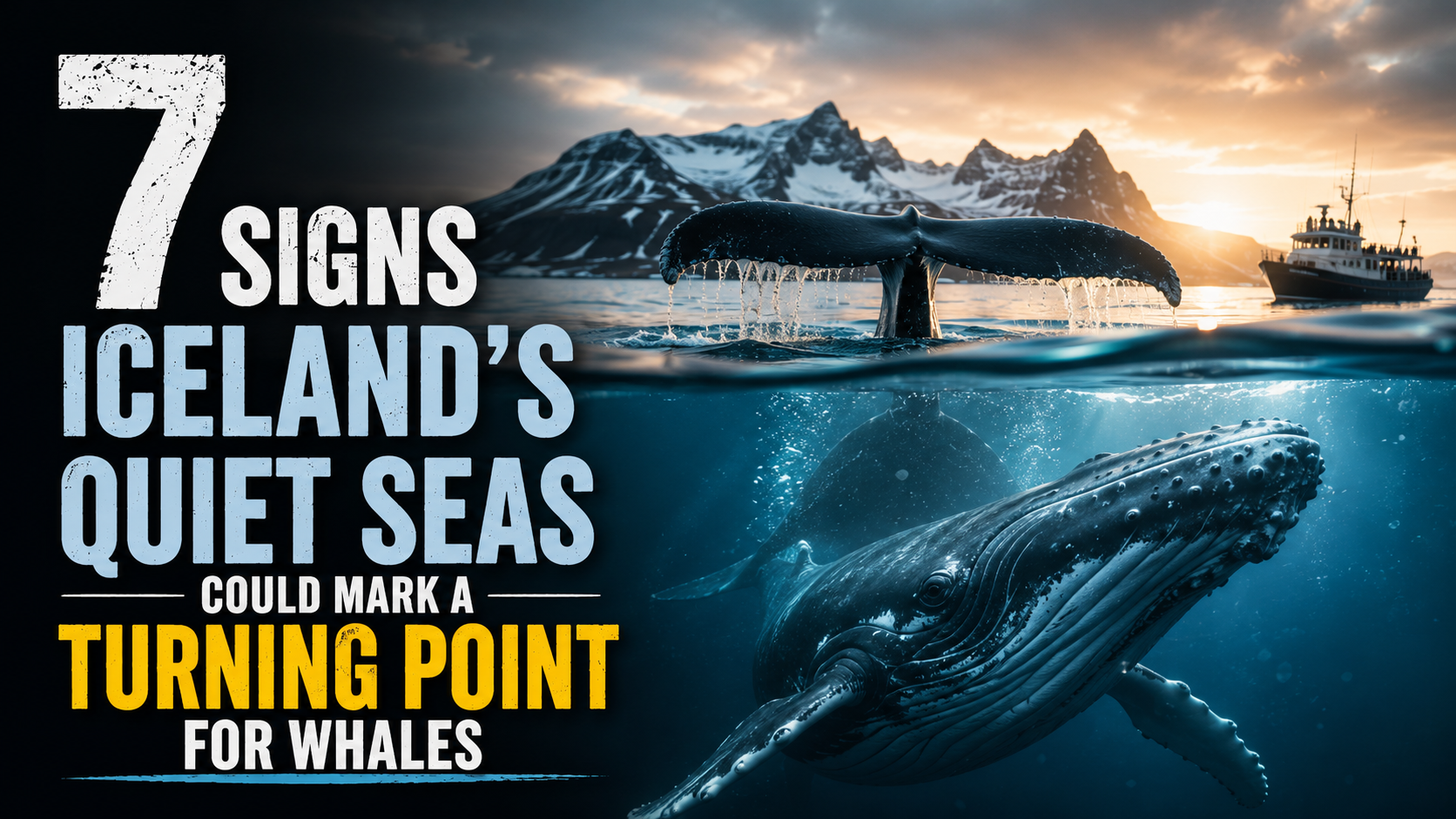
For centuries, the waters surrounding Iceland have been among the most important marine habitats in the North Atlantic. These cold, nutrient-rich seas support an incredible variety of ocean life, attracting some of the world’s most iconic whale species.
From humpbacks and minke whales to fin whales and blue whales, Iceland’s coastline has long served as a vital feeding ground and migratory route. Yet like many marine ecosystems around the globe, these waters have faced increasing pressures from human activity, environmental changes, and shifting ocean conditions.
In recent years, however, scientists, conservationists, and whale enthusiasts have noticed something encouraging. Parts of Iceland’s surrounding waters appear quieter than before, creating conditions that may benefit whale populations in ways researchers are only beginning to understand.
While no single development guarantees a dramatic recovery for marine mammals, several emerging trends suggest that Iceland’s seas could be entering an important new chapter.
Here are seven signs that the country’s quieter waters may represent a meaningful turning point for whales.
1. Reduced Ocean Noise Creates a Better Environment
The ocean is far from silent.
Whales rely heavily on sound to navigate, communicate, locate food, and maintain contact with other members of their species. Unfortunately, modern oceans have become increasingly noisy due to commercial shipping, industrial activity, and other human-generated sounds.
Excessive underwater noise can interfere with whale communication and create stress for marine mammals.
When certain regions experience reduced vessel traffic or lower levels of industrial disturbance, whales often benefit from a quieter acoustic environment.
Around Iceland, researchers have observed periods in which underwater noise levels appear lower than in previous years.
This matters because clearer communication can improve everything from mating opportunities to migration success.
For animals that depend on sound as much as whales do, a quieter ocean can significantly improve quality of life.
2. More Whale Sightings Are Being Reported
One of the most encouraging signs comes from increased observations of whales in areas where they may have been less frequently seen in the past.
Whale-watching operators, marine researchers, and local communities have reported regular sightings of several species throughout Icelandic waters.
Although sighting increases do not automatically indicate population growth, they can suggest favorable environmental conditions.
When whales repeatedly return to certain areas, it often signals that food resources remain available and habitats continue to meet their needs.
Consistent sightings also provide researchers with valuable opportunities to monitor behavior, migration patterns, and overall population health.
The growing visibility of whales in some regions has fueled optimism among conservation advocates.
3. Feeding Grounds Appear More Productive
Whales go where the food is.
Many species travel thousands of miles each year to reach nutrient-rich feeding grounds. Iceland’s waters have historically served this purpose because ocean currents bring large amounts of plankton, krill, and fish into the region.
Recent observations suggest that some feeding areas continue to support abundant marine life.
Healthy feeding grounds are critical because whales require enormous amounts of food to maintain energy reserves, reproduce successfully, and complete long migrations.
When food sources remain stable, whale populations are more likely to thrive.
The continued productivity of Iceland’s marine ecosystem offers hope that these waters can support future generations of whales.
4. Conservation Awareness Has Grown Significantly
Public attitudes toward whales have changed dramatically over the past few decades.
Where whales were once viewed primarily as resources, they are now widely recognized as essential components of healthy marine ecosystems.
This shift in perspective has encouraged greater investment in research, conservation initiatives, and responsible tourism.
Iceland has become one of the world’s leading whale-watching destinations, attracting visitors eager to observe marine life in its natural habitat.
As public appreciation grows, support for conservation efforts often follows.
Greater awareness creates stronger incentives to protect critical habitats and reduce activities that threaten marine mammals.
In many ways, changing attitudes may be just as important as changing environmental conditions.
5. Advances in Marine Research Are Improving Protection Efforts
Scientists today know far more about whales than they did even a few decades ago.
Modern technology allows researchers to track migration routes, monitor underwater sounds, analyze feeding behavior, and study population dynamics with unprecedented accuracy.
In Icelandic waters, ongoing research continues to reveal important information about how whales interact with their environment.
These discoveries help policymakers and conservation organizations make more informed decisions.
The ability to identify critical habitats, migration corridors, and sensitive areas makes it easier to develop effective protection strategies.
Knowledge is one of the most powerful conservation tools available.
As understanding improves, so do opportunities to support whale recovery.
6. Whales Are Showing Remarkable Resilience
Perhaps the most inspiring sign is the resilience demonstrated by whales themselves.
Despite facing decades of challenges—including historical hunting, habitat disruption, pollution, and climate-related changes—many whale populations have shown an extraordinary capacity for adaptation.
Whales are highly mobile animals capable of adjusting migration routes and feeding strategies when conditions change.
Some species that once experienced severe population declines have shown encouraging signs of recovery under improved protection measures.
This resilience does not mean whales no longer face threats. Far from it.
However, it demonstrates that positive changes can produce meaningful results.
When given the opportunity, nature often proves remarkably capable of healing.
7. A Growing Global Focus on Ocean Health Supports Recovery
Whale conservation does not happen in isolation.
The health of whale populations depends on the health of entire marine ecosystems.
Around the world, governments, scientists, environmental organizations, and local communities are increasingly focusing on ocean protection.
Efforts to reduce pollution, improve fisheries management, protect marine habitats, and address environmental challenges all contribute to healthier ecosystems.
Because whales occupy important roles within ocean food webs, they benefit when broader conservation efforts succeed.
Iceland’s quieter seas are part of a much larger global conversation about protecting marine environments for future generations.
This growing commitment to ocean stewardship offers one of the strongest reasons for optimism.
Why Quiet Oceans Matter More Than Many People Realize
Most people associate whale conservation with preventing hunting or protecting endangered species.
While those issues remain important, underwater noise has emerged as another significant factor affecting marine life.
Whales communicate across vast distances using sound.
Some species produce vocalizations that travel for miles through the ocean. These calls help them locate companions, coordinate movement, identify potential mates, and navigate complex environments.
When human-generated noise increases, these communications can become more difficult.
Imagine trying to hold an important conversation in a room filled with constant machinery and loud traffic.
That challenge helps illustrate what many whales experience every day.
Reducing unnecessary noise pollution can have meaningful benefits for marine mammals and other ocean species.
Iceland’s Unique Role in Whale Conservation
Iceland occupies a special position in the North Atlantic ecosystem.
Its surrounding waters sit at the intersection of major ocean currents, creating highly productive marine environments that attract a wide variety of wildlife.
Because so many whale species depend on these habitats, conditions in Icelandic waters often have broader ecological significance.
Researchers from around the world continue to study the region because it offers valuable insights into whale behavior, migration, and population trends.
As conservation efforts evolve, Iceland may play an increasingly important role in understanding how marine ecosystems respond to changing environmental conditions.
The lessons learned here could help inform whale protection strategies globally.
What Whale Recovery Means for Ocean Ecosystems
Whales do far more than inspire awe.
They contribute to the health of entire marine ecosystems.
Scientists have found that whales help circulate nutrients through the water column, supporting productivity in ocean food webs. Their movements influence nutrient distribution, while their feeding behavior can shape ecosystem dynamics.
Healthy whale populations often indicate healthy oceans.
When whales thrive, it suggests that food sources, habitat conditions, and ecological relationships remain functional.
This is one reason conservationists pay such close attention to whale populations.
Protecting whales benefits far more than a single species.
It helps support broader ecosystem health.
Looking Ahead
The future of whale conservation remains complex.
Challenges such as climate change, changing ocean temperatures, pollution, and habitat disruption continue to affect marine environments worldwide.
Yet there are reasons for optimism.
Iceland’s quieter seas represent one example of how positive changes can create opportunities for wildlife.
Improved awareness, better research, stronger conservation efforts, and growing public support all contribute to a more hopeful outlook.
Progress rarely happens overnight.
Recovery often occurs gradually, through a combination of scientific understanding, responsible management, and public commitment.
Every positive trend matters.
Final Thoughts
The idea that Iceland’s quieter waters could mark a turning point for whales is not based on a single event. Instead, it reflects a collection of encouraging developments that together suggest a brighter future may be possible.
The seven signs are worth remembering:
- Reduced underwater noise creates better conditions for communication.
- Whale sightings continue to generate optimism.
- Productive feeding grounds support healthy populations.
- Conservation awareness is stronger than ever.
- Scientific research is improving protection efforts.
- Whales continue to demonstrate remarkable resilience.
- Global support for ocean health is growing.
While challenges remain, these developments offer hope that some of the world’s most magnificent marine mammals may continue to thrive in the waters surrounding Iceland.
For conservationists, researchers, and whale lovers alike, that possibility is a powerful reminder that positive change can happen when people and nature work together toward a healthier future.







