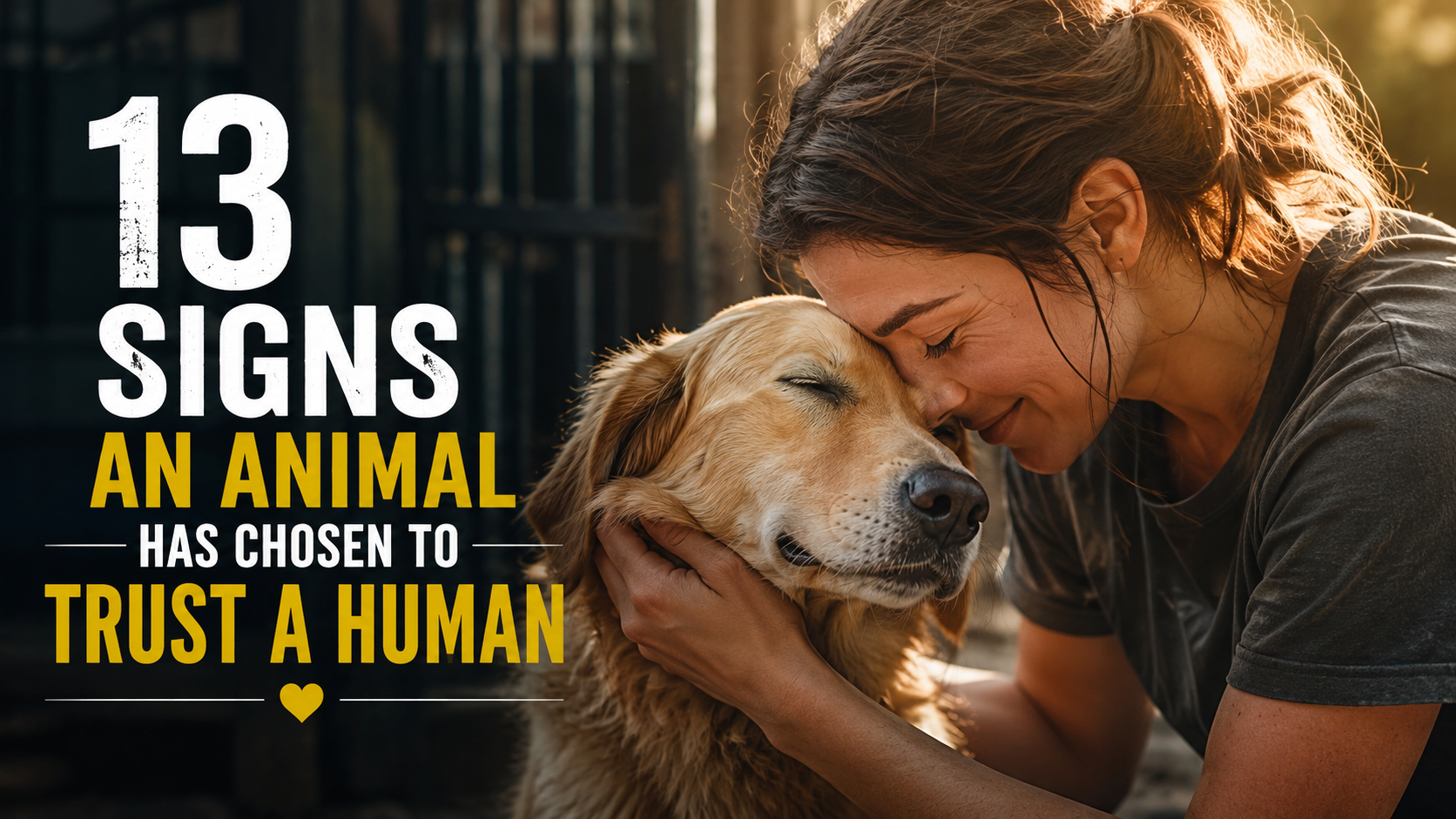
Trust is one of the most powerful bonds in the animal world.
Unlike humans, animals don’t build trust through promises or conversations. Instead, they rely on observation, experience, and instinct. Every interaction matters. A single positive experience can strengthen a relationship, while a negative one can take weeks, months, or even years to overcome.
Whether it’s a family dog, a rescued horse, a rehabilitated bird, or a wild animal that has grown comfortable around people, trust is never given automatically. It must be earned.
This is what makes animal trust so meaningful. When an animal decides that a human is safe, it is making a choice based on repeated experiences and careful judgment.
Although every species communicates differently, there are several common signs that often indicate an animal has begun to trust a person.
Here are 13 signals that may suggest an animal has accepted a human as a source of safety, comfort, and companionship.
1. They Choose to Stay Near You
One of the clearest signs of trust is voluntary proximity.
Animals naturally avoid situations that make them uncomfortable. If they repeatedly choose to remain close to a particular person when they have the freedom to leave, it often indicates a sense of security.
This behavior can appear in many forms.
A cat may settle beside you on the couch.
A horse may stand quietly nearby in a pasture.
A bird may remain perched close instead of flying away.
The key detail is choice. The animal is not being forced to stay. It wants to remain in your presence.
That decision speaks volumes.
2. They Relax Their Body Language
Animals reveal a great deal through posture.
A stressed or fearful animal typically appears tense. Muscles tighten, movements become cautious, and attention remains fixed on potential threats.
Trusted humans often see the opposite.
Relaxed animals may stretch out comfortably, lower their guard, rest peacefully, or display loose and natural body movements.
Calm body language is often one of the earliest indicators that an animal feels safe.
When vigilance fades, trust is usually growing.
3. They Make Eye Contact Without Fear
In the animal kingdom, eye contact can carry different meanings depending on the species.
For some animals, direct staring is considered threatening. For others, soft eye contact can signal comfort and familiarity.
When an animal calmly meets your gaze without signs of anxiety, it often reflects confidence in your intentions.
Many pet owners recognize this behavior immediately.
A relaxed dog looking into its owner’s eyes or a cat slowly blinking while maintaining visual contact often communicates a deep sense of trust.
The eyes frequently reveal what words cannot.
4. They Allow Physical Contact
Touch requires vulnerability.
When an animal permits petting, grooming, handling, or close physical interaction, it is often demonstrating confidence that no harm will occur.
This is particularly meaningful for animals that have experienced neglect, trauma, or limited human interaction.
Trust through touch is rarely immediate.
Instead, it develops gradually through positive experiences.
The willingness to accept physical contact often reflects a strong foundation of safety and familiarity.
5. They Sleep Around You
Sleep is one of the most vulnerable states an animal can experience.
A sleeping animal cannot react as quickly to danger, making rest an act of trust in itself.
If an animal chooses to nap, sleep deeply, or rest near a person, it often suggests that it feels protected.
Many animals carefully select where and when they sleep.
When humans become part of that safe environment, it is a significant sign of trust.
In nature, vulnerability is never taken lightly.
6. They Follow You Without Being Asked
Animals that trust humans frequently choose to follow them.
This behavior is common among dogs, but it can also occur in horses, birds, cats, goats, and many other species.
Following behavior often indicates comfort, curiosity, and social connection.
The animal sees value in staying close.
It may view the person as a source of security, guidance, or companionship.
When an animal willingly keeps pace with you, it is often expressing confidence in the relationship.
7. They Show Their Vulnerable Areas
Many animals instinctively protect sensitive parts of their bodies.
The belly, neck, chest, or other vulnerable regions are typically guarded when an animal feels uncertain.
When those areas are exposed voluntarily, it often signals trust.
For example, a dog rolling onto its back or a cat stretching out completely can indicate relaxation and confidence.
However, context matters.
Not every exposed belly is necessarily an invitation for touch.
More importantly, it often reflects that the animal does not perceive an immediate threat.
That level of comfort is meaningful.
8. They Seek Comfort From You During Stress
Trust becomes especially visible during difficult moments.
When animals are frightened, confused, or stressed, they typically seek safety.
If they turn toward a human during those moments rather than away from them, it often suggests a strong bond.
Some animals move closer during thunderstorms.
Others seek reassurance during veterinary visits or unfamiliar situations.
The decision to seek comfort from a person reflects a belief that the individual can provide security.
That trust is not built overnight.
9. They Bring You Objects
Many animals share items for different reasons.
Dogs may bring toys.
Cats sometimes carry objects to favored humans.
Certain birds present items they find interesting.
While motivations vary, offering or sharing objects often reflects social engagement.
The animal is initiating interaction.
In many cases, it is inviting connection.
These small gestures can serve as powerful indicators of trust and relationship-building.
10. They Respond Positively to Your Voice
Animals become remarkably familiar with the voices of trusted humans.
Even before seeing a person, they may react positively to familiar sounds.
A relaxed response to your voice often indicates recognition and comfort.
Many animals learn to associate specific voices with safety, food, affection, or positive experiences.
When they respond enthusiastically or calmly to your presence through sound alone, it often reflects a strong level of trust.
Communication extends far beyond words.
11. They Mirror Your Behavior
Social animals frequently observe and imitate those around them.
This phenomenon can sometimes be seen in human-animal relationships as well.
Trusted animals may adjust their pace to match yours, mirror relaxed behavior, or become calmer when you remain calm.
This synchronization suggests attentiveness and social awareness.
The animal is paying close attention to your actions and emotional state.
Such responsiveness often develops through familiarity and trust.
Strong relationships create subtle forms of connection.
12. They Return After Leaving
One of the most overlooked signs of trust is return behavior.
Animals that feel safe often choose to come back.
This can be especially meaningful in species that are free to roam or move independently.
Returning repeatedly demonstrates preference.
The animal has options, yet it chooses to reconnect.
Whether it’s a pet returning to its owner, a rescued animal seeking interaction, or a wild animal maintaining a comfortable presence, repeated return behavior often reflects confidence and familiarity.
Trust encourages connection.
13. They Act Like Themselves Around You
Perhaps the strongest sign of trust is authenticity.
Animals that feel unsafe often suppress natural behaviors.
They become cautious, withdrawn, or hypervigilant.
Trusted animals behave differently.
They play.
They explore.
They rest.
They express curiosity.
They engage with their environment naturally.
In other words, they feel comfortable enough to be themselves.
When an animal consistently displays its normal personality around a person, trust has likely taken root.
That may be the most meaningful sign of all.
Why Trust Matters So Much to Animals
Trust is not merely a pleasant addition to an animal-human relationship.
It serves a practical purpose.
Trust reduces stress.
It improves communication.
It allows animals to navigate unfamiliar situations more comfortably.
For domestic animals, trust contributes to better health, easier training, and stronger emotional well-being.
For rescued animals, trust can be life-changing.
Many rehabilitation programs rely on carefully building trust before other forms of progress can occur.
Without trust, meaningful relationships are difficult to establish.
With trust, remarkable transformations become possible.
How Humans Earn Animal Trust
Many people assume affection automatically creates trust.
In reality, trust is usually built through consistency.
Animals pay close attention to patterns.
They notice who respects boundaries.
They remember who behaves predictably.
They learn who provides safety and positive experiences.
Patience is essential.
Attempts to force interaction often create setbacks.
The most successful relationships typically develop gradually through respect, observation, and understanding.
Trust cannot be demanded.
It must be earned.
Why Every Species Shows Trust Differently
It’s important to remember that trust does not look identical across all animals.
A dog’s signals may differ from a horse’s.
A parrot communicates differently than a rabbit.
Wild animals often display trust in subtler ways than domesticated species.
Understanding species-specific behavior helps prevent misunderstandings.
What matters most is recognizing patterns that indicate comfort, confidence, and voluntary engagement.
Trust is not always dramatic.
Sometimes it appears in the smallest actions.
Final Thoughts
When an animal chooses to trust a human, it is offering something incredibly valuable.
Unlike material gifts, trust cannot be bought. It develops through patience, consistency, and mutual respect.
The 13 signs discussed here often reveal that trust is growing:
- They stay close voluntarily.
- Their body language relaxes.
- They make comfortable eye contact.
- They accept touch.
- They sleep nearby.
- They follow you willingly.
- They expose vulnerable areas.
- They seek comfort during stress.
- They share objects.
- They respond positively to your voice.
- They mirror your behavior.
- They return repeatedly.
- They feel comfortable being themselves.
Each sign represents a small piece of a larger relationship.
Together, they tell a powerful story: an animal has decided that a particular human is safe.
And in the animal world, there are few compliments greater than that.







