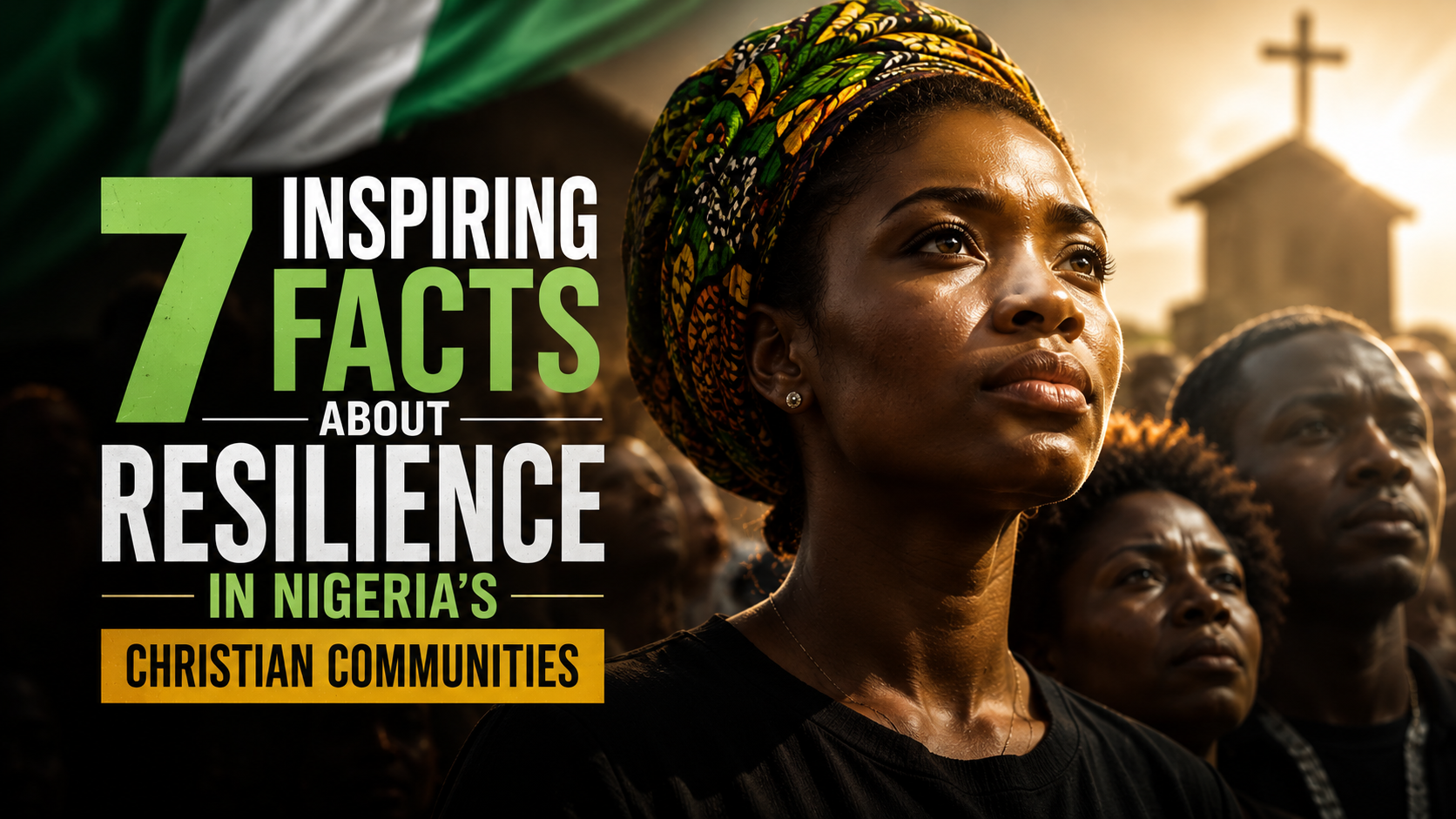
Resilience is one of those qualities that is easy to admire but difficult to develop. It is often forged through challenges, strengthened by adversity, and revealed during moments when people must decide whether to give up or keep moving forward.
Across the world, countless communities demonstrate remarkable resilience every day. Among them are many Christian communities in Nigeria, whose stories of perseverance, faith, service, and hope have inspired people both within the country and beyond its borders.
Nigeria is home to one of the largest Christian populations in Africa. Churches play an important role not only in spiritual life but also in education, healthcare, charity work, community support, and cultural identity. Despite facing economic hardships, social challenges, and periods of uncertainty, many Christian communities continue to demonstrate extraordinary determination and optimism.
Their experiences offer valuable lessons about human strength, collective support, and the power of belief during difficult times.
While every community has its own unique story, several recurring themes stand out as examples of resilience in action.
Here are seven inspiring facts about resilience in Nigeria’s Christian communities and what they reveal about the human spirit.
1. Faith Often Becomes a Source of Strength During Hardship
One of the most remarkable aspects of resilience is the ability to maintain hope when circumstances become difficult.
For many Nigerian Christians, faith serves as an anchor during uncertain times.
Whether facing economic pressures, personal struggles, health challenges, or broader social issues, many believers draw strength from prayer, worship, and spiritual teachings. Faith provides more than comfort—it often offers perspective.
Rather than viewing challenges as permanent, many individuals see them as temporary seasons that can be overcome with perseverance and trust.
This mindset can have a powerful effect on emotional well-being.
People who maintain hope are often better equipped to endure setbacks because they believe difficult circumstances do not define the entire future.
That sense of hope remains one of resilience’s most important foundations.
2. Communities Frequently Support One Another in Practical Ways
Resilience is rarely a solo effort.
One of the defining characteristics of many Nigerian Christian communities is their emphasis on mutual support.
Churches often function as more than places of worship. They serve as gathering points where people find encouragement, friendship, mentorship, and practical assistance.
When families experience hardship, community members frequently step in to help.
Support may come through:
- Food assistance
- Financial contributions
- Educational support
- Childcare assistance
- Emotional encouragement
- Volunteer service
These acts of solidarity strengthen social bonds and help individuals navigate difficult circumstances.
The willingness to support one another reflects a simple but powerful truth: resilience grows stronger when people face challenges together.
3. Worship Creates a Sense of Hope and Unity
Music, prayer, and communal worship play a significant role in many Nigerian churches.
Visitors are often struck by the energy, joy, and enthusiasm found during worship services.
Even amid hardship, congregations frequently gather with a spirit of celebration and gratitude.
This collective experience can be emotionally powerful.
Singing together, sharing testimonies, and participating in communal worship help reinforce feelings of connection and hope.
Psychologists have long recognized the importance of social belonging and shared experiences in building resilience.
For many believers, worship becomes a reminder that they are not facing life’s challenges alone.
That sense of unity helps strengthen both individuals and communities.
4. Education Remains a Long-Term Investment in the Future
One inspiring aspect of many Christian communities in Nigeria is their commitment to education.
Throughout the country’s history, churches and Christian organizations have contributed significantly to schools, universities, literacy programs, and educational outreach efforts.
Investing in education reflects resilience because it focuses on long-term solutions rather than short-term survival.
Education creates opportunities.
It expands possibilities.
It equips future generations with tools to overcome obstacles and improve their circumstances.
Even when resources are limited, many families continue prioritizing education because they view it as a pathway toward a better future.
This commitment demonstrates optimism and determination.
Resilient communities think beyond immediate challenges and invest in what comes next.
5. Service to Others Continues Despite Difficult Circumstances
One of the clearest signs of resilience is the ability to help others even while facing personal difficulties.
Many Nigerian Christian organizations remain deeply involved in charitable activities.
These efforts often include:
- Healthcare outreach
- Food distribution
- Community development projects
- Youth programs
- Orphan care
- Disaster relief initiatives
What makes these efforts especially inspiring is that they frequently occur in environments where resources may already be stretched.
Yet many individuals continue serving because they believe compassion matters regardless of circumstances.
Helping others can also strengthen resilience.
Acts of service create purpose, reinforce social connections, and remind people that their actions can make a positive difference.
Service transforms hardship into opportunity.
6. Families Play a Central Role in Building Strength
Strong families often serve as the foundation of resilient communities.
Across many Nigerian Christian households, family relationships remain deeply valued.
Parents, grandparents, siblings, and extended relatives frequently provide emotional support, practical guidance, and spiritual encouragement.
These relationships create stability during uncertain times.
When challenges arise, family members often work together to find solutions and share responsibilities.
This support system helps reduce feelings of isolation.
It also reinforces important values such as responsibility, perseverance, generosity, and faith.
Resilience often begins at home.
The strength of families contributes significantly to the strength of communities as a whole.
7. Optimism Persists Even in Difficult Seasons
Perhaps the most inspiring characteristic of resilient communities is their ability to maintain optimism.
Optimism does not mean ignoring reality.
It does not require pretending problems do not exist.
Instead, optimism reflects a belief that improvement remains possible.
Many Nigerian Christians continue looking toward the future with hope despite facing challenges that might discourage others.
This outlook influences behavior.
Hopeful people are more likely to pursue opportunities, invest in relationships, support others, and remain engaged in their communities.
Optimism fuels perseverance.
And perseverance often creates progress.
The ability to maintain hope during difficult periods may be one of the most powerful forms of resilience.
Why Resilience Matters More Than Ever
The modern world presents challenges that affect people across every nation and culture.
Economic uncertainty, social change, health concerns, and personal struggles can test even the strongest individuals.
Resilience helps people adapt.
It enables recovery after setbacks.
It encourages growth despite adversity.
Communities that cultivate resilience are often better equipped to navigate change and support their members through difficult periods.
The examples found within Nigerian Christian communities demonstrate how resilience develops through relationships, purpose, faith, and shared values.
These lessons extend far beyond any single country or religious tradition.
The Connection Between Faith and Resilience
Researchers have spent years studying the relationship between spirituality and resilience.
While experiences vary from person to person, many studies suggest that faith can provide important psychological benefits.
Faith often offers:
- A sense of meaning
- Hope during adversity
- Social support
- Emotional comfort
- Positive coping mechanisms
- A framework for interpreting challenges
For many believers, spiritual practices such as prayer, worship, and reflection create a sense of stability when life feels uncertain.
This does not eliminate hardship.
However, it often changes how people respond to it.
That difference can be significant.
Lessons the World Can Learn
The resilience demonstrated by many Nigerian Christian communities offers several universal lessons.
First, resilience is rarely an individual achievement.
Strong relationships matter.
Support systems matter.
Communities matter.
Second, hope remains a powerful force.
People who believe improvement is possible are more likely to persevere through challenges.
Third, purpose strengthens endurance.
Individuals who focus on serving others often discover greater strength within themselves.
Finally, resilience grows through consistent action.
It develops gradually through daily choices rather than dramatic moments.
These lessons apply regardless of culture, nationality, or faith background.
Building Resilience in Everyday Life
The inspiring examples found in resilient communities can also help individuals strengthen their own lives.
Practical ways to build resilience include:
- Developing supportive relationships
- Maintaining hope during setbacks
- Practicing gratitude
- Investing in personal growth
- Serving others
- Focusing on long-term goals
- Strengthening spiritual or personal values
These habits create a foundation that helps people navigate challenges more effectively.
Resilience is not something people are simply born with.
It is a skill that can be developed over time.
Looking Toward the Future
One reason resilience is so inspiring is that it points toward possibility.
Resilient communities refuse to let current difficulties define future outcomes.
They continue building.
They continue serving.
They continue believing that positive change can occur.
Many Nigerian Christian communities embody this forward-looking mindset.
Their commitment to faith, education, service, family, and community demonstrates a remarkable ability to keep moving forward despite obstacles.
That determination offers encouragement far beyond national borders.
It serves as a reminder that resilience remains one of humanity’s greatest strengths.
Final Thoughts
The stories emerging from Nigeria’s Christian communities reveal important truths about perseverance and hope.
The seven inspiring facts discussed here highlight key sources of resilience:
- Faith provides strength during hardship.
- Communities support one another.
- Worship fosters unity and hope.
- Education creates future opportunities.
- Service continues despite challenges.
- Families provide stability and encouragement.
- Optimism fuels perseverance.
Together, these qualities form a powerful example of what resilience looks like in practice.
While circumstances may vary from place to place, the underlying lessons remain universal.
People become stronger when they support one another.
Hope helps sustain progress.
Purpose creates endurance.
And faith, for many, provides the foundation that makes resilience possible.
In a world often focused on obstacles, these communities offer a different message—one centered on perseverance, compassion, and the enduring power of hope.







