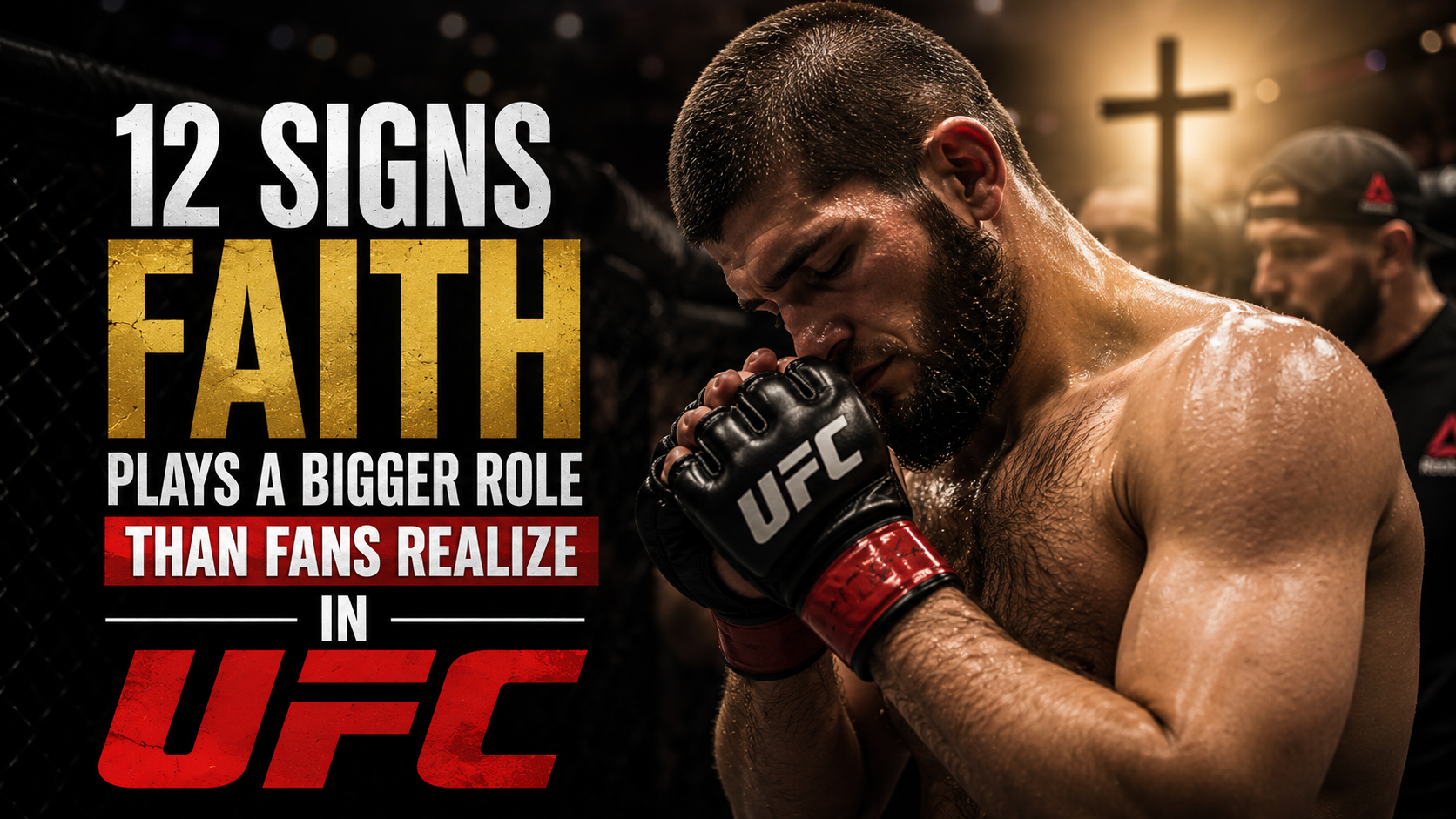
When most people think about the UFC, they picture intense training camps, dramatic knockouts, championship belts, and elite athletes pushing themselves to physical extremes. The spotlight usually falls on fighting styles, strength, conditioning, and strategy.
Yet beneath the surface of mixed martial arts lies another influence that often receives far less attention: faith.
For many UFC fighters, coaches, and team members, spiritual beliefs play an important role behind the scenes. While fans tend to focus on what happens inside the Octagon, the mental and emotional preparation that takes place outside of it often includes prayer, religious practices, personal reflection, and spiritual guidance.
Of course, not every fighter shares the same beliefs. The UFC is home to athletes from countless cultures, religions, and backgrounds. However, one trend has become increasingly clear over the years: faith remains a significant part of many competitors’ lives.
From pre-fight rituals to post-fight interviews, signs of spirituality regularly appear throughout the sport.
Here are twelve reasons faith may play a bigger role in the UFC than many fans realize.
1. Many Fighters Publicly Thank God After Victories
One of the most visible signs of faith in mixed martial arts appears immediately after major wins.
Watch enough UFC events, and you’ll notice a recurring pattern. Following emotional victories, many fighters use their first interview to express gratitude to God before discussing their performance.
For some athletes, these acknowledgments have become a consistent part of their public identity.
In moments when adrenaline is high and emotions are raw, people often reveal what matters most to them.
The fact that so many fighters choose to begin with expressions of faith suggests spirituality occupies an important place in their lives.
2. Prayer Is Common Before Fights
Preparing for a professional fight involves enormous pressure.
Athletes spend months training for an event that may last only a few minutes. Careers, rankings, financial opportunities, and personal goals often depend on the outcome.
Given those stakes, many fighters turn to prayer before entering the cage.
Some pray alone.
Others pray with coaches, teammates, or family members.
These moments often occur quietly behind the scenes, away from television cameras.
For many competitors, prayer provides calm, focus, and perspective before stepping into one of the most demanding environments in professional sports.
3. Faith Helps Athletes Handle Fear and Uncertainty
Even elite fighters experience fear.
The willingness to compete does not eliminate anxiety about injuries, failure, or disappointing expectations.
Faith often serves as a tool for managing those emotions.
Many athletes describe spiritual beliefs as a source of confidence during uncertain situations.
Rather than eliminating fear entirely, faith can help individuals move forward despite it.
This psychological benefit may explain why so many fighters continue relying on spiritual practices throughout their careers.
Mental resilience is often just as important as physical preparation.
4. Fighters Frequently Speak About Purpose Beyond Competition
Winning matters in professional sports.
Yet many UFC athletes eventually discover that achievements alone do not provide lasting fulfillment.
As a result, numerous fighters discuss finding purpose beyond titles, rankings, and financial success.
Faith often plays a role in that broader perspective.
Many competitors speak about serving others, supporting their families, helping communities, or living according to personal values.
These conversations reveal that their identities extend beyond athletic accomplishments.
For many athletes, faith helps define who they are outside the cage.
5. Religious Symbols Are Commonly Seen During Events
Attentive fans may notice religious symbols appearing throughout UFC broadcasts.
Athletes sometimes wear crosses, display scripture references, carry religious items, or make symbolic gestures before and after fights.
These expressions are usually personal rather than promotional.
They reflect individual beliefs rather than organizational messaging.
While such symbols may seem subtle, their consistent presence demonstrates how faith remains woven into the daily lives of many competitors.
These visible reminders often represent deeply held convictions.
6. Spiritual Practices Help Maintain Discipline
Success in mixed martial arts requires extraordinary discipline.
Fighters must manage training schedules, nutrition plans, recovery protocols, travel demands, and mental preparation.
Many athletes credit faith with helping them maintain that discipline.
Religious teachings often emphasize self-control, perseverance, and accountability.
These qualities align closely with the demands of professional fighting.
For some competitors, spiritual commitments reinforce habits that contribute to long-term success.
Faith becomes part of the framework that supports consistent effort.
7. Many Training Camps Include Spiritual Support
A fighter’s preparation involves more than physical conditioning.
Training camps frequently include support systems designed to strengthen mental and emotional well-being.
In some cases, spiritual guidance becomes part of that support network.
Athletes may seek advice from pastors, religious mentors, chaplains, or trusted faith leaders.
These relationships provide encouragement during difficult periods and help fighters maintain perspective.
The presence of spiritual mentors highlights the importance many athletes place on personal growth beyond competition.
8. Faith Often Influences How Fighters Respond to Defeat
Victory attracts attention.
Defeat reveals character.
Losses can be emotionally devastating for professional athletes who have invested months—or years—into preparing for a single event.
Many fighters reference faith after setbacks.
Rather than viewing defeat as the end of the story, they often describe it as a learning experience or part of a larger journey.
This perspective can make setbacks easier to process.
Faith provides a framework for handling disappointment without losing hope.
That resilience is crucial in a sport where losses are inevitable.
9. Family and Faith Frequently Go Hand in Hand
When fighters discuss their motivations, two themes appear repeatedly: family and faith.
The two are often closely connected.
Many athletes credit parents, spouses, grandparents, or religious communities for shaping their values.
These influences frequently remain important throughout their careers.
Faith traditions often emphasize family relationships, responsibility, and service.
As a result, spiritual beliefs frequently reinforce the personal motivations that drive athletes to succeed.
Behind many UFC careers is a strong support system rooted in both family and faith.
10. Fighters From Diverse Backgrounds Share Similar Spiritual Themes
One of the most fascinating aspects of the UFC is its diversity.
Athletes come from different nations, cultures, and religious traditions.
Despite these differences, many express surprisingly similar themes.
Hope.
Gratitude.
Humility.
Perseverance.
Purpose.
Whether rooted in Christianity, Islam, Buddhism, Hinduism, or other faith traditions, these values frequently emerge in interviews and public statements.
The common ground suggests that spirituality serves important functions across cultural boundaries.
Faith may look different from one athlete to another, but its influence remains significant.
11. Spiritual Beliefs Provide Perspective During Success
Handling success can be just as challenging as handling failure.
Championship belts, fame, financial rewards, and public attention can create new pressures.
Many fighters rely on faith to remain grounded during successful periods.
Spiritual beliefs often encourage humility and gratitude.
They remind athletes that achievements do not define their entire worth.
This perspective can help prevent success from becoming overwhelming.
Maintaining balance becomes easier when personal identity extends beyond athletic accomplishments.
12. Fans Often Notice Only a Small Part of the Story
Perhaps the biggest reason faith’s influence is underestimated is that much of it happens away from cameras.
Fans typically see fight week, weigh-ins, and competition.
They rarely witness the private moments.
The prayers.
The conversations.
The personal struggles.
The spiritual reflection.
These unseen experiences often shape how athletes approach their careers.
What appears on fight night is only the final chapter of a much larger story.
For many competitors, faith remains an important part of that story.
Why Faith and Fighting Are Not Necessarily Contradictory
At first glance, some people may view faith and combat sports as opposites.
One emphasizes spirituality.
The other involves physical competition.
Yet many fighters see no contradiction.
For them, mixed martial arts represents discipline, self-improvement, respect, and personal growth.
Faith provides guidance regarding how they pursue those goals.
Rather than encouraging aggression, many athletes describe spiritual beliefs as helping them develop humility, character, and self-control.
The relationship is often more nuanced than outsiders expect.
The Mental Side of Mixed Martial Arts
Success in MMA depends heavily on mental preparation.
Physical ability alone rarely guarantees victory.
Athletes must remain composed under pressure, adapt to adversity, and maintain focus during chaotic situations.
Faith often contributes to this mental framework.
Many fighters describe prayer, meditation, or spiritual reflection as tools that help manage stress and maintain confidence.
The psychological benefits can be significant.
When athletes believe they are supported by something greater than themselves, they may approach challenges differently.
That mindset can influence performance in meaningful ways.
Lessons Fans Can Learn
Even people who have no interest in religion can learn valuable lessons from the role faith plays in many fighters’ lives.
Several themes stand out:
- Gratitude during success.
- Resilience after failure.
- Commitment to discipline.
- Focus on long-term purpose.
- Service to others.
- Maintaining perspective.
These principles extend far beyond sports.
They apply to careers, relationships, personal growth, and everyday challenges.
The experiences of UFC athletes simply make those lessons easier to see.
Final Thoughts
The UFC is often viewed through the lens of competition, athleticism, and entertainment. Yet beneath the surface, faith continues to play an important role in the lives of many fighters.
The twelve signs are difficult to ignore:
- Public expressions of gratitude to God.
- Pre-fight prayer.
- Faith-based approaches to fear.
- Purpose beyond competition.
- Religious symbols.
- Spiritual discipline.
- Faith-centered support systems.
- Resilience after defeat.
- Family values shaped by belief.
- Shared spiritual themes across cultures.
- Humility during success.
- Private practices that fans rarely see.
Together, these factors reveal a side of mixed martial arts that often goes unnoticed.
While punches, takedowns, and championship belts dominate headlines, many fighters are engaged in a deeper journey as well—one involving purpose, character, and faith.
And for countless athletes, that journey may be just as important as anything that happens inside the Octagon.







