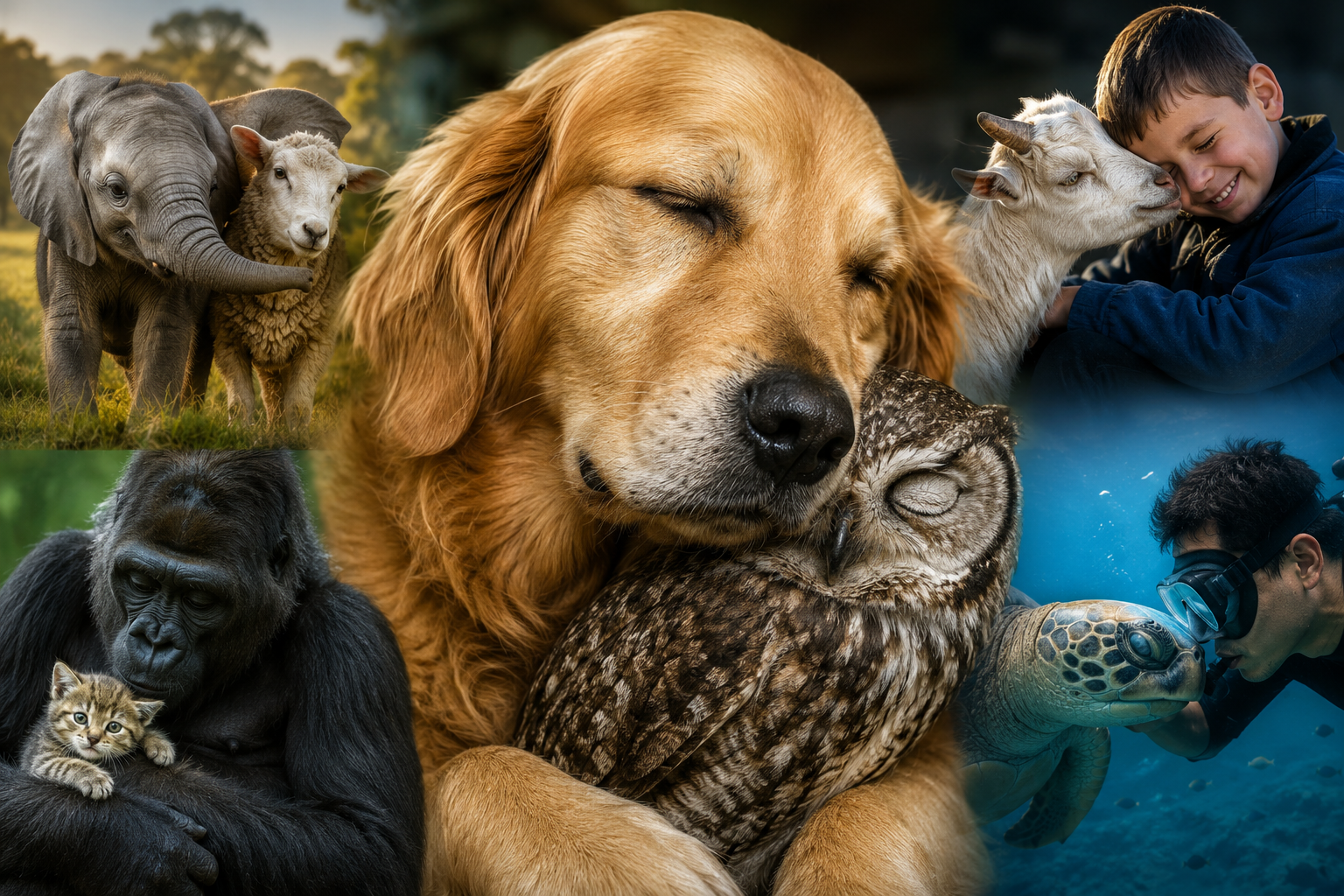
The natural world is often portrayed as a place governed solely by competition and survival. Predators hunt prey, animals compete for resources, and species fight for territory. While these struggles are certainly part of nature, they are not the whole story. Scientists and wildlife observers have documented countless examples of animals displaying cooperation, empathy-like behaviors, and even acts that appear surprisingly compassionate.
Some of the most fascinating cases involve animals helping companions that are not members of their own species. These unexpected relationships challenge traditional assumptions about animal behavior and offer a glimpse into the complexity of life in the wild. While researchers remain careful about assigning human emotions to animals, many observations suggest that cooperation can emerge in remarkable ways.
From unlikely friendships to life-saving interventions, here are 12 amazing examples of animals helping unexpected companions.
1. Dolphins Assisting Injured Whales
Dolphins are well known for their intelligence and social behavior, but some of their most remarkable actions involve helping other marine mammals.
Researchers and boat crews have observed dolphins surrounding injured or distressed whales, appearing to protect them from threats or assist them in reaching the surface to breathe. While the exact motivations remain uncertain, these interactions demonstrate a level of social responsiveness that continues to intrigue scientists.
Such encounters remind us that cooperation in the ocean can extend beyond species boundaries.
2. Dogs Caring for Orphaned Wildlife
Throughout the world, stories occasionally emerge of domestic dogs caring for orphaned animals.
Cases have included dogs nurturing kittens, ducklings, rabbits, and even wild species that would not normally be considered companions. In many instances, the dog appears to treat the young animal similarly to its own offspring.
These interactions highlight the flexibility of caregiving instincts and the surprising bonds that can develop between different species.
3. Gorillas Protecting Human Children
One of the most famous examples of interspecies assistance involved captive gorillas responding protectively when human children accidentally entered their enclosures.
In several documented cases, gorillas approached cautiously, stood guard, or behaved in ways that appeared protective rather than aggressive. These incidents surprised many observers because of the immense physical power of the animals involved.
Researchers believe such behavior may reflect complex social awareness and sensitivity to vulnerable individuals.
4. Humpback Whales Intervening in Predator Attacks
Marine biologists have documented numerous cases in which humpback whales appeared to interfere with attacks by killer whales.
Even more surprising, the animals being assisted were not always other whales. Observations have included humpbacks intervening during attacks on seals, sea lions, and other marine animals.
Scientists continue debating why this occurs, but the repeated pattern has become one of the most fascinating mysteries in marine behavior research.
5. Cats Adopting Unrelated Baby Animals
Domestic cats occasionally become caregivers to young animals from entirely different species.
Reports have included cats nursing puppies, squirrels, chicks, rabbits, and other orphaned animals. Maternal instincts may help explain some of these interactions, particularly when young animals trigger caregiving responses.
Regardless of the cause, the resulting relationships often seem extraordinary to human observers.
6. Elephants Assisting Other Species in Distress
Elephants are renowned for their intelligence and strong social bonds.
In some documented situations, elephants have helped animals that were trapped, injured, or struggling in difficult circumstances. Wildlife observers have reported elephants moving obstacles, investigating distressed animals, or appearing to aid creatures that were not members of their own herd.
These actions contribute to the elephant’s reputation as one of the most socially complex animals on Earth.
7. Ravens Sharing Information With Other Animals
Ravens possess impressive cognitive abilities and often interact with a variety of species.
Researchers have observed ravens using vocalizations and behavior that can attract wolves and other predators to carcasses. Once larger animals open the carcass, the ravens gain access to food.
While this relationship benefits the birds, it also demonstrates how different species can influence and assist one another in unexpected ways.
8. Sea Turtles Receiving Help From Fish
Not all examples involve mammals.
Cleaner fish are known to remove parasites and dead tissue from larger marine animals, including sea turtles. These cleaning interactions benefit both participants: the fish gain food while the turtles receive grooming services that may improve health and comfort.
This mutually beneficial relationship highlights the importance of cooperation within ecosystems.
9. Horses Forming Bonds With Other Species
Horses frequently develop close relationships with animals outside their own species.
Farmers and caretakers have reported strong friendships between horses and goats, dogs, cats, birds, and even smaller livestock animals. In some cases, horses appear protective of their unusual companions and may show signs of distress when separated from them.
These bonds illustrate the social flexibility present in many domesticated animals.
10. Monkeys Caring for Injured Birds and Small Animals
Primates occasionally display behavior that appears nurturing toward other creatures.
Researchers and wildlife observers have documented monkeys handling injured birds, protecting vulnerable animals, or showing prolonged interest in their welfare. Although motivations can be difficult to interpret, such interactions suggest a level of curiosity and social complexity that extends beyond simple survival instincts.
The behavior continues to be studied by animal cognition experts.
11. Lions Accepting Unexpected Companions
Lions are apex predators, yet there have been rare cases in which they tolerated or even appeared to adopt animals they would typically regard as prey.
Wildlife researchers have documented unusual situations involving lionesses caring for young antelope or allowing other species to remain nearby temporarily. These events are uncommon and often short-lived, but they reveal that animal behavior can sometimes defy expectations.
Such stories remind us that nature is often more complicated than simple predator-prey relationships suggest.
12. Humans Are Not the Only Species Capable of Cooperation
Perhaps the most important lesson from all these examples is that cooperation is widespread throughout the animal kingdom.
Whether through caregiving, protection, cleaning partnerships, information sharing, or social bonding, animals frequently engage in behaviors that benefit others. While these actions may not always stem from the same motivations humans experience, they demonstrate that nature contains far more collaboration than many people realize.
The ability to assist others—even across species lines—appears in a surprising variety of forms.
Why These Stories Fascinate Scientists
Unusual interspecies interactions attract attention because they challenge traditional views of animal behavior.
For many years, scientists focused heavily on competition, predation, and survival. While those forces remain important, modern research increasingly recognizes the role of cooperation, social learning, and behavioral flexibility.
Cases involving animals helping unexpected companions provide valuable opportunities to explore questions about cognition, communication, and social behavior.
Each observation contributes another piece to the puzzle of understanding how animals perceive and respond to the world around them.
What Researchers Still Don’t Know
Despite growing interest, many questions remain unanswered.
Scientists continue investigating:
- Why animals sometimes help members of other species.
- How caregiving instincts are triggered.
- Whether certain species are more likely to form interspecies bonds.
- The role of learning and experience in cooperative behavior.
- How common these interactions are in the wild.
Because many observations occur unexpectedly, gathering consistent data can be challenging.
Nevertheless, the field continues to grow as researchers develop new methods for studying animal behavior.
The Role of Empathy in the Animal Kingdom
One of the most debated topics involves whether animals experience empathy.
Researchers generally avoid assuming that animals feel emotions exactly as humans do. However, evidence increasingly suggests that many species can recognize distress, respond to social cues, and modify behavior in ways that benefit others.
These abilities may represent evolutionary foundations for behaviors that resemble empathy.
Understanding these processes remains one of the most exciting areas of modern animal behavior research.
What These Examples Teach Us
The stories explored here reveal an important truth: animal behavior is often far more complex than simple instincts or survival strategies.
Animals can form relationships, adapt to unusual situations, and respond in ways that surprise even experienced researchers. While not every interaction can be fully explained, these examples highlight the flexibility and richness of life across the natural world.
They also remind us that cooperation is not exclusively a human trait.
Final Thoughts
From dolphins assisting whales and elephants helping distressed animals to cats adopting orphaned wildlife and humpback whales intervening during predator attacks, nature is filled with remarkable examples of unexpected companionship.
The 12 examples discussed here demonstrate that cooperation, caregiving, and social flexibility can emerge in surprising places. While scientists continue investigating the motivations behind these behaviors, one thing is clear: the relationships that develop between animals are often far more intricate than we once believed.
As research advances, we may discover even more extraordinary stories that challenge our understanding of the animal kingdom. For now, these examples serve as powerful reminders that nature contains not only competition and survival, but also moments of connection that continue to inspire wonder.







