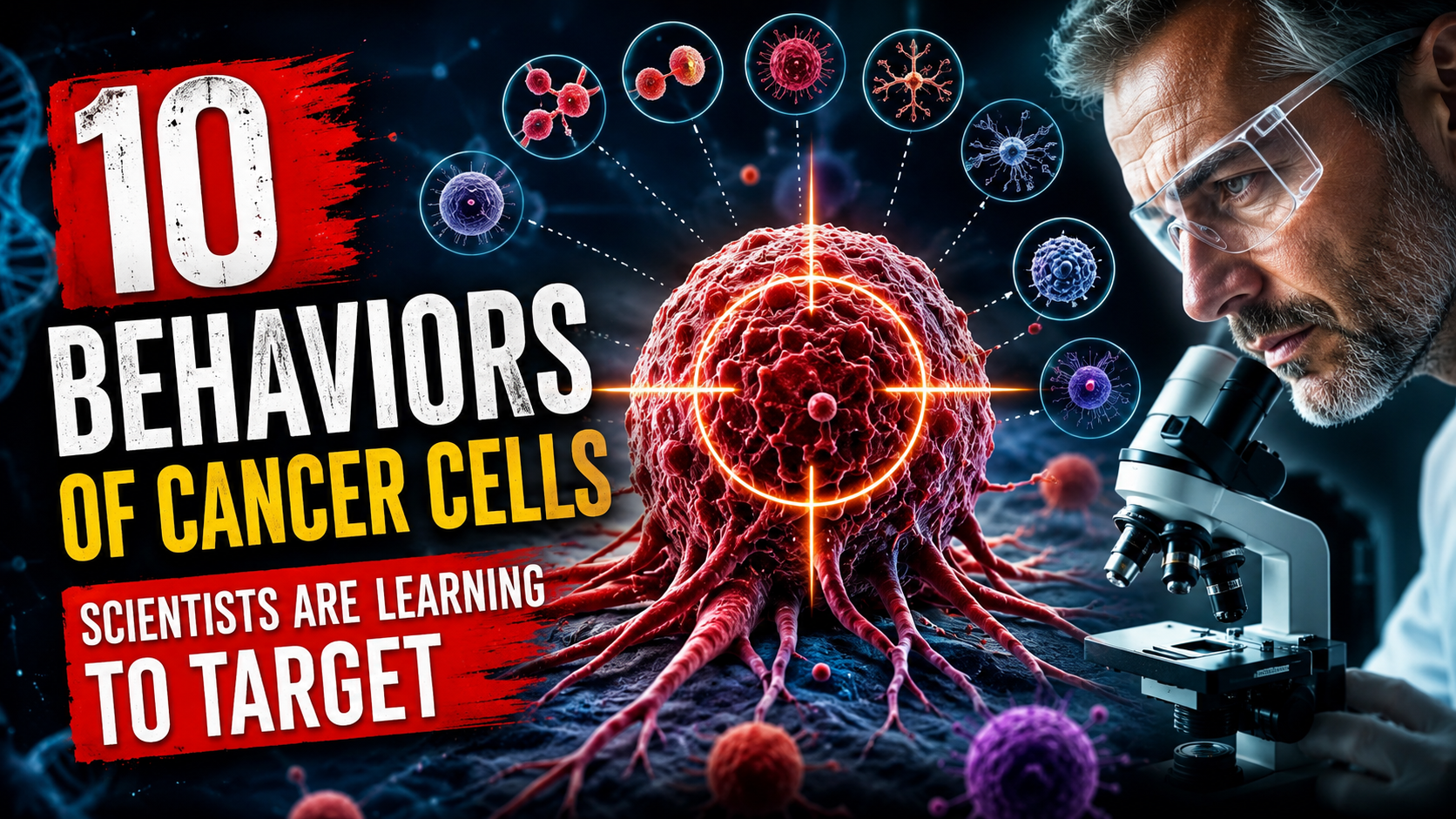
Cancer remains one of the greatest challenges in modern medicine. Despite decades of research, scientists are still uncovering new details about how cancer develops, spreads, and survives inside the human body. What makes cancer especially difficult to treat is that cancer cells are not foreign invaders. They originate from our own healthy cells but gradually acquire abnormal traits that allow them to grow uncontrollably.
Over the years, researchers have discovered that cancer cells share several common behaviors that help them thrive. Understanding these behaviors has opened the door to innovative treatments designed to interrupt the disease at its source. Instead of simply attacking tumors with chemotherapy or radiation, many modern therapies focus on targeting the specific tricks cancer cells use to survive.
Here are 10 key behaviors of cancer cells that scientists are actively working to stop.
1. Uncontrolled Cell Growth
One of the defining characteristics of cancer is its ability to grow without limits. Healthy cells follow strict biological rules that regulate when they should divide and when they should stop. Cancer cells ignore these signals.
Normally, the body uses a complex system of proteins and genetic instructions to control cell growth. When these controls fail due to mutations, cells begin multiplying continuously. Over time, this unchecked growth forms tumors.
Many targeted cancer therapies are designed to block the molecular pathways that tell cancer cells to keep dividing. By interrupting these growth signals, scientists hope to slow or stop tumor development before it becomes life-threatening.
2. Avoiding Cell Death
Healthy cells have a built-in self-destruct mechanism known as apoptosis. This process helps remove damaged or unnecessary cells from the body. If a cell becomes abnormal, it is usually programmed to die before causing harm.
Cancer cells, however, develop ways to bypass this safety feature. They can survive even when carrying significant genetic damage.
Researchers are now creating treatments that reactivate the cell death process. Some newer drugs are specifically designed to trigger apoptosis in cancer cells while leaving healthy cells largely unaffected. This approach offers the potential for more precise and effective treatment.
3. Hiding from the Immune System
The immune system constantly patrols the body for threats, including abnormal cells. Under normal circumstances, many cancer cells are detected and destroyed before they become dangerous.
Unfortunately, some tumors develop sophisticated ways to evade immune detection. They can disguise themselves or send signals that suppress immune responses.
This discovery has led to one of the most exciting breakthroughs in cancer treatment: immunotherapy. These therapies help the immune system recognize and attack cancer cells more effectively. In some patients, immunotherapy has produced remarkable results, particularly for cancers that were once considered difficult to treat.
4. Creating Their Own Blood Supply
As tumors grow, they require oxygen and nutrients to survive. To meet these demands, cancer cells can stimulate the formation of new blood vessels through a process called angiogenesis.
These newly formed vessels act like supply lines, feeding the tumor and supporting further growth.
Scientists have developed anti-angiogenic drugs that attempt to cut off this blood supply. By limiting access to oxygen and nutrients, researchers hope to starve tumors and slow their progression.
Although not effective in every case, this strategy has become an important part of treatment for several types of cancer.
5. Spreading to Other Parts of the Body
Cancer becomes especially dangerous when it spreads beyond its original location. This process, known as metastasis, is responsible for the majority of cancer-related deaths.
To spread, cancer cells break away from the primary tumor, travel through the bloodstream or lymphatic system, and establish new tumors elsewhere.
Researchers are intensely studying the mechanisms that allow cancer cells to move throughout the body. By identifying and targeting these pathways, scientists hope to prevent metastasis before it occurs.
Stopping cancer from spreading could dramatically improve survival rates and treatment outcomes.
6. Repairing Themselves After Damage
Cancer treatments such as chemotherapy and radiation work by damaging the DNA of rapidly dividing cells. However, many cancer cells possess powerful DNA repair mechanisms that help them recover from this damage.
These repair systems can make tumors more resistant to treatment over time.
Scientists are developing drugs that block specific DNA repair pathways. When these pathways are disabled, cancer cells become more vulnerable to existing treatments.
One example is the use of PARP inhibitors, which have shown promise in treating certain breast, ovarian, and prostate cancers.
7. Changing Their Genetic Makeup
Cancer is not a static disease. Tumors can evolve as they grow, acquiring new mutations that help them survive treatment.
This constant genetic change creates a major challenge for doctors. A therapy that works initially may become less effective as cancer cells adapt.
Advances in genomic sequencing have allowed researchers to monitor these changes more closely. Personalized medicine approaches now aim to tailor treatments based on the unique genetic profile of each patient’s cancer.
By understanding how tumors evolve, scientists can develop more flexible and effective treatment strategies.
8. Reprogramming Their Energy Use
Healthy cells generate energy in a relatively efficient manner. Cancer cells often use a different process that allows them to grow rapidly, even under challenging conditions.
This unusual energy strategy, known as the Warburg effect, has fascinated researchers for decades.
Scientists are investigating ways to disrupt the metabolic pathways cancer cells depend on. By targeting their energy supply, researchers hope to weaken tumors and make them more susceptible to treatment.
Although this field is still developing, metabolic therapies could become an important addition to future cancer care.
9. Influencing Surrounding Cells
Cancer cells do not operate alone. They interact with nearby tissues, immune cells, blood vessels, and connective tissue to create a supportive environment.
This surrounding environment, often called the tumor microenvironment, plays a major role in cancer progression.
Tumors can manipulate nearby cells to help them grow, avoid immune attacks, and resist treatment.
Researchers are increasingly focused on targeting not only the cancer cells themselves but also the supportive environment around them. Disrupting these interactions may improve the effectiveness of existing therapies and reduce the likelihood of recurrence.
10. Developing Resistance to Treatment
One of the most frustrating aspects of cancer treatment is resistance. Even when therapies successfully shrink tumors, some cancer cells may survive and adapt.
These surviving cells can develop new strategies to evade treatment, causing the cancer to return.
Scientists are studying resistance mechanisms in great detail. By understanding how cancer cells adapt, researchers can design combination therapies that attack tumors from multiple angles simultaneously.
This approach may help prevent cancer from developing escape routes and improve long-term treatment success.
The Future of Cancer Treatment
The fight against cancer has changed dramatically over the past few decades. Rather than viewing cancer as a single disease, scientists now recognize it as a collection of complex disorders driven by different biological processes.
Each new discovery reveals another vulnerability that can be targeted with precision therapies. Advances in immunotherapy, genetic medicine, molecular biology, and personalized treatment are transforming the way doctors approach cancer care.
While significant challenges remain, the progress being made is encouraging. Researchers around the world continue to uncover the hidden behaviors that allow cancer cells to survive and spread. Every breakthrough brings us closer to treatments that are more effective, less invasive, and better tailored to individual patients.
Final Thoughts
Cancer cells are remarkably adaptable, but they are not invincible. By understanding the behaviors that make these cells dangerous, scientists are identifying new opportunities to stop the disease at its roots.
From uncontrolled growth and immune evasion to metastasis and treatment resistance, each behavior represents a potential target for future therapies. The more researchers learn about cancer’s survival strategies, the better equipped they become to develop innovative solutions.
The ongoing effort to understand and disrupt these behaviors is shaping the future of cancer research and offering new hope to millions of patients worldwide. As science continues to advance, the possibility of more effective and personalized cancer treatments becomes increasingly realistic.







