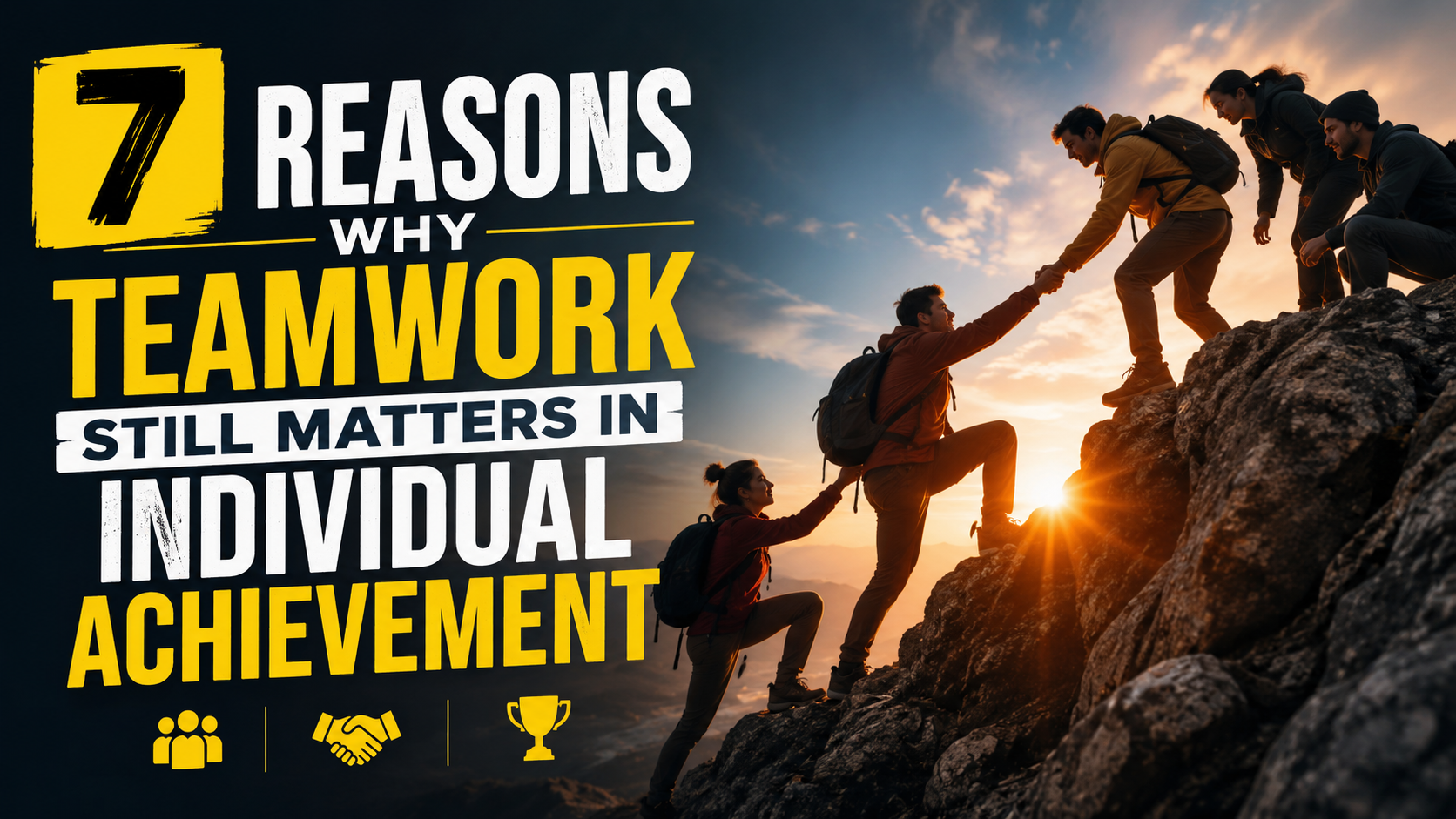
In modern culture, success is often portrayed as a solo journey. We celebrate entrepreneurs who build businesses from scratch, athletes who break records, and students who earn top honors. Headlines typically focus on one name, one face, and one achievement.
But the reality behind most accomplishments tells a different story.
Even the most impressive individual successes are rarely achieved in complete isolation. Behind every high performer is usually a network of teachers, mentors, teammates, colleagues, friends, and supporters who contributed in meaningful ways. While talent, discipline, and determination are essential, collaboration often provides the foundation that allows those qualities to flourish.
The idea of the “self-made” success story is appealing, but it often overlooks an important truth: people grow faster, learn more, and overcome challenges more effectively when they work with others.
Whether in business, education, sports, science, or everyday life, teamwork remains one of the most powerful forces behind personal achievement. Here are seven important reasons why collaboration continues to matter, even when individual accomplishments receive the spotlight.
1. Different Perspectives Lead to Better Solutions
Every person sees the world through a unique lens. Our experiences, education, skills, and backgrounds shape how we approach problems.
When working alone, it’s easy to become trapped within our own assumptions. We may overlook alternatives, miss important details, or become attached to ideas that need improvement.
Collaboration helps solve this problem.
A team brings together multiple viewpoints, allowing people to challenge each other’s thinking and explore possibilities that may never have emerged individually. This exchange of ideas often leads to stronger decisions and more creative solutions.
Think about major innovations throughout history. While a single inventor or leader may receive public recognition, breakthroughs often result from groups of people sharing expertise and refining concepts together.
In many cases, the best ideas are not created by one person—they are improved through collaboration.
2. Support From Others Helps Maintain Motivation
Long-term success requires more than talent. It demands persistence.
The problem is that motivation isn’t constant. Everyone experiences moments when energy drops, confidence fades, or obstacles seem overwhelming.
This is where teamwork becomes invaluable.
Supportive people can provide encouragement during difficult periods. A mentor may offer guidance when uncertainty arises. A colleague might help solve a frustrating problem. A friend can provide reassurance when self-doubt begins to take over.
Having people who believe in your goals often makes it easier to continue moving forward.
Research in psychology consistently shows that social support plays a significant role in resilience. People tend to handle stress more effectively when they feel connected to others who care about their progress and well-being.
Success may ultimately be credited to an individual, but emotional support often plays a critical role behind the scenes.
3. Collaboration Accelerates Learning
Learning alone can be effective, but learning with others often speeds up the process.
When people work together, they exchange knowledge, share experiences, and expose one another to new ways of thinking. This creates opportunities for growth that are difficult to replicate in isolation.
Consider students preparing for a challenging exam. Study groups frequently help participants understand difficult concepts because each person explains information differently.
The same principle applies in professional settings. Employees learn from coworkers. New entrepreneurs learn from experienced business owners. Athletes improve through coaching and training partnerships.
Exposure to different perspectives helps people develop skills more quickly and avoid mistakes that others have already encountered.
Simply put, teamwork creates an environment where learning becomes more efficient and continuous.
4. Shared Strengths Produce Stronger Results
No one is excellent at everything.
Some individuals are natural leaders. Others excel at organization. Some thrive under pressure, while others are creative problem-solvers.
One of the greatest advantages of teamwork is the ability to combine these strengths.
Rather than expecting one person to handle every responsibility, effective teams allow members to contribute where they perform best. This creates outcomes that are often far stronger than what any individual could achieve alone.
Successful organizations understand this principle well. Companies hire specialists because expertise matters. Sports teams rely on players with different skills. Research teams bring together experts from multiple fields to solve complex challenges.
When people focus on their strengths while benefiting from the abilities of others, performance improves dramatically.
The result is greater efficiency, innovation, and overall success.
5. Feedback Creates Opportunities for Growth
Improvement requires awareness.
Unfortunately, people are not always good at identifying their own weaknesses. We all have blind spots that can limit growth if left unaddressed.
Constructive feedback helps bridge this gap.
Working with others provides valuable insight into areas that need improvement. A coach can identify weaknesses in performance. An editor can strengthen a writer’s work. A manager can highlight opportunities for professional development.
Feedback is sometimes uncomfortable, but it is also one of the most effective tools for growth.
The most successful individuals often seek feedback actively because they understand that improvement depends on honest evaluation.
Teamwork creates an environment where learning becomes an ongoing process rather than a one-time event.
Over time, this willingness to receive and apply feedback can significantly enhance personal achievement.
6. Challenges Are Easier to Handle Together
Every worthwhile goal comes with obstacles.
Unexpected setbacks, difficult decisions, resource limitations, and periods of uncertainty are normal parts of any journey toward success.
Facing these challenges alone can be exhausting.
Teams provide practical assistance during difficult moments. When problems arise, multiple people can contribute ideas, resources, and solutions. This collective approach often reduces stress and improves outcomes.
Beyond practical support, teamwork also offers emotional reassurance.
Knowing that others are working alongside you creates a sense of shared responsibility. Challenges often feel less intimidating when people face them together rather than alone.
History is filled with examples of groups overcoming extraordinary difficulties through cooperation. Whether in scientific research, disaster response, business development, or athletic competition, teamwork consistently helps people navigate adversity more effectively.
7. Individual Success Often Reflects Collective Effort
Perhaps the most important reason teamwork matters is that personal achievement rarely happens in isolation.
Every successful person has been influenced by others along the way.
Teachers provide education. Parents offer guidance. Friends provide encouragement. Mentors share wisdom. Colleagues contribute expertise. Communities create opportunities.
Even achievements that appear highly individual often depend on countless forms of support that occur behind the scenes.
Recognizing this reality does not diminish personal accomplishment. Instead, it creates a more accurate understanding of how success actually happens.
Acknowledging the contributions of others fosters humility, gratitude, and stronger relationships—qualities that often lead to even greater success over time.
The Problem With the “Self-Made” Myth
The concept of the self-made individual is deeply rooted in popular culture.
Stories about people achieving greatness through sheer determination are inspiring, but they often simplify a much more complicated reality.
Most successful individuals benefit from educational systems, supportive relationships, professional networks, mentorship, and opportunities created by others.
Hard work absolutely matters. Talent matters. Discipline matters.
But support systems matter too.
Recognizing the role of teamwork doesn’t reduce the value of personal effort—it highlights the many factors that contribute to achievement.
Understanding this can help people appreciate collaboration rather than viewing it as a sign of dependence.
Teamwork Builds Skills Beyond Success
An often-overlooked benefit of collaboration is personal development.
Working with others strengthens communication skills, emotional intelligence, leadership abilities, adaptability, and conflict-resolution skills.
These qualities are valuable not only in professional environments but also in personal relationships and everyday life.
People who learn how to collaborate effectively often become stronger leaders because they understand how to motivate, support, and coordinate diverse groups of people.
In many ways, teamwork helps individuals grow into more capable and well-rounded versions of themselves.
Practical Ways to Become a Better Team Player
Anyone can improve their ability to collaborate.
Some simple strategies include:
- Listening carefully before responding.
- Respecting opinions that differ from your own.
- Giving credit when others contribute.
- Communicating openly and honestly.
- Offering help when teammates need support.
- Remaining open to constructive criticism.
- Focusing on shared goals rather than personal recognition.
These habits build trust and create stronger relationships, making teamwork more effective and rewarding for everyone involved.
Final Thoughts
Although society often celebrates individual achievements, success is rarely a solo accomplishment. Behind most major accomplishments lies a network of people who provide knowledge, support, encouragement, and collaboration.
Teamwork strengthens ideas, accelerates learning, improves resilience, and helps people overcome obstacles more effectively. It creates opportunities for growth that would be difficult to achieve alone.
The next time you admire a remarkable success story, look beyond the person receiving the applause. Chances are, a team of supporters played an important role in making that achievement possible.
Individual talent may open doors, but teamwork often helps people walk through them. In a world that increasingly values innovation, adaptability, and connection, the ability to collaborate remains one of the most important skills anyone can develop.