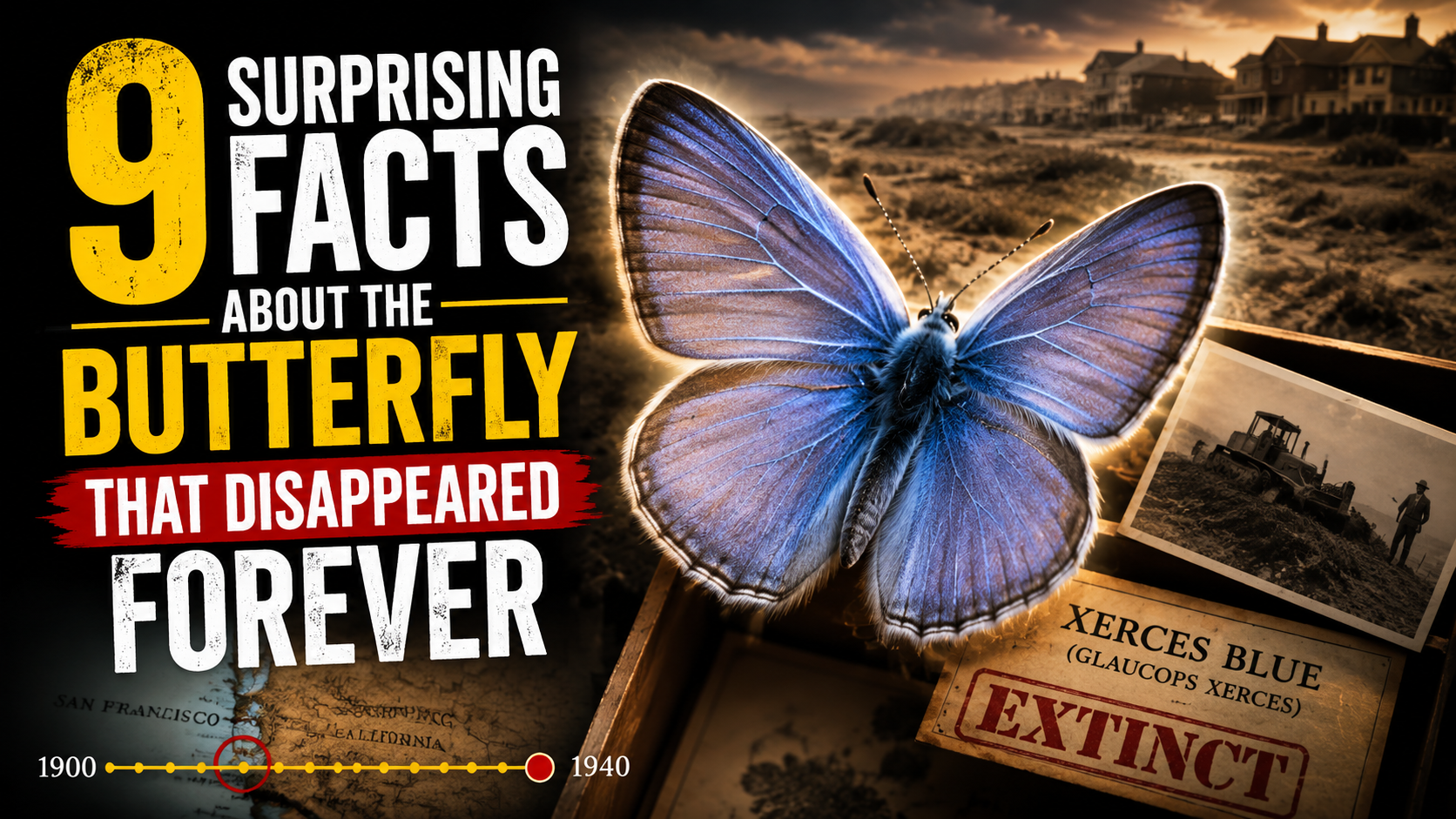
The natural world is filled with incredible stories, but some of the most powerful are also the most heartbreaking. Among them is the story of the Xerces blue butterfly, a small but remarkable insect that once fluttered across the coastal dunes of California. Today, it holds a place in history for a reason no species would ever want—it became the first known butterfly in North America to go extinct because of human activity.
At first glance, the loss of a single butterfly may not seem like a major event. After all, thousands of insect species exist across the globe. Yet the disappearance of the Xerces blue butterfly became a warning sign of how quickly human development can alter ecosystems and erase species forever.
Scientists, conservationists, and historians continue to study its story because it offers valuable lessons about biodiversity, habitat protection, and the delicate balance of nature.
Here are nine surprising facts about the butterfly that disappeared forever.
1. It Was Once Found in Only One Small Area
One of the most remarkable facts about the Xerces blue butterfly is how limited its range was.
Unlike widespread species that inhabit large regions, the Xerces blue lived almost exclusively in the sand dunes surrounding what is now the San Francisco Peninsula. Its entire world existed within a relatively small stretch of coastal habitat.
Because the species occupied such a restricted area, it was especially vulnerable to environmental change. When that habitat began disappearing due to urban expansion, the butterfly had nowhere else to go.
Scientists often point to this as an important lesson: species with small geographic ranges face a much higher risk of extinction.
2. Human Development Played a Direct Role in Its Disappearance
Many extinctions occur because of a combination of factors such as climate shifts, disease, invasive species, and habitat loss.
In the case of the Xerces blue, habitat destruction was the primary culprit.
As San Francisco expanded during the late nineteenth and early twentieth centuries, coastal dune systems were transformed into neighborhoods, roads, parks, and commercial developments.
The butterfly’s specialized habitat gradually vanished.
Without the native plants and dune environment it depended on, the species could not survive.
This direct connection between human development and extinction is why the Xerces blue remains such a significant case study in conservation biology.
3. It Was Named After an Ancient Persian King
The butterfly’s unusual name has a fascinating origin.
“Xerces” comes from Xerxes I, the famous ruler of the Persian Empire during the fifth century BCE.
Naturalists often draw inspiration from mythology, history, and classical culture when naming species, and the Xerces blue was no exception.
Although the name sounds grand and powerful, it now serves as a reminder of a tiny insect whose legacy became unexpectedly important.
Today, the name carries symbolic weight in conservation circles worldwide.
4. It Depended on Specific Native Plants
Like many butterflies, the Xerces blue had a close relationship with particular plants.
Its caterpillars relied on native legumes growing within the coastal dunes. These plants provided food and shelter during critical stages of development.
When urbanization removed much of the native vegetation, the butterfly lost more than just habitat—it lost the resources needed to complete its life cycle.
This dependence highlights a key ecological principle: species rarely exist in isolation.
Every organism is connected to a network of plants, animals, fungi, and microorganisms that support survival.
Removing one piece of that network can trigger unexpected consequences.
5. It Helped Inspire Modern Conservation Efforts
Although the butterfly disappeared decades ago, its legacy continues.
The extinction of the Xerces blue became one of the earliest examples used to demonstrate the importance of protecting habitats before species decline beyond recovery.
Its story inspired scientists and conservationists to advocate for stronger environmental protections and increased public awareness.
In fact, one of the world’s most influential invertebrate conservation organizations, the Xerces Society, was named in honor of the butterfly.
The organization’s mission reflects the lessons learned from this loss: prevention is often far more effective than attempting to reverse extinction after it occurs.
6. Butterflies Are More Important Than Many People Realize
Some people view butterflies primarily as beautiful insects, but they play much larger ecological roles.
Butterflies contribute to pollination, serve as food for birds and other wildlife, and help indicate the health of ecosystems.
Because they respond quickly to environmental changes, scientists often use butterfly populations as biological indicators.
Declining butterfly numbers can signal broader ecological problems that may affect many other species.
The disappearance of the Xerces blue therefore represented more than the loss of a single insect—it highlighted changes occurring throughout its ecosystem.
7. Scientists Can Still Study It Today
Although the species is extinct, researchers have not lost all traces of it.
Museum collections preserve specimens collected before the butterfly vanished. These historical samples allow scientists to examine physical characteristics and, in some cases, extract genetic information.
Advances in DNA technology have made it possible to learn more about extinct species than ever before.
Researchers can compare preserved specimens with related butterflies and gain insight into evolutionary relationships, population history, and ecological adaptations.
In a way, the Xerces blue continues contributing to science even decades after its disappearance.
8. Its Story Mirrors Challenges Facing Many Species Today
The factors that led to the extinction of the Xerces blue remain relevant.
Habitat loss continues to be one of the leading causes of biodiversity decline worldwide.
Urban growth, agricultural expansion, pollution, and environmental fragmentation place increasing pressure on countless species.
Many insects, birds, amphibians, and mammals now face challenges similar to those experienced by the Xerces blue.
Scientists often use this butterfly’s story as a reminder that extinction is not merely a historical event. It remains an ongoing concern requiring careful attention and proactive conservation efforts.
9. Its Extinction Changed How We Think About Insects
Historically, conservation efforts focused primarily on large animals such as birds, mammals, and reptiles.
Insects often received less attention despite their enormous ecological importance.
The loss of the Xerces blue helped change that perspective.
Researchers increasingly recognized that insects are essential components of healthy ecosystems. They pollinate crops, recycle nutrients, support food webs, and contribute to biodiversity in countless ways.
Today, growing concern about insect population declines reflects a broader understanding that even small creatures can have significant ecological value.
The Xerces blue became one of the earliest symbols of this realization.
Why the Xerces Blue Still Matters
More than eighty years after its disappearance, the Xerces blue butterfly remains one of the most important examples of human-caused extinction in North America.
Its story resonates because it demonstrates how ordinary activities—building homes, expanding cities, and altering landscapes—can unintentionally produce irreversible consequences.
Unlike dramatic environmental disasters, the extinction happened gradually.
Each small habitat change seemed insignificant on its own. Over time, however, those changes accumulated until the butterfly’s survival became impossible.
This gradual process makes the story especially relevant today.
Many environmental challenges unfold in similar ways, emphasizing the importance of long-term planning and conservation awareness.
What Scientists Have Learned
The extinction of the Xerces blue provided several important lessons:
- Protecting habitats is often the most effective conservation strategy.
- Species with limited ranges are particularly vulnerable.
- Native plants play critical roles in supporting wildlife.
- Early intervention is essential when populations begin declining.
- Even seemingly small species can have significant ecological importance.
These insights continue guiding conservation programs around the world.
Modern efforts to preserve endangered species frequently incorporate lessons learned from past losses like the Xerces blue.
The Bigger Picture of Biodiversity
The story of this butterfly is ultimately about more than one species.
Biodiversity represents the variety of life on Earth, from microorganisms to mammals, insects, plants, and fungi. Each species contributes to the functioning of ecosystems in ways scientists are still discovering.
When species disappear, ecosystems lose complexity and resilience.
Protecting biodiversity is not simply about preserving individual organisms—it is about maintaining the interconnected systems that support life itself.
The Xerces blue serves as a powerful reminder of that reality.
Hope for the Future
While the Xerces blue can never be brought back, its story has inspired positive change.
Conservation organizations, researchers, and local communities now work together to restore habitats, protect native plants, and monitor vulnerable species before they reach critical levels of decline.
Public awareness of pollinators and insect conservation has grown significantly in recent decades.
Butterfly gardens, habitat restoration projects, and citizen science programs all help support biodiversity.
These efforts demonstrate that while some losses cannot be reversed, future extinctions can often be prevented.
Final Thoughts
The Xerces blue butterfly may have been small, but its impact on environmental history has been enormous. Its extinction became a turning point in conservation awareness and helped shape how scientists and the public think about habitat protection and biodiversity.
The butterfly’s story reminds us that every species, no matter how small, plays a role in the larger web of life. It also highlights the responsibility humans share in protecting the natural world. Gone forever, the Xerces blue can no longer flutter above California’s coastal dunes. Yet its legacy continues to educate, inspire, and encourage action—ensuring that future generations may avoid repeating the mistakes that led to its disappearance