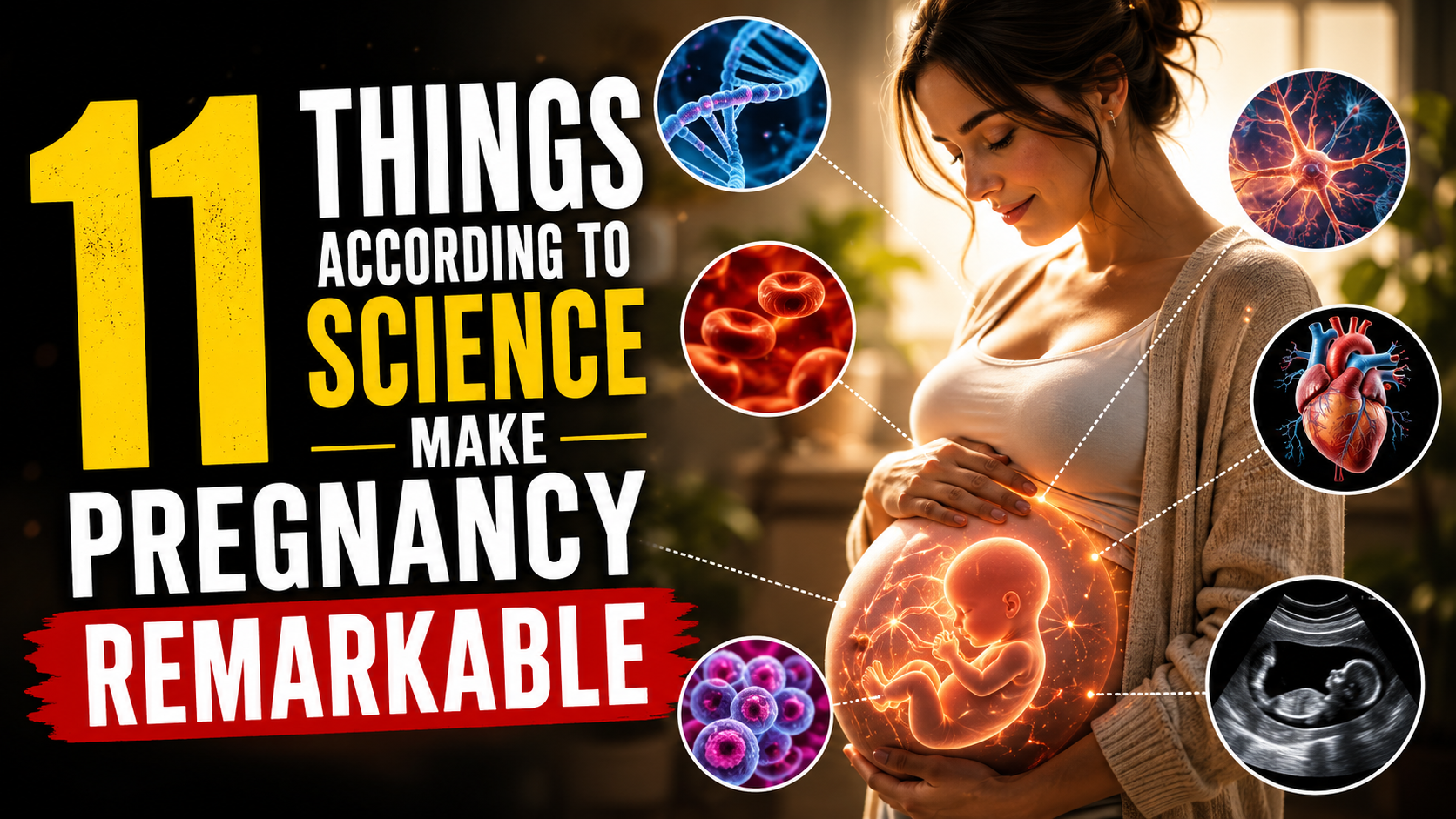
Pregnancy is one of the most extraordinary biological processes in nature. For months, a woman’s body undergoes countless changes to support the growth of a new human being. While many people are familiar with the visible signs of pregnancy, the most fascinating transformations often happen beneath the surface.
Modern science continues to uncover surprising details about how mothers and developing babies interact, adapt, and support one another throughout pregnancy. From complex cellular communication to dramatic physiological changes, pregnancy reveals just how sophisticated the human body truly is.
Researchers across fields such as medicine, genetics, neuroscience, and developmental biology continue to study pregnancy because it offers unique insights into human health, resilience, and survival.
Here are 11 remarkable things that science says make pregnancy one of the most fascinating experiences in human biology.
1. Two Bodies Work Together as a Single Biological Team
One of the most amazing aspects of pregnancy is the constant communication between mother and baby.
Although the fetus develops inside the womb, it is not simply a passive passenger. Throughout pregnancy, both bodies exchange chemical signals, hormones, nutrients, and biological information.
This ongoing dialogue helps regulate growth, development, and adaptation. Scientists often describe pregnancy as a highly coordinated partnership rather than a one-sided process.
The developing baby and mother continuously influence each other’s biology in ways researchers are still working to fully understand.
2. The Heart Works Significantly Harder
Pregnancy places new demands on nearly every organ system, especially the cardiovascular system.
As the baby grows, the mother’s body must supply oxygen and nutrients to both herself and the developing fetus. To meet these increased demands, blood volume rises substantially during pregnancy.
The heart pumps more blood with each beat and often works harder throughout the entire pregnancy.
This remarkable adaptation demonstrates the body’s ability to adjust to changing circumstances while maintaining stability and supporting healthy development.
3. Cells Can Move Between Mother and Baby
One of the most surprising discoveries in pregnancy research involves a phenomenon called microchimerism.
During pregnancy, small numbers of cells can pass between the mother and fetus through the placenta. Some fetal cells may enter the mother’s body, while maternal cells may travel to the fetus.
Even more fascinating, some of these cells can remain for years or even decades after birth.
Scientists continue investigating the long-term effects of this cellular exchange and how it may influence health, healing, and immune function.
The idea that mother and child can literally carry each other’s cells is one of the most extraordinary findings in modern biology.
4. The Brain Adapts to Parenthood
Pregnancy doesn’t only affect the body—it also influences the brain.
Research suggests that pregnancy and early parenthood involve neurological changes that may help prepare mothers for caregiving responsibilities.
Certain brain regions associated with attention, emotional processing, and social bonding appear to adapt during this period.
Scientists believe these changes may help parents respond more effectively to their baby’s needs and strengthen the parent-child relationship.
This demonstrates how deeply pregnancy can influence both physical and psychological development.
5. The Immune System Becomes More Sophisticated
At first glance, pregnancy presents a biological puzzle.
The fetus contains genetic material from both parents, meaning it is not genetically identical to the mother. Yet the maternal immune system does not typically reject the developing baby.
Researchers have discovered that pregnancy involves highly sophisticated immune adjustments.
Rather than simply suppressing immunity, the body carefully regulates immune responses to protect both mother and fetus while still defending against infections.
This delicate balancing act remains one of the most impressive examples of biological coordination.
6. The Placenta Functions Like a Temporary Super Organ
Many people underestimate the importance of the placenta.
This temporary organ develops specifically for pregnancy and performs an astonishing range of functions.
It delivers oxygen and nutrients, removes waste products, produces hormones, supports immune regulation, and serves as a communication hub between mother and baby.
In many ways, the placenta acts as an advanced life-support system for the developing fetus.
Scientists continue discovering new roles played by this remarkable organ, highlighting its importance in healthy pregnancies.
7. The Developing Baby Influences Maternal Physiology
Pregnancy is not simply a process in which the mother supports the baby.
The baby also influences the mother’s body through hormones, signaling molecules, and cellular interactions.
Researchers have found evidence that fetal signals help regulate nutrient delivery, growth patterns, and various physiological processes.
This two-way communication illustrates the complex relationship that develops long before birth.
Rather than functioning independently, mother and baby become part of an integrated biological system.
8. Pregnancy Demonstrates Extraordinary Adaptability
Few events require the human body to adapt as dramatically as pregnancy.
Muscles, joints, blood vessels, metabolism, hormone levels, respiratory function, and digestive processes all undergo adjustments.
These changes occur gradually and in coordination, allowing the body to support fetal development while continuing to function effectively.
Scientists often study pregnancy because it reveals how flexible and resilient human physiology can be.
The ability to accommodate such extensive changes highlights the remarkable adaptability of the body.
9. The Mother-Baby Bond Begins Before Birth
Long before a child enters the world, biological and psychological connections are already forming.
Research suggests that developing babies can respond to sounds, voices, and environmental cues during pregnancy.
Mothers may also begin recognizing patterns of movement, activity, and behavior before birth.
These early interactions help establish familiarity and connection.
While bonding continues after delivery, science increasingly shows that important aspects of the parent-child relationship begin developing during pregnancy itself.
10. Pregnancy Provides Clues About Human Evolution
Scientists study pregnancy not only to improve healthcare but also to better understand human evolution.
The unique characteristics of human pregnancy reflect millions of years of evolutionary adaptation.
Questions involving brain development, childbirth, parental investment, and survival strategies all connect to our evolutionary history.
Pregnancy offers valuable insight into how humans evolved and why certain biological traits developed over time.
Understanding these processes helps researchers explore broader questions about human origins and development.
11. Researchers Are Still Discovering New Things
Perhaps the most remarkable fact about pregnancy is how much remains unknown.
Despite centuries of observation and decades of modern research, scientists continue uncovering new information about maternal health, fetal development, genetics, hormones, and cellular communication.
Advances in imaging technology, molecular biology, and genetic research are providing unprecedented insight into the hidden processes occurring during pregnancy.
Each discovery reveals additional layers of complexity and deepens our appreciation for this extraordinary biological journey.
Why Pregnancy Continues to Fascinate Scientists
Pregnancy sits at the intersection of multiple scientific disciplines.
Researchers studying pregnancy may investigate:
- Human development
- Genetics
- Immunology
- Neuroscience
- Endocrinology
- Evolutionary biology
- Maternal health
- Pediatric medicine
Because pregnancy involves so many interconnected systems, it provides a unique opportunity to study how the body coordinates complex processes.
Insights gained from pregnancy research often contribute to broader medical advances that benefit people far beyond pregnancy itself.
Common Misconceptions About Pregnancy
Many popular beliefs about pregnancy oversimplify what is actually a highly complex biological process.
For example, people sometimes assume that the fetus develops independently inside the womb. In reality, mother and baby remain deeply connected through constant physiological communication.
Others may think pregnancy primarily affects reproductive organs. Scientific research clearly shows that nearly every major body system participates in adaptation.
Understanding the full complexity of pregnancy helps replace myths with evidence-based knowledge.
The Importance of Ongoing Research
Modern pregnancy research has improved healthcare outcomes for both mothers and babies.
Scientists continue investigating questions such as:
- How can pregnancy complications be identified earlier?
- What factors influence fetal development?
- How do genetics and environment interact during pregnancy?
- What role do fetal cells play in maternal health?
- How can maternal well-being be better supported?
Answers to these questions may lead to improved treatments, preventive strategies, and healthcare practices in the future.
A Powerful Example of Human Resilience
One reason pregnancy captures scientific attention is that it showcases the body’s extraordinary capacity for adaptation.
Few biological processes require such extensive coordination among organs, tissues, hormones, immune systems, and cellular networks.
Despite these challenges, millions of healthy pregnancies occur every year.
The ability of the body to support growth, development, and birth reflects one of nature’s most remarkable achievements.
Final Thoughts
Pregnancy is far more than a period of physical growth. It is an intricate biological partnership involving constant communication, adaptation, and cooperation between mother and baby.
From cellular exchanges and immune system adjustments to brain changes and evolutionary insights, modern science continues to reveal surprising aspects of this extraordinary process.
Perhaps what makes pregnancy most remarkable is not any single discovery, but the realization that every healthy pregnancy represents countless biological systems working together with remarkable precision.
As researchers continue exploring the science behind pregnancy, one thing becomes increasingly clear: the journey of creating new life remains one of the most complex and fascinating phenomena in the natural world.