Modern life keeps many people in a constant state of motion. Between work deadlines, family responsibilities, financial concerns, endless notifications, and the pressure to stay productive, it can feel as though there is little time to truly rest.
While most people recognize physical fatigue, fewer understand the effects of chronic stress on the nervous system. The body is remarkably designed to handle short bursts of pressure. However, when stress becomes constant and recovery becomes limited, the nervous system can begin showing signs that it needs a break.
You don’t have to experience a major health crisis for your body to signal that it’s overwhelmed. Often, the warning signs appear gradually and can easily be mistaken for normal tiredness or everyday stress.
Learning to recognize these signals is important because recovery isn’t a luxury—it’s a biological necessity. When the nervous system has adequate time to reset, it supports emotional balance, mental clarity, physical health, and overall well-being.
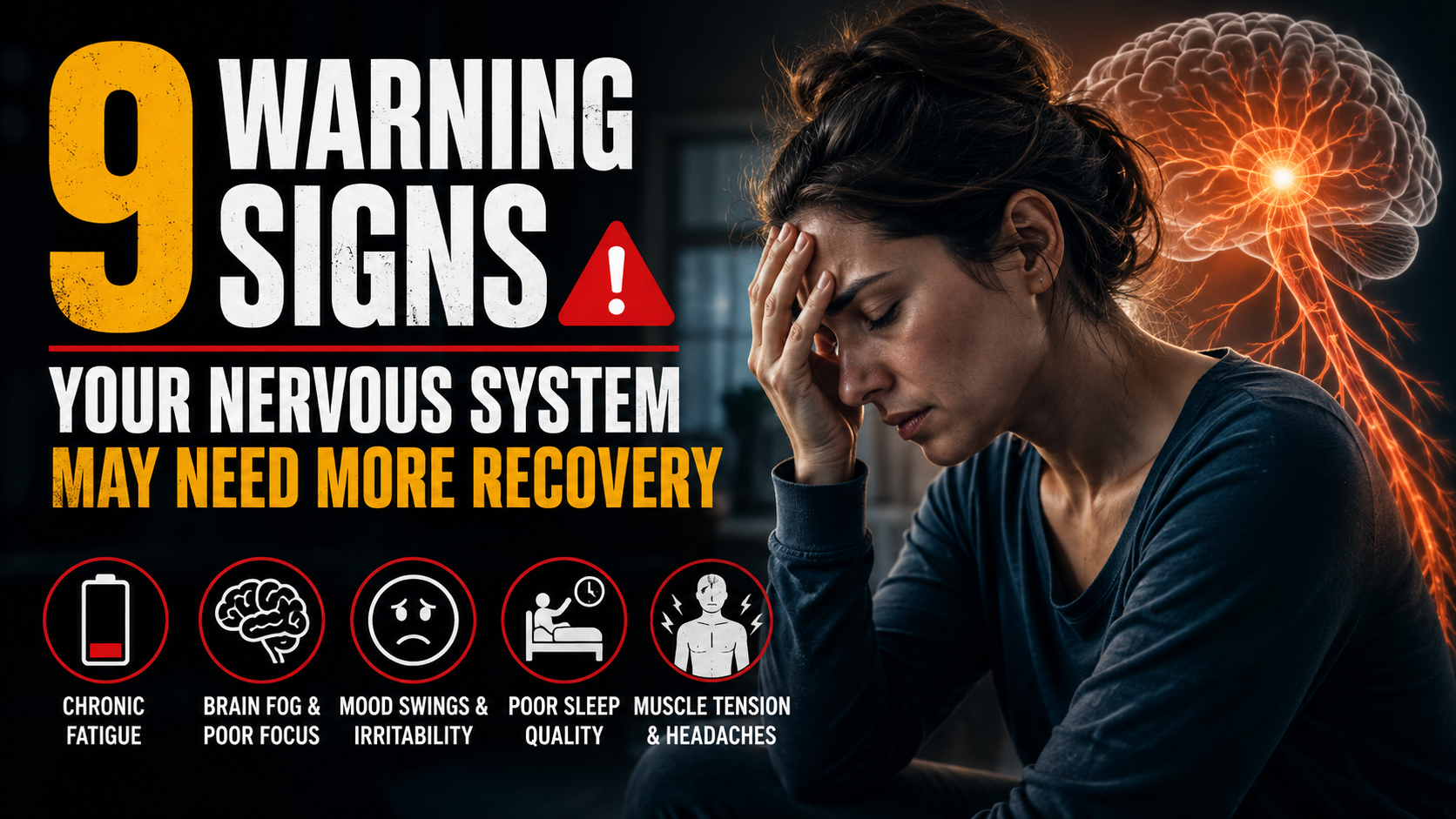
Here are nine warning signs that your nervous system may be asking for more recovery.
1. You Feel Tired Even After Sleeping
Everyone experiences occasional fatigue, especially after a busy week. However, if you consistently wake up feeling exhausted despite getting enough sleep, your nervous system may be struggling to recover.
Chronic stress can keep the body in a heightened state of alertness. Even when you’re asleep, stress-related processes may continue operating in the background.
As a result, you may technically spend enough hours in bed while still feeling drained throughout the day.
Common signs include:
- Waking up tired
- Feeling sluggish in the morning
- Needing excessive caffeine
- Experiencing afternoon energy crashes
Persistent fatigue often indicates that deeper recovery—not just more sleep—may be needed.
2. Small Problems Feel Overwhelming
Have you noticed yourself becoming unusually frustrated by minor inconveniences?
Perhaps a delayed email, traffic jam, misplaced item, or small mistake suddenly feels much more stressful than it normally would.
When the nervous system is overloaded, emotional resilience often decreases.
The brain becomes more reactive and less capable of calmly processing challenges.
Situations that once seemed manageable may suddenly trigger disproportionate stress responses.
This doesn’t mean you’re weak or incapable.
It may simply mean your internal resources are depleted and your system needs time to recharge.
3. You Struggle to Relax
One of the clearest signs of nervous system overload is the inability to switch off.
Even when free time becomes available, some people find themselves unable to fully relax.
You might notice:
- Racing thoughts
- Constant mental activity
- Feeling restless during downtime
- Difficulty sitting still
- An urge to stay busy
This can occur because the body becomes accustomed to operating in a heightened state of alertness.
Ironically, the people who need recovery the most sometimes find it hardest to rest.
The nervous system may require intentional practices that help signal safety and calm.
4. Your Sleep Quality Has Declined
Sleep and nervous system health are closely connected.
When stress remains elevated for long periods, sleep quality often suffers.
You may experience:
- Difficulty falling asleep
- Frequent nighttime awakenings
- Vivid stress-related dreams
- Early morning waking
- Light, unrefreshing sleep
Poor sleep can create a cycle in which stress reduces recovery, and reduced recovery increases stress.
Breaking this cycle often requires addressing both sleep habits and overall stress levels.
The quality of sleep is often just as important as the quantity.
5. You Feel Constantly On Edge
Many people describe nervous system overload as feeling “wired but tired.”
You may feel physically exhausted while simultaneously experiencing a sense of internal tension.
Common symptoms include:
- Feeling jumpy
- Being easily startled
- Persistent worry
- Difficulty concentrating
- A sense of uneasiness
This state often reflects prolonged activation of the body’s stress response.
The nervous system is essentially remaining on high alert even when no immediate threat exists.
Over time, this pattern can become mentally and physically exhausting.
6. Your Focus and Memory Seem Worse
Stress affects more than emotions.
It can also influence cognitive performance.
When the nervous system is under strain, many people notice:
- Forgetfulness
- Difficulty concentrating
- Mental fog
- Reduced productivity
- Trouble making decisions
The brain performs best when it has adequate recovery time.
Without sufficient rest, attention and memory processes may become less efficient.
This doesn’t necessarily indicate a serious problem.
In many cases, improving recovery habits helps restore mental clarity.
7. You Experience More Physical Tension
The nervous system and muscles communicate constantly.
When stress remains elevated, the body often stores tension physically.
Common areas include:
- Neck
- Shoulders
- Jaw
- Lower back
- Head
You might notice frequent headaches, muscle tightness, clenched teeth, or unexplained body discomfort.
Many people focus on treating the physical symptoms without recognizing the role stress may be playing behind the scenes.
Sometimes the body is expressing what the mind has not fully processed.
Physical tension can be one of the nervous system’s most visible warning signals.
8. You Feel Emotionally Numb or Disconnected
Not everyone responds to nervous system overload with anxiety or emotional intensity.
Some people experience the opposite.
After prolonged stress, emotional shutdown can occur.
You may notice:
- Feeling detached
- Reduced motivation
- Loss of enthusiasm
- Difficulty feeling joy
- Emotional flatness
This response can be the body’s way of conserving energy during extended periods of stress.
Emotional numbness is often misunderstood because it doesn’t always look dramatic from the outside.
However, it can be an important signal that recovery is needed.
9. You No Longer Enjoy Things That Once Made You Happy
One of the most meaningful warning signs involves changes in enjoyment and engagement.
Activities that once felt rewarding may begin to feel like obligations.
You may lose interest in:
- Hobbies
- Socializing
- Exercise
- Creative projects
- Personal goals
This doesn’t necessarily mean something is permanently wrong.
Often, it reflects a nervous system that has been operating under pressure for too long without enough restoration.
When recovery improves, enthusiasm and motivation frequently return.
Why Recovery Matters More Than Most People Realize
Many people view recovery as something that happens only after major physical exertion.
In reality, the nervous system requires recovery from mental, emotional, and social stress as well.
Every day, your brain processes:
- Decisions
- Conversations
- Deadlines
- Responsibilities
- Emotional experiences
- Environmental stimulation
Without adequate recovery, these demands accumulate over time.
Recovery allows the body to shift from a state of constant vigilance into a state of restoration.
This transition supports:
- Emotional balance
- Better sleep
- Improved focus
- Healthier relationships
- Stronger immune function
- Greater resilience
Far from being unproductive, recovery helps make future performance possible.
What Science Says About Chronic Stress
Researchers continue to study how prolonged stress affects the body.
Their findings consistently show that chronic stress can influence multiple systems, including:
- The nervous system
- Cardiovascular health
- Sleep regulation
- Hormonal balance
- Cognitive function
- Emotional well-being
The body is designed to recover after stressful events.
Problems tend to arise when stress becomes continuous and opportunities for recovery become limited.
This is why stress management is not simply about feeling better—it is about supporting long-term health.
Healthy Ways to Support Nervous System Recovery
Fortunately, recovery does not always require drastic changes.
Small daily habits can have a significant impact over time.
Prioritize Quality Sleep
Consistent sleep schedules help regulate many recovery processes.
Practice Deep Breathing
Slow, controlled breathing can help activate the body’s relaxation response.
Spend Time Outdoors
Natural environments have been associated with reduced stress and improved mood.
Move Your Body
Gentle exercise, walking, stretching, and physical activity can help regulate stress responses.
Limit Constant Stimulation
Periods away from screens, notifications, and information overload can provide valuable mental rest.
Maintain Supportive Relationships
Meaningful social connections often help buffer the effects of stress.
Schedule True Downtime
Recovery works best when rest is intentional rather than accidental.
Recovery Is Not Laziness
One of the biggest misconceptions in modern culture is that rest equals weakness.
In reality, recovery is an essential biological function.
Elite athletes understand this principle well. They know performance improves not only through effort but also through recovery.
The same principle applies to everyday life.
Mental performance, emotional resilience, creativity, and productivity all depend on periods of restoration.
Ignoring recovery often leads to diminishing returns.
Supporting recovery allows the nervous system to function as intended.
Final Thoughts
The nervous system constantly works behind the scenes to help you think, feel, move, and respond to the world around you. But like any complex system, it requires time to recover from ongoing demands.
The nine warning signs discussed here—persistent fatigue, emotional reactivity, difficulty relaxing, poor sleep, heightened stress, brain fog, physical tension, emotional numbness, and loss of enjoyment—may all indicate that your body needs more restoration.
Recognizing these signals is not about diagnosing yourself. Instead, it is about paying attention to what your body may be communicating.
Recovery is not something that happens only after burnout. It is something that helps prevent burnout in the first place.
By making recovery a regular part of life rather than an occasional reward, you give your nervous system the opportunity to reset, adapt, and function at its best.