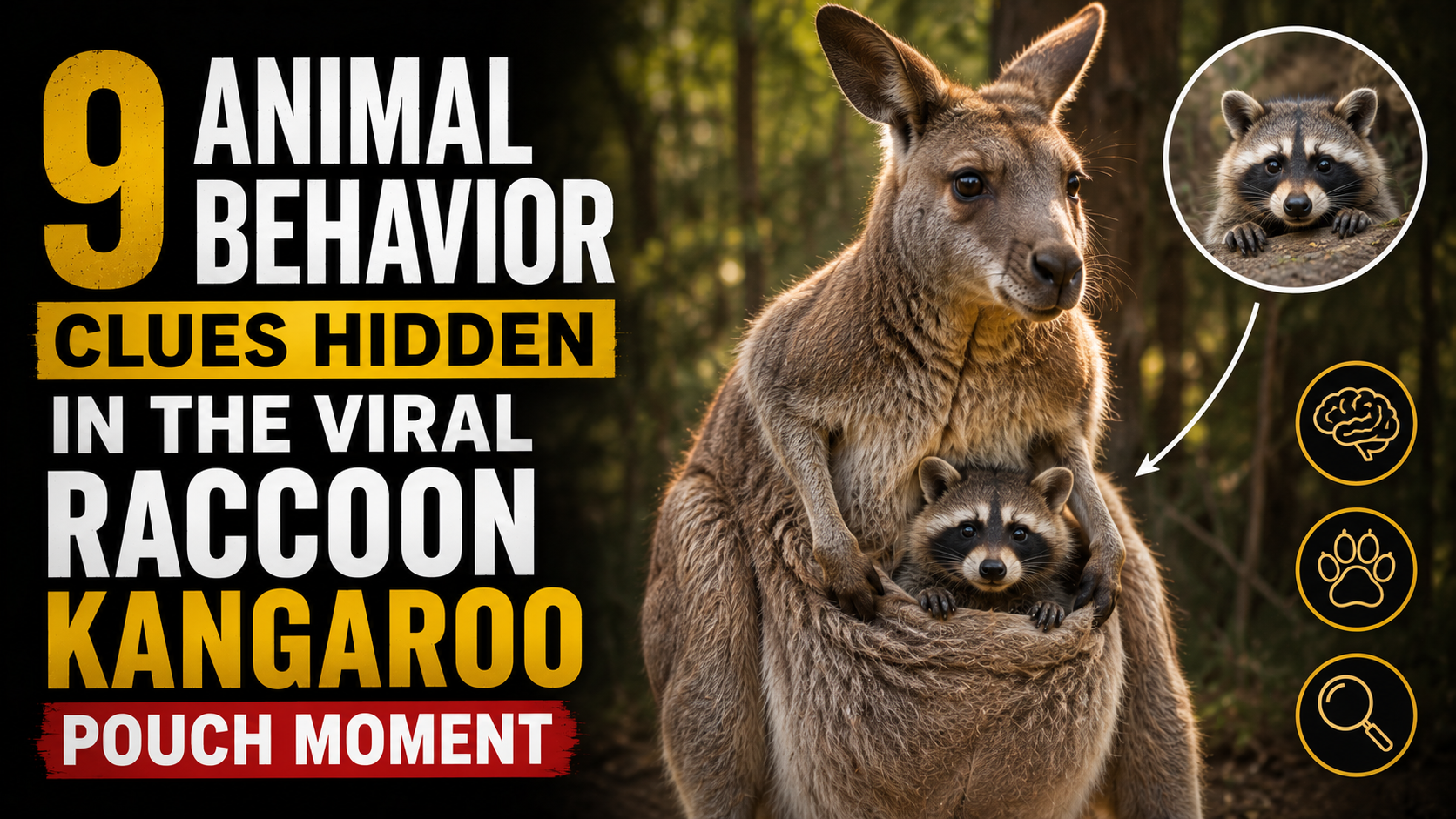
Every so often, a wildlife video goes viral for reasons that are both amusing and oddly fascinating. One recent clip showing a raccoon appearing to sit inside a kangaroo’s pouch captured millions of views and sparked endless curiosity online. At first glance, it looks like a humorous and surreal interaction between two very different animals. But beneath the entertainment value, the moment also offers interesting clues about animal behavior, instincts, and interspecies interactions.
While the viral clip may not represent a typical or natural long-term relationship between raccoons and kangaroos, it does open the door to understanding how animals react to comfort, safety, curiosity, and environmental stimuli. Animal behavior experts often point out that viral wildlife moments can reveal more about perception and instinct than people initially realize.
Here are nine animal behavior clues hidden in the viral raccoon “kangaroo pouch” moment.
1. Animals Seek Comfort in Unexpected Places
One of the most immediate interpretations of the clip is the idea that animals will often seek comfort wherever it is available.
Raccoons are highly adaptable creatures known for exploring unusual environments in search of safety or shelter. If an opportunity appears warm, enclosed, or stable, they may investigate it.
This behavior is driven by instinct rather than logic, showing how survival priorities often override conventional boundaries.
2. Curiosity Is a Strong Motivator in Raccoons
Raccoons are widely recognized as one of the most curious animals in the wild.
They often investigate new objects, spaces, and even other animals. This curiosity helps them survive in changing environments but can also lead them into unusual situations.
The viral moment reflects this natural exploratory behavior, where unfamiliar surroundings trigger investigation rather than avoidance.
3. Kangaroos Provide Natural Protective Spaces
Kangaroo pouches are biologically designed to protect and nurture their young.
They are warm, enclosed, and safe environments that offer physical stability.
While a raccoon would not normally inhabit such a space, the structure itself resembles other forms of shelter that animals instinctively find appealing.
This highlights how certain biological features can unintentionally resemble ideal refuge spaces for other species.
4. Cross-Species Interaction Is Often Driven by Environment
In controlled environments such as wildlife parks or human-influenced habitats, animals from different regions sometimes come into contact.
These interactions are usually not part of natural ecosystems but can occur due to shared spaces, feeding areas, or human intervention.
When this happens, animals rely on instinct rather than learned behavior, which can lead to unexpected but non-aggressive encounters.
5. Non-Threatening Behavior Encourages Proximity
One important factor in interspecies interactions is perceived threat level.
If one animal does not interpret the other as a danger, it may allow closer proximity.
Raccoons and kangaroos, while very different in size and behavior, are not natural predators of each other.
This lack of threat perception can create moments of unusual but peaceful coexistence.
6. Social Media Often Amplifies Rare or Misleading Contexts
Viral wildlife clips are often shared without full context.
While the raccoon “pouch” moment appears extraordinary, viewers may not see the full circumstances behind it, such as human handling or controlled environments.
This amplification can lead to misunderstandings about natural animal behavior.
It highlights the importance of careful interpretation when viewing viral animal content.
7. Animals Respond Strongly to Warmth and Security
Many animals are drawn to warmth and enclosed spaces because these conditions signal safety.
Small mammals like raccoons often seek out sheltered areas to rest or hide from perceived threats.
The kangaroo pouch, being warm and enclosed, unintentionally mimics these conditions.
This instinctual attraction helps explain the behavior seen in the viral clip.
8. Stress Reduction Can Lead to Unusual Resting Behavior
Animals under stress may seek out environments that reduce sensory overload.
In unfamiliar settings, they often gravitate toward quiet, stable, or enclosed spaces.
If the raccoon in the viral moment appeared calm, it may have been responding to a sense of reduced stress in that specific environment.
This behavior is consistent with general mammalian instincts for safety and comfort.
9. Human Presence Often Shapes Animal Behavior
One of the most important but overlooked factors in viral wildlife moments is human influence.
Animals in captivity, rehabilitation centers, or managed environments often behave differently than they would in the wild.
Human presence can alter their sense of safety, curiosity levels, and social boundaries.
This means that unusual interspecies interactions are often shaped, directly or indirectly, by human involvement.
Why the Viral Moment Captured So Much Attention
The raccoon “kangaroo pouch” clip went viral because it combined surprise, humor, and emotional curiosity.
People are naturally drawn to unusual animal interactions, especially when they appear gentle or unexpected.
The image of one animal seemingly “resting” in another’s pouch challenges everyday expectations about wildlife behavior, making it highly shareable.
It also reflects a broader trend in social media, where short, visually striking animal moments often spread rapidly regardless of context.
Final Thoughts
While the viral raccoon kangaroo pouch moment may not represent typical wildlife behavior, it still offers valuable insights into how animals respond to comfort, curiosity, and environmental conditions.
From instinct-driven exploration to the search for warmth and safety, the behavior seen in the clip reflects broader patterns found across many species.
At the same time, it serves as a reminder to view viral animal content thoughtfully, considering the context behind what is shown.
In the end, the moment is less about an unusual pairing of animals and more about the universal instincts that guide behavior in the natural world.







