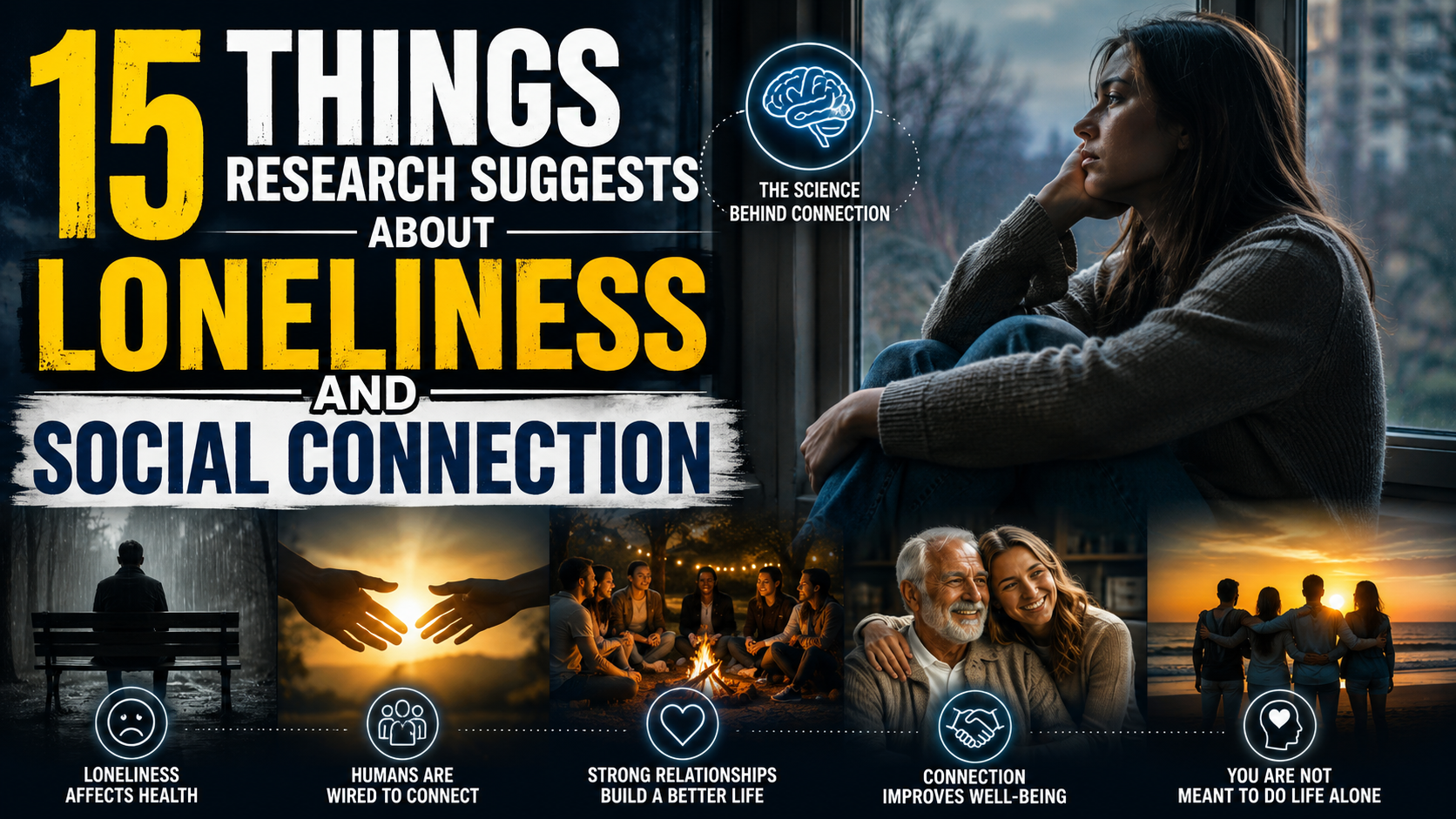
Human beings are wired for connection. From the earliest days of life, relationships help shape how we think, feel, communicate, and navigate the world. While independence is often celebrated, decades of scientific research suggest that meaningful social bonds may be just as important to our well-being as exercise, nutrition, and sleep.
Yet loneliness has become an increasingly common experience. In an age where people can communicate instantly across the globe, many still report feeling disconnected, isolated, or emotionally distant from others. Researchers have spent years studying why loneliness occurs and how social relationships affect both mental and physical health.
The findings reveal something fascinating: social connection is not merely a pleasant addition to life—it appears to be a fundamental human need.
Here are 15 important things research suggests about loneliness and social connection.
1. Loneliness and Being Alone Are Not the Same Thing
Many people use the terms interchangeably, but researchers distinguish between solitude and loneliness.
A person can spend significant time alone and feel perfectly content. Conversely, someone may be surrounded by friends, family, or coworkers and still feel lonely.
Loneliness is less about physical isolation and more about the gap between the social connections people want and the connections they feel they have.
This distinction helps explain why loneliness can affect individuals from all walks of life.
2. Social Connection Is a Basic Human Need
Psychologists often compare social belonging to other essential human needs.
Throughout history, survival depended heavily on cooperation, family support, and group membership. Humans evolved in communities where social bonds improved safety, resource sharing, and protection.
As a result, the desire to connect with others became deeply embedded in human biology.
Modern research suggests that our brains continue to treat social connection as something fundamentally important rather than merely optional.
3. Chronic Loneliness Can Affect Physical Health
One of the most surprising discoveries in recent decades is the connection between loneliness and physical well-being.
Studies have found associations between long-term loneliness and various health challenges, including:
- Increased stress levels
- Higher blood pressure
- Poor sleep quality
- Reduced immune function
- Elevated inflammation
Researchers continue investigating the biological pathways involved, but evidence increasingly suggests that social experiences influence the body in meaningful ways.
4. The Brain Responds Strongly to Social Experiences
Humans are highly social creatures, and the brain reflects this reality.
Neuroscientists have identified brain regions involved in processing relationships, social interactions, trust, empathy, and belonging.
Positive social experiences often activate reward systems associated with feelings of satisfaction and well-being.
Conversely, social rejection or prolonged isolation can trigger responses linked to emotional distress.
This helps explain why loneliness can feel so powerful and difficult to ignore.
5. Quality Matters More Than Quantity
Many people assume that having a large social network automatically protects against loneliness.
Research suggests otherwise.
The quality of relationships often matters more than the number of connections.
A few meaningful, supportive relationships may provide greater emotional benefits than dozens of superficial interactions.
Trust, understanding, emotional support, and genuine connection tend to play a larger role than sheer social volume.
6. Technology Can Both Help and Hinder Connection
Digital communication has transformed human interaction.
Video calls, messaging apps, and social media allow people to stay connected across vast distances. These tools can strengthen relationships and help individuals maintain contact with loved ones.
However, researchers also note potential challenges.
Excessive comparison, passive scrolling, and replacing face-to-face interactions with digital engagement may sometimes contribute to feelings of disconnection.
Technology itself is not necessarily the issue; how it is used often determines its impact.
7. Loneliness Can Affect Mental Health
The relationship between loneliness and mental health appears to be closely connected.
Persistent feelings of isolation may contribute to:
- Anxiety
- Depression
- Low self-esteem
- Increased stress
- Emotional exhaustion
At the same time, mental health challenges can sometimes make it harder for people to maintain social relationships, creating a cycle that becomes difficult to break.
This is one reason mental health professionals often emphasize the importance of social support.
8. Social Support Helps People Cope With Stress
Life inevitably brings challenges.
Whether facing illness, financial difficulties, career setbacks, or personal loss, supportive relationships often serve as a protective buffer.
Research consistently suggests that people with strong social support networks may cope more effectively with stressful situations.
Knowing that others are available to listen, assist, or provide encouragement can significantly reduce emotional strain during difficult periods.
9. Small Interactions Can Make a Difference
Meaningful connection does not always require deep conversations or lifelong friendships.
Researchers have found that even brief positive social interactions can contribute to feelings of belonging and well-being.
Simple actions such as:
- Greeting neighbors
- Chatting with coworkers
- Thanking a cashier
- Smiling at someone
may help reinforce a sense of social connection.
These everyday moments often have a greater impact than people realize.
10. Loneliness Can Influence How People See the World
Research suggests that loneliness may affect perception and behavior.
People experiencing prolonged loneliness sometimes become more sensitive to signs of rejection, criticism, or exclusion.
This heightened vigilance may be an attempt by the brain to protect against further social pain.
Unfortunately, it can also make social situations feel more threatening, potentially reinforcing isolation.
Understanding this pattern may help explain why loneliness can persist even when opportunities for connection exist.
11. Social Bonds Change Across Life Stages
Human relationships evolve throughout life.
Children rely heavily on family connections. Adolescents often focus on peer relationships. Adults balance friendships, careers, romantic partnerships, and family responsibilities.
Older adults may experience major life transitions such as retirement, relocation, or the loss of loved ones.
Because social needs and circumstances change over time, maintaining connection often requires adaptation and intentional effort.
12. Acts of Kindness Can Strengthen Connection
One of the simplest ways to foster social connection is through kindness.
Helping others, offering support, expressing gratitude, and showing compassion can strengthen relationships while increasing personal well-being.
Researchers frequently find that prosocial behaviors benefit both the giver and the receiver.
Kindness creates opportunities for trust, reciprocity, and emotional closeness.
These interactions help build stronger communities and healthier relationships.
13. Shared Experiences Create Stronger Bonds
People often feel closer to others when they share experiences.
Whether participating in sports, volunteering, attending events, working toward common goals, or overcoming challenges together, shared experiences create opportunities for connection.
Common interests and collective activities provide natural conversation starters and help strengthen social bonds over time.
This may explain why community involvement often contributes positively to well-being.
14. Social Connection Supports Healthy Aging
Research increasingly highlights the role social relationships play in healthy aging.
Older adults who maintain meaningful social connections often report higher life satisfaction and greater emotional well-being.
Strong social networks may encourage:
- Physical activity
- Cognitive engagement
- Emotional resilience
- Healthier habits
- Continued participation in community life
While aging brings changes, social connection remains important throughout the lifespan.
15. Building Connection Is Often a Skill
Many people assume social connection happens naturally.
While some relationships develop effortlessly, meaningful connection often requires intentional effort.
Skills such as:
- Active listening
- Empathy
- Communication
- Vulnerability
- Emotional awareness
can strengthen relationships over time.
Like any skill, these abilities can be developed and improved through practice.
This means social connection is not solely determined by personality or circumstance—it can be cultivated.
Why Loneliness Matters More Than Ever
Modern society offers unprecedented opportunities for communication, yet many people continue to struggle with feelings of isolation.
Busy schedules, remote work, geographic mobility, and digital lifestyles have changed how people interact.
As a result, researchers are paying increasing attention to loneliness as a public health concern.
Understanding loneliness is important not because occasional solitude is harmful, but because prolonged disconnection can influence both emotional and physical well-being.
Recognizing these effects allows individuals, communities, and healthcare professionals to respond more effectively.
The Science Behind Human Connection
From an evolutionary perspective, social connection helped humans survive.
Groups provided protection, cooperation, and access to resources. Individuals who formed strong social bonds often had greater chances of survival.
Although modern life differs dramatically from our ancestors’ environment, the biological systems that value connection remain largely intact.
This may explain why belonging, acceptance, and companionship continue to play such significant roles in human happiness.
Our need for connection is not simply cultural—it appears deeply rooted in biology.
Looking Forward
As researchers continue exploring loneliness and social connection, new insights are emerging about how relationships shape health and well-being.
Future studies may help identify more effective ways to reduce loneliness, strengthen communities, and support meaningful human interaction.
Healthcare providers, educators, employers, and policymakers are increasingly recognizing that social well-being deserves attention alongside physical health.
This broader perspective reflects a growing understanding of what it truly means to thrive.
Final Thoughts
Loneliness is a complex human experience, but research consistently points to one powerful conclusion: meaningful social connection matters. Relationships influence how we think, feel, cope with stress, and experience daily life.
While technology, lifestyles, and social structures continue to evolve, the fundamental human need for belonging remains remarkably consistent. Strong social bonds provide comfort, resilience, support, and a sense of purpose that enriches life in countless ways.
Whether through family, friendships, community involvement, or simple everyday interactions, investing in connection may be one of the most valuable things we can do for our overall well-being. In a world that often moves quickly, taking time to build and nurture meaningful relationships remains one of the most powerful contributors to a healthier and more fulfilling life.