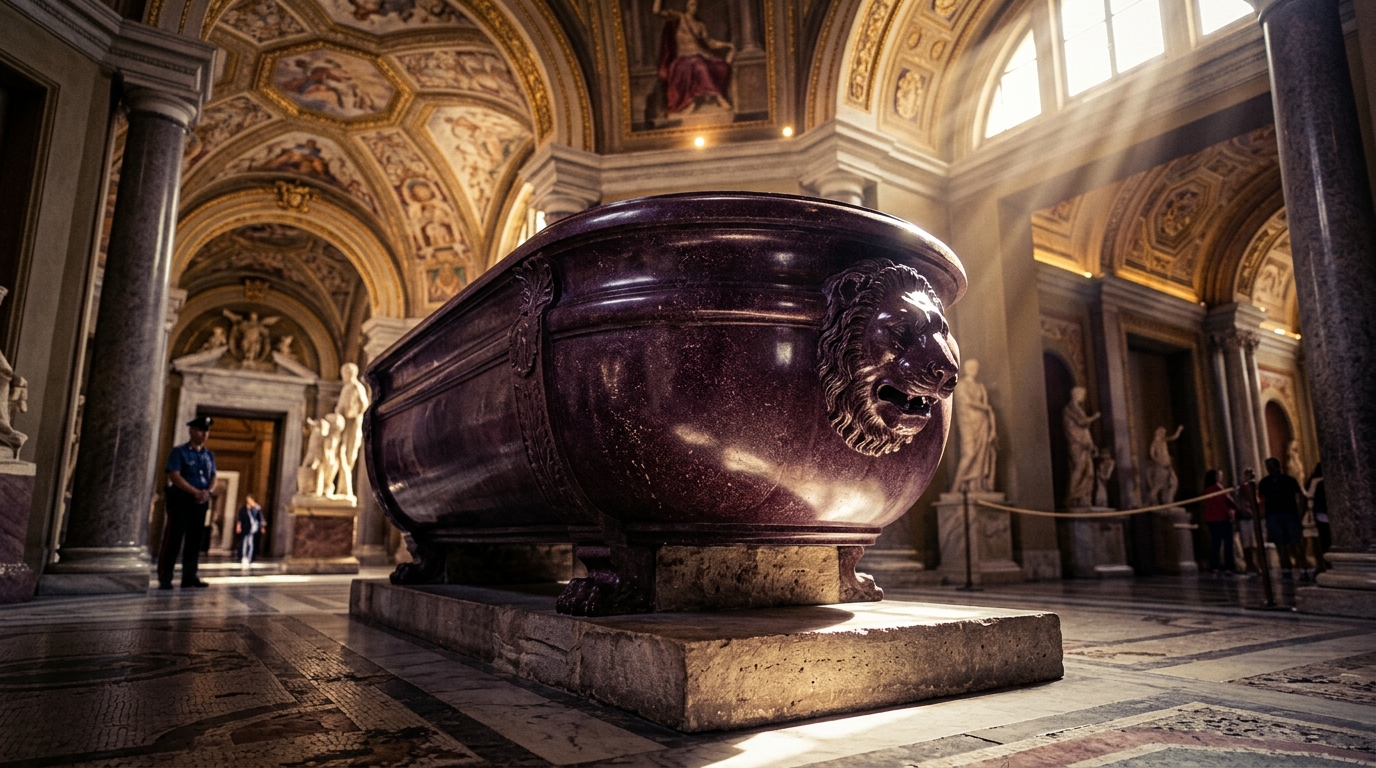
Ancient Rome was famous for its grand architecture, extravagant lifestyles, and remarkable engineering achievements. Among the many treasures that have survived from this extraordinary civilization is a giant bathtub made from porphyry, a rare and highly prized stone often associated with emperors and power. Commonly linked to the Roman Emperor Nero, this enormous artifact continues to fascinate historians, archaeologists, and visitors alike.
Today, the massive porphyry bathtub is preserved in the Vatican, where it serves as a striking reminder of the wealth, ambition, and artistic sophistication of ancient Rome. Beyond its impressive appearance, the object tells a much larger story about imperial luxury, craftsmanship, and the enduring legacy of Roman civilization.
Here are ten surprising facts about Emperor Nero’s massive porphyry bathtub at the Vatican.
1. It Is Made From One of the Ancient World’s Most Valuable Stones
The bathtub was carved from porphyry, an exceptionally hard and beautiful igneous rock distinguished by its rich purple-red color.
In ancient Rome, porphyry was extraordinarily rare and difficult to obtain. Because of its scarcity and striking appearance, it became strongly associated with wealth, authority, and imperial prestige.
Owning objects made from porphyry was a powerful symbol of status.
2. Purple Was the Color of Power
The color of porphyry was especially significant in Roman culture.
Purple dyes and purple-colored materials were often linked to royalty and high-ranking officials because they were expensive and difficult to acquire. The stone’s natural hue further strengthened its connection with imperial authority.
The bathtub therefore represented more than luxury—it also carried powerful political symbolism.
3. Creating It Required Extraordinary Skill
Carving a giant bathtub from porphyry was no simple task.
Porphyry is an extremely hard stone that demands considerable expertise and labor to shape and polish. Ancient craftsmen had to work carefully to transform a massive block of rock into a functional and visually impressive object.
The bathtub stands as a remarkable testament to Roman craftsmanship and engineering ability.
4. It Demonstrates the Extravagance of Roman Elites
Ancient Rome’s wealthiest individuals often surrounded themselves with lavish possessions.
A massive bathtub made from rare stone perfectly illustrates the opulent lifestyles enjoyed by certain members of the Roman elite. Such objects served practical purposes but also functioned as displays of status and influence.
The artifact provides a vivid glimpse into the luxurious world of imperial Rome.
5. It Is Commonly Associated With Emperor Nero
The bathtub is traditionally linked to Emperor Nero, one of Rome’s most famous and controversial rulers.
Nero’s reign has long fascinated historians because of accounts describing both his ambitious projects and his extravagant tastes. Although many details of his life remain subjects of historical debate, his name has become closely associated with grandeur and excess.
The connection adds another layer of intrigue to the artifact.
6. The Object Has Survived for Nearly Two Millennia
One of the most astonishing aspects of the bathtub is its age.
Despite the rise and fall of empires, wars, and centuries of political change, this remarkable piece has endured for almost two thousand years. Its survival allows modern visitors to encounter an object that once belonged to the world of ancient Rome.
Few artifacts provide such a direct and tangible connection to antiquity.
7. The Romans Were Masters of Stoneworking
The bathtub highlights the exceptional skills of Roman artisans.
The Romans quarried, transported, and shaped enormous quantities of stone for temples, monuments, roads, and luxury objects. Their ability to work with challenging materials contributed significantly to their architectural achievements.
The porphyry bathtub reflects the technical sophistication that characterized Roman craftsmanship.
8. Luxury Objects Often Carried Political Meaning
In ancient Rome, displays of wealth frequently served purposes beyond personal enjoyment.
Possessing rare materials and monumental objects could reinforce authority and project power. Lavish possessions communicated status to visitors and subjects alike.
The bathtub therefore functioned as both an impressive object and a symbol of imperial prestige.
9. The Vatican Preserves Treasures From Many Eras of History
The presence of the bathtub in the Vatican reminds us that historical collections often span numerous civilizations and time periods.
The Vatican houses remarkable works of art and artifacts that preserve important chapters of human history. Objects such as the porphyry bathtub provide valuable insights into the cultural and artistic achievements of ancient societies.
Its preservation ensures that future generations can continue studying and appreciating this extraordinary piece.
10. It Continues to Inspire Wonder Today
Perhaps the most fascinating aspect of Emperor Nero’s massive porphyry bathtub is the sense of amazement it still creates.
Modern viewers are often astonished by its size, craftsmanship, and historical significance. The object encourages people to imagine the world in which it was created—a society capable of obtaining rare materials, employing highly skilled artisans, and producing luxury objects on an extraordinary scale.
The bathtub reminds us that ancient civilizations were often far more sophisticated and ambitious than we sometimes assume.
Final Thoughts
Emperor Nero’s massive porphyry bathtub is far more than an oversized relic from ancient Rome. It represents a unique intersection of artistry, engineering, luxury, and political symbolism. Crafted from one of the ancient world’s most prized materials, it offers valuable insights into Roman society and the ways power was displayed through architecture and material culture.
Most importantly, the bathtub demonstrates the enduring ability of historical artifacts to connect us with distant civilizations. Nearly two thousand years after its creation, this remarkable object continues to fascinate historians, inspire visitors, and remind us of the extraordinary achievements of the ancient Roman world.